Interview with Dr. Oktay Vural (Part II):
Nationalist Movement Party (MHP) on the Bipolar Political Axis:
Nationalist Movement’s Current Political Basis, Red Lines and Evaluations on the Current Agenda
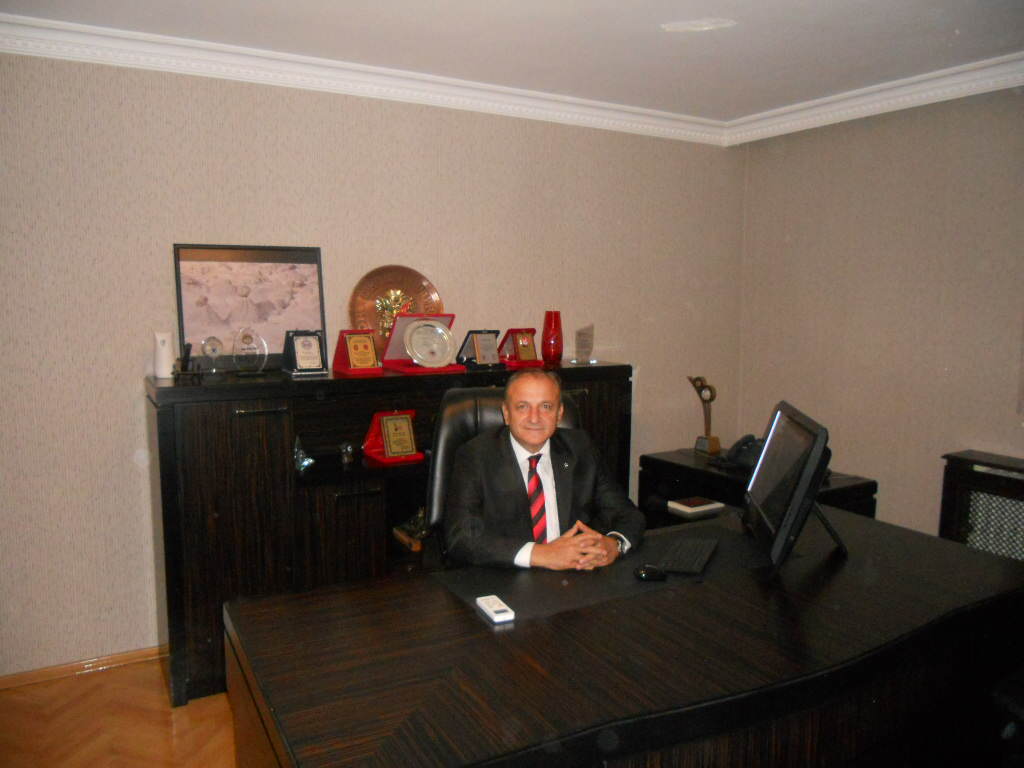
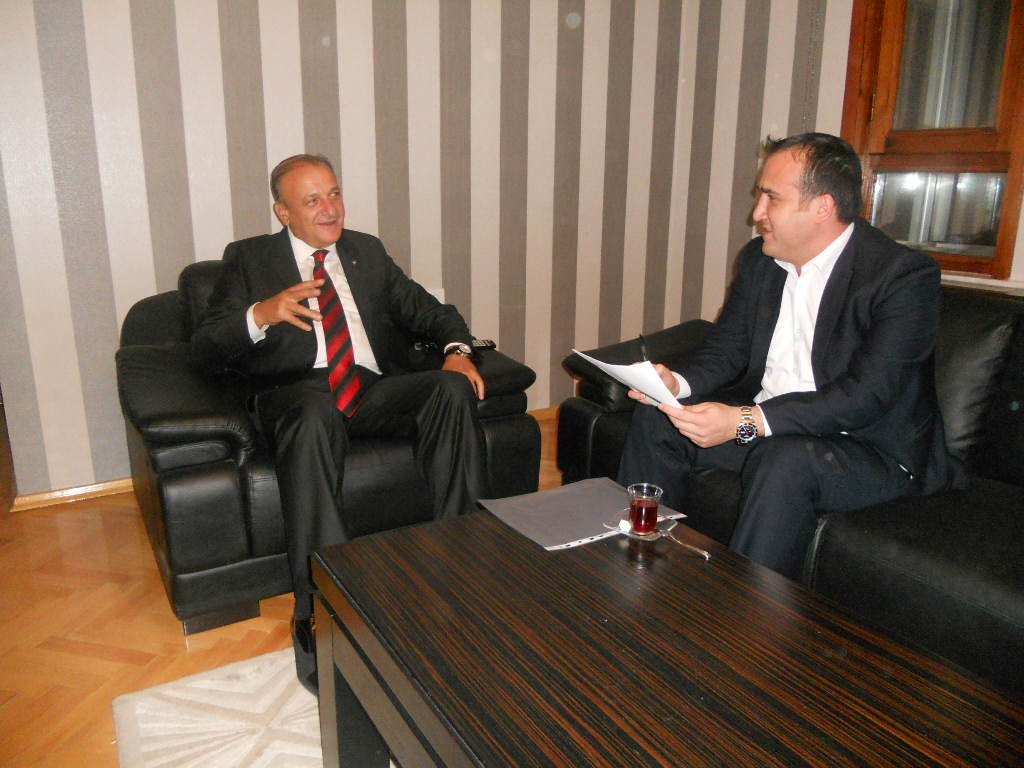
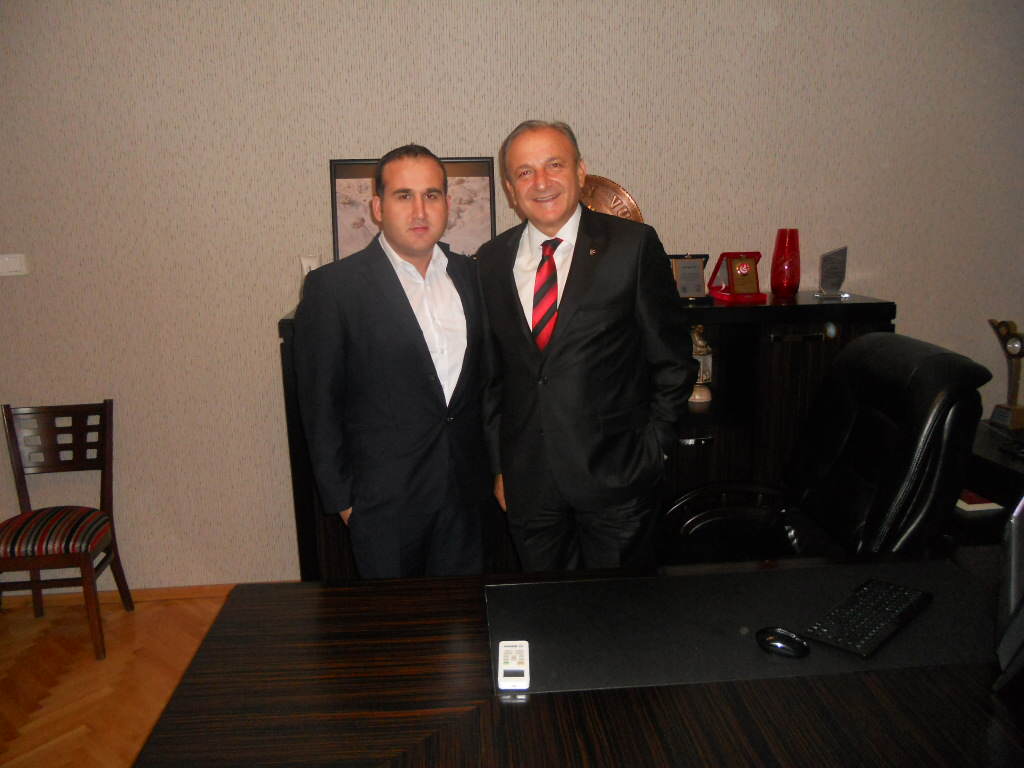
As Centre for Policy and Research on Turkey (Research Turkey), we conducted an interview – to be published in two parts – with Dr. Oktay Vural, MHP (Nationalist Movement Party) deputy from İzmir and the Group Deputy Chairman in the Grand National Assembly of Turkey (TBMM). Mr Vural has held offices as a politician and a legist, as well as a bureaucrat and an academician; he served as Turkish Minister of Transportation from August 2001 onwards at the coalition government, consisting of Democratic Left Party (DSP), Nationalist Movement Party (MHP), and Motherland Party (ANAP) that lasted between 1999 and 2002. He began his bureaucratic career at State Planning Organization of Turkey (DPT) in 1980, and proceeded as a high-ranking official in various departments. Vural completed his Bachelor’s in the Department of Law at Istanbul University, received his Ph.D. in Economics at İzmir Dokuz Eylül University in 1987, and later served as an Assistant Professor at this university. Once elected as a MHP member of the TBMM at the 1999 General Election, Vural has taken on several important tasks within his party, and still fiercely advocates for MHP’s policies to this date as the Group Deputy Chairman. In this second part of our interview with Mr. Vural, of which the first part was published a couple of weeks ago and has attracted great interest, we start by discussing why MHP led Turkey to an early election in 2002 and continue with the current political issues, reviewing the important recent developments.
Synopsis of the Interview:
“MHP has given great importance to economic transformation and political stability. Justice and Development Party (AKP ) continued to apply our economy program until 2007”
“A chaotic environment had been created in Turkey. We called for an early election in 2002 with the fear that it was the nation who was suffering the increased uncertainty”
“We faced many external interventions and plots as the coalition government, since we were against the war in Iraq. It ought to be stated, without any doubt that these manipulations aimed at creating a separate political will, which would not resist these demands and requests”
“MHP’s attitude on the fight against terrorism and separatism and about Cyprus had been turned into a provocative opposition against MHP, with the claims that it would block the EU membership”
“AKP’s political language, their administration model, is one that considers democracy as a tool, one that cannot tolerate democracy, a model to rule the society not in a pluralist but majoritarian mentality”
“Within this mentality, an alternative to them is out of question. This mentality of ‘We have done all’ is a marginalising one that has created a medium for polarisation”
“A different polarisation model was applied before the 2007 elections, in order to change the course of the rising nationalism. AKP was handed the government on a golden platter once again”
“AKP entered the July 22 elections with the vulnerabilities created, the polarisation strategy and stories of victimisation. MHP was not part of such a polarisation”
“The April 27 memorandum was not against the government, but the opposition. A political engineering was conducted, externally and internally, and MHP was prevented from entering the parliament more strongly”
“The Turkish politics has been tried to be organised along 2 poles: AKP and CHP. Also with the promotion of the wiretapping and surveillance activities against MHP, the aim was always to keep MHP out of the parliament”
“Today, AKP has built hostilities, polarisations. But these polarisations have become tiresome. The people who seek peace, compromise and dialogue are fed up with this policy.”
“Unfortunately, they are performing political clownery. They keep thinking how they can set people against each other, they scratch anything they can find; these are virtual hostilities. AKP has a mentality that creates discomfort, enemies out of neighbours. The society is paying for it”
“In the bipolar political mentality, MHP is tried to be demonstrated as either the assistor to AKP or a wagon to CHP. The purpose is to prevent the rise of MHP”
“Today we have no intentions of standing together with neither AKP nor CHP, we are administering our own fair politics”
“When we look into the situation we are in today, isn’t it CHP who brought AKP to power? Isn’t it CHP who started the process that led Erdoğan to become Prime Minister in 2003, or who approved the Turkish Penal Code by calling the parliament to an emergency meeting, and supported the founding of the Specially Authorised Courts in 2004?”
“We acknowledged the rightfulness of the societal opposition that was created around Gezi Park axis, but we kept our distance when it turned into acts of violence”
“Gezi protests actually demonstrated how AKP’s mentality of governance can turn into an oppressive and despotic one and also showed the police executing disproportionate force”
“The Gezi events were sorrowful events that exposed the incapability of the government and the extent of the societal polarisation created by AKP”
“The younger section in the Gezi Park protests, who were born in 1980’s or 1990’s, spent their whole life with AKP governments. This generation is weary of Erdoğan’s egocentric ruling style and his mentality of ‘I know all’”
“AKP stimulated the Gezi protests, it turned marginalisation to violence and used it as a mean of reconnecting its voter population to itself, who were drifting away day by day”
“Arranging political rallies right after the Gezi events gave away AKP’s real purpose. Instead of managing the Gezi events, AKP converted them to rallies in order to obtain political benefits”
“They are making up strange state fantasies by abusing religion. AKP states that nation states need to transform into states that collaborate internationally”
“AKP is trying to form a new state model that is based on regions and ethnical identities. To make people tolerate it he is performing the Kurdish opening and behaving inconsistently in the negotiations with the head of the terrorists. This is called hypocritical politics”
“AKP aims and serves to transform Islam into a local component of the Western Civilisation. It is trying to transform the Republic, transform the nation”
”Democratisation packages, under the cover of ‘let us end the terror so mothers will not cry any more’, predicts a structure that is more authoritative, more localised and where the national economy and national state have completely disappeared”
“AKP has transformed PKK to the representative of Kurds. Abdullah Öcalan is no longer the head of the terrorists and is rendered a political leader. And they try to make people digest it”
“A parallel nation, a parallel state is created via AKP”
“The real purpose of the ‘opening’ and the democratisation packages is to provideamnesty to PKK and Öcalan. The other additions are to balance this and help digest”
“The Kurdish problem claim is used as a tool in order to build the Middle Eastern model for state installation in Turkey, which is based on ethnicities and sects. The real goal is to set-up 4-piece Kurdistan.”
“According to us, there is no Kurdish problem in Turkey. There is just the problem of putting the Turkish nation and state into the track for dissolution by enforcing the acknowledgment of the Kurdish problem”
“Using the term Kurdish problem, more importantly than anything else hurts and harms our brothers and sisters of Kurdish descent, and more dangerously externalises them”
“Reforms are done for the democratic and human rights of every single citizen. But in Turkey these steps are always taken for encouraging and creating the basis for separatism”
“They put together in the same package the requests of Alevis, our sisters in head-scarf and PKK, and are serving all of it as a democratic step and trying to deceive the nation”
“KCK is a new version of PKK terrorist organization that is formed in Turkey explicitly as the urban structuring of the PKK terrorist organization and it aspires to the construction of a separate parallel state in the country”
“As MHP, our red lines about the new constitution are clear. There are unmodifiable items such as ‘The name of the country is Republic of Turkey, the capital is Ankara, the official language is Turkish, and everyone affiliated to the country as a citizen is Turkish’”
“We do not have a problem with the democratic parliamentary system. The request for the presidency system shall be interpreted as the longing of the political powers and Prime Minister Erdoğan for a ‘single-man’ system”
“We describe the latest democratisation package as a step taken in order to fulfill PKK’s requests, their impositions. The arrangements about the student oath, modifications to the alphabet are only one portion of these requests”
“Turkey was dominating the civilisation of the territory as a soft power, when AKP destroyed this power. Turkey lost all of her reputation; she is no longer a trustworthy country. Our relations with the EU are problematic anyways”
“We do not support an external intervention to Syria that would become a side of the internal conflict there. However, if the incidents in Syria reach a point where they threaten Turkey’s unity and integrity we would support an intervention that is for the benefit of our nation”
“AKP did well to continue our economic program until 2007. However, AKP did not take a single new structural precaution”
“In the AKP era, the economic development was not due to production but it was more an imported one; we call it a ‘development on steroids’. Turkey grows when she is running current account deficit. Such a development model is not a sustainable one”
“We are no longer in debt to the IMF, but this is only superficial. Other debts increased. For example, the debt to the World Bank has increased three times. The most important problem of our day is to build the financial stability that can create the competitive power, in the economy and in the banks”
“The generation of today wishes to see administrative models that allow more participation”
Full Text of the Interview
“A chaotic environment had been created in Turkey. We called for an early election in 2002 with the fear that it was the nation suffering the rising uncertainty”
Mr Vural, in the first part we have talked about your personal story before and after entering politics, along with the codes of being a Turkish nationalist, and the past and present-day of Nationalist Movement Party and idealist movement. We will continue with current politics in this part. One of the most important events, that have helped to shape the present day politics, was actually the call for an early election by MHP chairman Devlet Bahçeli and Ak Party acceding to power following the elections in November 2002. This is why I would like to start with that. Between 1999 and 2002 there was the coalition government, that involved MHP, there was a big economic crisis in 2001, then a new economic program was built, serious structural precautions were taken and the economy started to get better. As a matter of fact, Ak Party kept applying this economic program, without making any changes, after taking power in 2002. Why did MHP call for an early election and led Turkey to an election right when recovery had started after a substantial economic crisis? Do you think that this was a mistake, that there was still time to wait since everything was ameliorating? How do you evaluate this when you look back at it?
Yes, Justice and Development Party (AKP) continued to apply our economic program until 2007. Now, we need to re-evaluate the environment in those days. First of all, I do not believe that that crisis is one that came about within its own economical dynamics, there were certain triggering agents. There were some interventions. Especially after April 2002, some plots of instability and insecurity were generated using Prime Minister Mr Ecevit’s illness. In an ambiance where the economic program was causing important effects, when interest rates were around the level of 40%, suddenly problems about instability were brought out. Back then, the political stability was tried to be destroyed using both Ecevit’s situation and certain formations under the cover of a government without MHP. Though, MHP has given great importance to political stability and economic transformation, structural reforms. What we said was, first, no matter what, we will prioritize keeping the coalition government; secondly, we need to provide structural transformation; otherwise it is impossible to continue with the old policies. Such a policy also resulted in a social forfeit for our citizens, but we took precautions, they started producing results, and while they were doing so, suddenly, scenarios of a new political configuration appeared. All of a sudden, certain political hubs started showing efforts to build a new political structure outside the parliament. Democratic Left Party (DSP) was separated; the government fell in a position where it would lose the majority. We wanted to end this plot.
I would like to interfere at this point to ask about an allegation. Those days, a US intervention to Iraq was expected and it was being said that the Turkish coalition government was against such an intervention. This was stated by Prime Minister Ecevit himself. Therefore, there were claims that there existed some work, some repression in order to form a new political foundation, alternative to the existing government, and one that would say ‘Yes’ to an intervention in Iraq. Are these allegations true?
It is true; we were against the intervention in Iraq back then. In fact, there is a report dated June 2001, or 2002, there it was stated that the nationalist way of reasoning had an attitude that was against the USA’s benefits on the Iraq, Armenian and Cyprus issues. Now, we clearly see what the internal and externally sourced plots direct their aims at when there is such an attitude. Let us think about it: you are the chairman of a nationalist party, and suddenly an atmosphere of uncertainty is being created. On July 3rd, 2002 in a meeting that involved leaders; all of a sudden the subject of discussion became like ‘there is an ambiguity, we need something new, the medical report etc.’ We need to comprehend where all this was planned to be taken to. Later on DSP started being emptied. Within this atmosphere of uncertainty, certain risks appeared in the economic stability, which we created with huge sacrifice, in a way that would make the nation suffer more. DSP lost its majority, the government lost its majority, and people were saying the Prime Minister would not be able to carry out his duties. With fears that this chaotic ambience would cause an even more ambiguous scenario to be imposed on Turkey and that the nation would pay the price of this rising uncertainty, we called for an early election. And to be honest, a sustainable government model was nowhere to be seen. A system where the political will is too dependent on external agents would bring along great risks.
“MHP’s attitude on the fight against terrorism and separatism and about Cyprus had been turned into a provocative opposition against MHP, with the claims that it would block the EU membership”
When deciding for the early election, were you anticipating that MHP would beat the election threshold and re-enter the parliament?
To be honest, we were not expecting to be left out of the parliament, we had made different calculations, but that is how it turned out to be. But we had made the early election decision in order to prevent the instability and uncertainty that was trying to be created within Turkish politics; that decision was completely for the nation’s benefit and today we still consider it to be a right decision. If we had not made that decision we could have gone in a period where we would pay a higher economical cost and we would be taking on various obligations about Iraq. MHP’s attitude on the fight against terrorism and separatism and about Cyprus had been turned into a provocative opposition against MHP, with the claims that it would block the EU membership. It ought to be stated, without any doubt that these manipulations aimed at creating a separate political will, which would not resist these certain demands and requests. The reason why we took the early election decision was to avoid, by the decision of the nation, situations that would have caused harm to the political and economic stability.
Within the course of the election period there was the Young Party (Genç Parti) surprise, which got 7% of the votes, and possibly your votes were also split. Moreover, AK Party, which had been founded just a year ago, made a great advance. Do you think the plots you have just mentioned, which evoked your decision for an early election, had also an effect in the election results?
In those days there were also external explicit interventions, manipulations that triggered AKP. These are very interesting; we need to investigate within the framework of that period. For example, how could someone that was banned from politics enter the elections as the chairman of a party? Someone that cannot even become a member of the party, but could participate in the elections as the chairman of a party. Hence, when we analyse that period, the internal and external interventions, there was an attempt to make other parties pay for the price of some victimisations and socio-economic crises by rewarding AKP, which was from out of the parliament. Those were periods where we intensely went through manipulations that were externally directed.
“AKP entered the 2007 elections with political polarisation and victimisation discourse. Once again the government was offered to AKP on a golden platter”
After 2002 elections AKP formed the government alone and managed to remain in the power for 11 years by winning elections in a row. The opposition parties are being criticized for not being good enough opponents. Besides, it is stated that AKP’s style of doing politics and language and discourse that it brings to politics create an unusual situation for the opposition parties. How do you evaluate AKP’s success and its political language, style, discourse and political actions that she generates?
For one thing, the language of politics and the model of management that AKP brings is a society governance model, within which does not digest democracy and rather sees it as a mean. It is not a pluralistic but a majoritarian one. For AKP’s style of politics, “everything that has been done before them is wrong; while all the things they have been doing is right.” Therefore, such an understanding entails that there is no alternative other than them. With their understanding of “We are the one who did everything, everything before us just belongs to past-era and is anonymously done”, they are marginalising. They even make a comparison with the Republican era, create an environment of polarisation and reject everything. They label the past as the mother of evils and indicate themselves as mother of kindness. This speech was also flattered by the media which AKP got hold of. While the opposition’s rightful criticisms were not brought to the agenda, opposition parties were always criticized in the media, not the ruling party. In fact, there was a rising nationalism prior to 2007 elections. In order to switch this rising nationalism off, a different kind of polarisation model was implemented in 2007. Especially the 27 April proclamation was issued in an era while nationalism was rising and the social opposition were heading towards to MHP. Once again the government was offered to AKP on a golden tray. The 22 July elections were held in an atmosphere with political polarisation and victimisation discourse along with the precision that AKP creates.
So, 27 April e-memorandum was actually issued to opposition, not the ruling party? Do you think that the e-memorandum was issued to block the rising social opposition instead of warning the ruling party?
Absolutely. When you look at the process from 27th of April to 4th of May Dolmabahçe meetings, could it be any rational justification of such an intervention, prior to a decision that the Constitutional Court was about to make? While the law was going to make a decision, you put the AKP in an election again with a victimisation discourse along with such an intervention. Ultimately, the election was suddenly converted into an election dominated by debates of 367 and 27 April proclamation rather than five years of government practices. In fact, AKP’s vote had dropped down to 24.5% according to surveys conducted six months before 22 July (2007) elections. Even people within AKP were stating this. Therefore, like a set of manipulations that were made before 3 November (2002) elections, same kind of manipulations were performed. Social engineering from outside and within were executed and MHP’s entering into the parliament in a more powerful manner was obstructed. This is clear and unequivocal.
“Turkish politics were attempted to be shared between AKP-CHP. MHP was tried to be eliminated completely”
Do you also evaluate the tapes of deputies and executives of MHP, which were released right before 2011 elections, as a part of similar manipulations?
Yes, some people want to regulate the Turkish politics on the axis of the bi-polar politics: AKP-CHP. By affirming that it is the way to keep AKP constantly in power, this understanding is constructed from within and outside. Even if you remember, propagandas were perpetually made saying that we were passing the two-party system. The main purpose, both in 2007 and 2011, when the records of the bugging of MHP officials were released, were based on incapacitation of MHP. Actually, MHP was also became the target in 12 September 2010 Turkish constitutional referendum. Developments prior to 2011 elections, as a continuation of these, headed towards to completely eliminating MHP.
Why do you think that MHP was always on the target?
Because MHP’s power and rising of nationalism would enhance the social resistance against some of the policies that AKP will implement. MHP’s empowerment would prevent deception and polarisation of the masses that was executed by AKP. It (MHP’s empowerment) would block out the games played between PKK and AKP along with some collaborations and ceasefires and prevent them from being used as an election tool. Then, several developments should be taking place in order to exclude MHP. While applying the program of the coalition government of MHP as it was designed before them, AKP creates an environment in which they make people believe that everything before them is done wrong and this helps them cover up for their own mistakes. At first they introduced polarisation on the axis of secular-non secular between AKP – CHP, then they release new ‘otherings’ and imaginary hostilities. The aim is always to keep MHP out of the parliament. We faced with extensive operations.
What are these imaginary hostilities? Do you think that AK Party instigate the polarisation in the society? Why do they follow such a strategy? Or why do they constantly make previous periods in the history a current issue? Prime Minister Erdoğan has been in power for 11 years yet he still talks like a leader of an opposition party. How do you evaluate this?
Unfortunately, they have been doing political clowning. They constantly think how to set people against each other. They dig everything they find; these are imaginary hostilities. Erdoğan has been in power for 11 years but he is still talking about 27 May (1960 Coup d’état). I do not know how old he was on 27 May but they interiorise such a political governance model, in which they attribute all bad doings to the others and creating a public polarisation of ‘the ones with us and the ones against us’. But this is not a policy that could stay valid for long. In our days AKP has been using it. She brings about new hostilities, polarisations in order to consolidate people who voted for them in the past. However this polarisation begins to irritate people. People who voted for AKP and are looking for peace, reconciliation, and dialog are tired of this policy. In a sense; isolation outside, polarisation inside and increasingly marginalised discourse and assuming everyone – even the people voted for them – who has criticised AKP as a positional threat are going to bring the end of AKP. Some who support AKP begin to move away from this movement now as well. Within this model, once you move away from this movement, the polarisation and the pressure increase even more. In this model when you are no longer able to bind people through ideas, you do start threatening and oppression, blackmailing. But I think that this model will not function any longer and AKP will pay the price for this. Conflicting with central values and marginalizing them create unrest in the political opinions and views of people who voted for centralized parties, too. Society does not want unrest. There is an understanding within the AKP which turns neighbours into enemies and make self-inflicted unrest in society. It conflicts ethnic and sectarian identities in order to turn people against each other. The society is paying the price for it. Society should not give credence to this governance model.
I will ask you about social polarisation but I also want to ask you something about the perception that is expressed a lot lately. You have been criticising AK Party harshly, but on the other hand there are significant criticisms that you rescue AK Party whenever it gets stuck in a difficult situation, that you are its space tire. What do you say about this?
Yes, occasionally this is attributed to MHP. As a matter of fact, this attribution is a perception failure. Within the understanding of two-pole politics, MHP is tried to represent either as an assistor of AKP or wagon of CHP. The main aim is to stop MHP’s growth. Most of the time, we do not ingratiate both of the parties. In fact, the reason why we could not ingratiate is that these two parties sometimes misaligned their political axes on with the national politics axis. One of the ways to prevent the loss of electors that is caused by this axis shift is to weaken and exclude MHP. For instance, we clearly observe that there are convergences at certain degree between AKP and CHP with regards to the ethnic issues.
“Today we have no intentions of standing together with neither AKP nor CHP; we are administering our own fair politics”
Not only regarding ethnic issues, for example there is the Presidential Election in 2007, Higher Education Council (YÖK) Act, Primary Education Act, recent military permit laws. A convergence between either Ak Party or CHP and MHP has been constantly vocalised as material for critics. Maybe it is the way to conduct politics in Turkey as well, as if the public has been directed to see everything either black or white?
Now, as politicians, we shall figure out a political route in this polarised environment. For instance, we do not find the ‘crisis of 367’ right as this crisis actually helped AKP. One shall see this, I said, I do not think ‘crisis of 367’ is the right thing to do hence I will go to the parliament for the voting. They said, if you got to the parliament then you are with AKP. Why would I be? The real question here is, is not helping AKP to get more votes with the help of this crisis, the real assistance to the AKP? What shall I do? As a politician I shall try attracting the discontented supporters of AKP and CHP. Hence we did not become a side in this polarisation. Therefore MHP has always thought the best for Turkey and democracy while taking her decisions. Well, we also against the 4+4+4 system and regarded the gradual system right but we did not think such gradualism was right and we set our difference on the table. We have voted “yes” for the permit for military operation against Syria, since there is a government that governs Turkey and if they say “I have to use the military as a deterrent” we say “yes” to that. I do criticise AKP as their policies brought Turkey to the edge of a war but if such an attack is imminent then MHP would defend the government’s right to defend the country. Hence we have not cared about AKP, we have cared about Turkey. Therefore, showing MHP as the assistor to the AKP is a great injustice. When we look at the past, isn’t that CHP who brought AKP to power? Isn’t that CHP who started the process for Erdoğan’s prime ministry or approved the change in the Turkish Penal Code in 2004 and supported the foundation of Specially Authorised Courts? Isn’t that CHP as well who says that there is a Kurdish problem in Turkey and calls the AKP for negotiations and says ‘No’ to their proposals after which also calling MHP for negotiations? We have stood together with neither Soviet Russia nor USA during the Cold War era and today we have no intentions of standing together with neither AKP nor CHP, we are administering our right policies.
Yes, there are so many things to talk about from the last ten years. If you wish, let’s go on with the most wondered recent political events. Very recently the Gezi Park demonstrations happened and became popular. It was said that many MHP supporters also participated in these demonstrations. However MHP kept its distance with the demonstrations. Is this true? What do you think about these demonstrations? You had some statements regarding both the attitude of the government and police violence.
Actually we have found the public opposition that was formed around Gezi Park as rightful, but it is true that we have kept our distance with them turning into violent actions. The main reason why we kept our distance is that we thought that the public opposition may have fallen into the trap of being marginalised through violent acts and discredited. In that sense we say ‘Yes’ to the public opposition but we are against the discourses which marginalise the public opposition and prevent the opposition from being understood by the wider public. Linking the opposition with violence and actions and radicalising it actually means the death of it. Therefore the marginalisation, radicalisation and spreading of this into streets were not right but peaceful and democratic demonstrations that vocalised these and arguments behind the demonstrations have been really important to us. In other words, segregation, hegemonic structure, social exclusion, the findings that were put forward by this public opposition are correct, but one shall not fall into the trap of the ones who would like to marginalise these findings on streets. Gezi demonstrations actually showed how AKP’s governing style could turn into a despotic one. Their attitude towards Gezi demonstrations, police’s disproportionate use of force and othering of certain people were remarkable.
“Gezi demonstrations actually showed how AKP’s governing style could turn into a despotic one”
How would you evaluate the Prime Minister Erdoğan’s claims saying that there are ‘interest lobby’ behind the Gezi demonstrations or foreign based conspiracies or Coup D’etat attempts?
Well, since Erdoğan himself came to power with the help of such lobbies and conspiracies one shall not take him seriously in this regard. Of course surely these were events that displayed the government’s inability and popular polarisation that was created by the AKP. Prime Minister tried to hide his wrong doings by emphasising unrealistic scenarios. When you look into it, you can see that most of the people who participated in Gezi demonstrations are born in 1980s or 1990s. Most of 1980s born and all 1990s born people have had only AKP in power throughout their lives (that they can remember) so far. A person who was born in 1990 is now 23 and let’s say if he can remember his life since he was 12, he does not know anything but AKP for the last 11 years. This generation is fed up with Erdoğan’s egocentric government and authoritarian, ‘I know the best about everything’ type of approach. This generation is not one that could be commanded. This generation is both optimist, pragmatist and flexible. In the old times, people criticised: ‘Süleyman (Demirel) is always the Prime Minister and Prime Minister is always Süleyman (Demirel)’ and now this man (Erdoğan) is dominant everywhere and does not allow any criticism anywhere so people went down to streets to protest. WE are against marginalisation and violence but this generation is going to rule Turkey in the future, hence this generation should be understood well, shall not be ‘othered’ and shall not be drawn into a conflict environment. If generations are lost Turkey loses, we know this principle very well from our own period.
I personally think that AKP stimulated the Gezi protests, it turned marginalization to violence and used it as a mean of reconnecting its voter population to itself, who were drifting away day by day. The fact that they organised mass rallies and showed demonstrators as enemies showed their real intentions. There were other scenarios there.
What kind of scenarios?
Now there are many issues that need to be explained better in these Gezi Park events. First of all, AKP says they knew that ‘these events would occur from three months ago’, if that was the case then why could not you manage the events at all? Second is since there was an awareness/respect grown towards trees and parks; within this awareness who gave the order to the police to burn the tents of the demonstrators at 5 a.m. in the morning and apply disproportionate force on them? Such practices created the perception that there was injustice done against the demonstrators. Just after this period on 7th of June 2013, a visit to İmralı Island was planned. There was a ‘Greetings to Gezi’ message from that visit which means marginal groups were started to be involved, who wanted to involve them, why were they involved, these questions shall be investigated. Instead of managing the situation, bringing the polarisation and turning into mass rallies also shows that the events were provoked through political engineering and used for political rent.
There were MHP flags as well in the mass rallies called ‘Respect to National Will’ that were organised by AKP. What do you think about this?
In order to evaluate that environment let’s use ‘method of reductio ad absurdum’. Somebody started to add all marginal and radical elements into Gezi events. AKP also supports this and provokes the events even further. If MHP was seen there with the marginal elements how would AKP use this? MHP, foreseeing this game, kept her distance with Gezi. Hence AKP understood that their game would not be successful and this time they used MHP flags in their own mass rallies.
“AKP, instead of managing the Gezi protests turned them into rallies in order to obtain political gains”
Do you mean that Justice and Development Party boosted the Gezi movements up, even made radical elements to participate and supported them; then set up a trap to make the bases of Nationalist Movement Party together with the ethnic groups look like they are opponents of Justice and Development Party in order to pull these radical elements closer?
Of course, we did not fall into this trap. This time it used the method of affinity to prevent that social opposition to face towards us. And, here, I think deep Justice and Development Party was effective; I think the forces of deep state were effective. If you recall, policies started with agitations such as “let mothers not cry” Justice and Development Party used before Gezi protests resulted in the societal opposition and Nationalist Movement Party to start to merge. In Izmir, Bursa, and other cities we had rallies that bring the masses together. Nationalist Movement Party started to be the address for opposition. Nationalist Movement Party was on the rise, Justice and Development Party quailed, the Prime Minister who was negotiating with the terrorists quailed. Then, by a manipulation, again on the axis of Republican People’s Party and Justice and Development Party with Gezi protests a polarization was tried to be created. When approached to this matter on this regard, it can be seen that Gezi protests made Justice and Development Party more dynamic. They were used to consolidate new voters. In this process there was a structure that wanted Republican People’s Party to be a polar side, but they were not able to reach their goals to the fullest.
“AKP is trying to form a new state model that is based on regions and ethnical identities. To make people tolerate it, he is performing the Kurdish opening and behaving inconsistently in the negotiations with the head of the terrorists. This is called hypocritical politics”
We have seen such political meanders in many different areas. Let us talk about openings on the axis of Kurdish problem, if you wish. Government, first, initiated a Kurdish opening, and when the reactions emerged this was renamed as “democratisation” opening. This opening was maintained by breakfasts, invites for singers, sports people etc. Then the process stopped. Prime Minister Erdoğan, later, had curious reactions. He mentioned the possibility of abolishing legislative immunity for the members of Peace and Democracy Party (BDP); he started stating sentences like “If it was me, I would have hung Öcalan”. Not even a month later, he initiated open negotiations process with PKK (Kurdistan Workers’ Party) and Öcalan which was called “peace process” in the dominant public opinion discourse. Lately, the process seems to be stopped; Ak Party, after a large propaganda process of two months, declared another democratisation policy package. How do you consider these developments?
The target is obvious. Citizens have an absorption problem. They are resorting to the method of degassing in the periods when citizens are suffering from indigestion, but the ultimate goal is quite obvious and clear. I mean, there is a reckoning with the Republic, with the nation. It is said that the issue should be approached from a perspective excluding the nationalist will that established the Republic. I am not the only one who says this, because Öcalan, when he introduced KCK (Koma Civakên Kurdistan, Group of Communities in Kurdistan) resolution plan of seven specifications, said that “nationalism is conflict, nation state should be dismantled”. Ahmet Davutoğlu says the same thing, Prime Minister Erdoğan degrades nationalism. Minister Ömer Çelik says “instead of national state, there should be country-state”. Therefore, AKP, actually, states in its conservative democratic book that nation states should turn into states that collaborate internationally. By exploiting religion they are producing different fantasies regarding the state. Consequently, in such a situation they need to redefine the bases that our Republic relies on and values that create our nation, but since these redefinitions will be highly costly from time to time these ‘beings of two minds’ take place. First, he says “I have business with those who embrace the terrorists, I will abolish their immunities”; then he takes them to the head of terrorists to Kandil in the most welcomed way. As a matter of fact, this is completely hypocritical politics. The aim and target of these implementations is to establish a new definition of a nation based on ethnic identities by cutting and shaping the people and the nation, and to establish a new model of state through a power distribution based on regional and ethnic identities. This is the model they have in mind. Because, according to them, there is no national identity or national culture. They hold only a belief system valid. Thus, cutting off these bonds, language does not matter; culture does not matter, national interest does not matter. As people are unable to absorb these political thoughts, they keep doing these fluxes and refluxes. Prime Minister also says this. “By letting people to digest slowly and properly”. He has this saying when he was coming back from Davos in January 24, 2004: “people have no hesitation with us regarding change of identity”. He says “people know us as they know themselves” and by seeming like this, he is actually undertaking an operation to change nation’s identity.
“AKP in this process made PKK a representative of Kurds. Öcalan rendered to be a political leader rather than head of terrorists. A parallel nation, a parallel state is being created by the hand of AKP”
Do you not think it is important for the ethnic minorities to gain some rights as to democratization? What do you mean by emphasis on religion and operation to change ethnical identities of AKP?
Actually, the core of the problem is not about rights. Demands are political. It is demanded that nation in its political sense and state-nation is defined according to ethnic identity, and the state to share its power according to that. The issue about rights is a camouflage. These people actually adopted the localization model. Ömer Dinçer already said: “localization is what is needed for globalization; Islam is the local culture for Turkey”. AKP is aiming at and serving for the transformation of our religion, Islam, as a local element of Western civilization, global civilization. It is trying to transform the Republic, transform the nation by redefining our national values that has been created by the Republic; that has been created by our history of 1000 years that made this geography a motherland. With democratisation packages, camouflages like ‘let us end the terror so mothers will not cry any more’, it is projecting a more authoritarian, more localized structuring where national economy and national state cease to exist. It is already stated in the conservative democrat understanding of AKP that national state should be redesigned according to the international standards.
When the democratisation package was announced, it was seen that many of the issues discussed for months were not there. Although Prime Minister Erdoğan said “this is the beginning, these packages will continue to come”, you express that the ultimate target is different. What were the critical mistakes of AKP in the opening process or latest open negotiations with Öcalan and PKK?
When Turkey was solving the issue of fight against terrorism in 2002, it was gravely important that public support did not lay with PKK. We had prevented this but AKP, in these negotiations that turned into a show, transformed PKK into a representative of a mass. AKP addresses PKK directly, and makes it politicized. Democracy is no longer meaningful when you instrumentally use terrorism legitimising it in democracy. Why do you criticize incidents in Gezi Park when you can embrace those who you call terrorists? This is factious politics. This legitimisation continued within the democratization package. When society reacted, they used this package as a step back to smoothen the sensitivities in the society. In this process PKK is transformed to be the representative of Kurds. Abdullah Öcalan rendered to be a political leader rather than the head of terrorists. They are still trying to make it be absorbed. Can there be a bigger mistake? A parallel nation, a parallel state is being created by the hand of AKP. The parallel nation and parallel state is being created inside the same state because it is impossible for any force to divide us de facto but we can never know what will happen in time. It is clear that PKK was never able to achieve these phases it is currently in on its own. It is the will of the majority that achieved these. Thus, I think, AKP should be stopped in order to prevent PKK to achieve its political objectives. The Prime Minister made his intention very clear by referring to the eyalets (Ottoman states) of Kurdistan and Lazistan. He established an agreement with the outside, the purpose and goal of which is completely the construction model of a 4-piece Kurdistan. It is also being constructed inside Turkey. AKP government has opened the way for PKK to have a sovereignty area in northern Syria by not keeping PKK busy with the fight. It is obvious and clear that this will have very serious repercussions. These are not innocent attempts, on that regard, when we express these matters; when people who vote for AKP notice them, AKP may change its discourse immediately.
Are there no steps being taken for human rights?
We defend the advancement of individual rights and freedoms. But there is a transformation project of these demands into a collective and ethnic political structuring. The main problem is that, this is what is shown while some other plans are being implemented. I think the policies implemented by the guides of AKP do not reflect the spirit of the people who voted for AKP, but the problem is the necessity to create an awareness of this. From time to time AKP tries to create societal disinformation by methods equating values like democratisation and human rights with ethnicist, racist approaches. This is what I believe: opening and democratization packages mainly aim at providing an amnesty to PKK and Öcalan with a three phase plan. The other additions are to balance this and make digest. We have seen this, on one hand, in the psychological intimidation of the Turkish Armed Forces; on the other, in the legitimisation process of PKK.
“In our opinion there is not a Kurdish problem in Turkey. The existent problem is the imposition to acknowledge the Kurdish problem for the dissolution of the Turkish nation and state”
The PKK terror and problems of Kurds, maybe, should not be confused. If they are, there emerges an inextricable dilemma for the actors who position themselves on different sides. It is clear that citizens of Kurdish origin have important problems, sufferings; and there are essential steps to be taken in the name of human rights and democratisation. You are also seriously sensitive about these issues. I want to ask openly, do you not think that there is a Kurdish problem in Turkey?
There is not, I want to make it clear as much as I can. Kurdish problem is an assertion put forward to legitimise the aims of damaging the national identity and national state. It is clear that these political demands will cause disintegration in power share of state and sovereignty to be distributed according to ethnicity and regions. In fact, the claim for a Kurdish problem is imposed by outside forces during the independence struggle of our Republic, but denied through the independence struggle. The declaration will with regards to this is expressed in 1921 in the Grand National Assembly of Turkey (TBMM) in the telegrams sent by our brothers of Kurdish descent as “Turkey does not have a Kurdistan issue, Kurds’ destiny lies with Turks, and Kurds do not accept their consideration as a separate element in the Grand National Assembly of Turkey government”. The representatives of various Kurdish communities, who protested when Lord Curzon spoke of autonomy of Kurdistan, expressed tenaciously that they are members of the Turkish Nation by stating “Kurds yield to the saviours of the Turkish nation and the Grand National Assembly government” and that they belong to the Turkish nation.
On the other hand, it is clear that the search for a political resolution for the claim of Kurdish problem is a phase in the construction of a four pieced Kurdistan in the Middle Eastern geopolitics. The Kurdish problem claim is used as a tool in order to build in Turkey the Middle Eastern model for state installation, which is based on ethnicities and sects. It is obvious that the search to find a solution beyond the national level will surpass our nation and state. Especially, the emphases made on four pieced Kurdistan during the so called resolution and peace process, the demands for Lausanne to be rewritten, the references to Articles 62-64 of Sevres in the constitution of Iraq’s Kurdistan Region have shown that a Kurdistan in Turkey is wanted to be established and our country is wanted to be dragged to a process of disintegration of sovereignty of our nation. In parallel with all these, publications of maps that divide Turkey in various locations points out to the same process. In this sense, it cannot be overlooked that the acceptance of the claim for a Kurdish problem and the political demands for the resolution of it serve to the purpose of disintegration of nation and state. Yes, in our opinion there is no Kurdish problem in Turkey. The existent problem is the imposition to acknowledge the Kurdish problem for the dissolution of the Turkish nation and state.
So, in this context, what problem exists in Turkey?
In Turkey, there is a dense and multi-dimensional problem of terror and separatism. There exist an organization that has been shedding blood for thirty years in order to change the constitutional order of the country and the treacherous separation demands of this organization. For this reason, it would be a wrong starting point for us if we perceive and reflect the impositions of this blood shedding organization as the demands of our citizens of Kurdish origin. It should not be forgotten that today there is no societal problem with our brothers of Kurdish origin. On the contrary, brotherhood prevails on the axis of unified values. On the individual level, many of our citizens living in our country have various problems. In this sense, a villager from Yozgat, a retiree whose salary is not enough, our citizens of Kurdish origin have individual problems; and the solution of these is imperative. The existent problems should be considered on the axis of individual rights and freedoms. Calling these individual problems Kurdish problem by turning them into political demands, first and foremost, hurts, damages our brothers of Kurdish descent, and more dangerously excludes them. At the same time, turning an organization like PKK, who massacres without distinguishing Turkish from Kurdish or adult from child, into a representative of our brothers of Kurdish origin makes us face an even bigger problem. That is why, we say “live and let live the thousand year old brotherhood”. The target of the terrorist organization PKK is the destruction of these thousand year old brotherhood with arms and ethnic politics.
Everyone in this country has been able to have every office and status as equal citizens with equal conditions and equal rights. No one has ever been subjected to inequality, injustice, discrimination before the law due to their origins. If such problem existed, how could we explain the fact that our citizens of Kurdish origin have become president, prime minister, Member of the Parliament? In this country, everyone is equal before the law. The imperialist conspiracy called the Kurdish problem, unfortunately, is the end product of an endeavour to manipulate the reality and serve the purposes of PKK terrorist organization. Today, by calling it that way, the extension of PKK in the Parliament to begin with, and the government as well as the main opposition serve the purposes and separation goals of PKK.
This expression of brotherhood and that Kurds can become anything they want as equal citizens disturb some circles. They think that this is covering the problems up.
What we are saying is that such expressions play into the hands of separationists. Problems of every citizen are discussed on the axis of democracy and human rights and reforms are made for the welfare of all. But in Turkey, these steps are taken to pave the way to separationism and we cannot overlook that. This, now, is tried to be done through the democratisation packages too. For example, what they are doing is trying to deceive people by including the demands of unarmed Alevis, our sisters with head scarves, and PKK into the same package as if they all are democratic steps. I do not think it is right to discuss them on the same ground or to put them all into the same package. I think it is an immense injustice. Because the demands of PKK, the demands usually put forward as Kurdish problem, are all political demands. The political consequences are attempts to shake the foundations of the nation and state. On the other hand, other demands are about individual freedoms. They have no other meaning beyond that. The demands for individual freedom should not be confused with the political demands aiming at the foundation of the establishment of a parallel state and parallel nation. Those political demands, freedoms that you should give on the individual, cultural grounds should not be equated. In this sense, as a matter of fact, the issue is not collectively or politically dimensioned. The demands for democratization should be put forward in the context of individual and cultural freedoms.
It seems unlikely that these hot debates are to end. I also want to ask about the trials in the last period. Very important operations and trials like Ergenekon, Balyoz, KCK took place in Turkey. Did MHP kept its distance to this process? There were some who considered these trials as reckoning with the deep state as well as those who claimed that the only purpose was to silence the opposition. It was highly debated that there were violations of law and human rights during these operations and process of trials. What do you think?
We were neither the prosecutors nor the lawyers of these trials, nor do we intend to be so. We are a 44 year old political party that believes in democracy and national will. On this axis, we consider the interventions to national sovereignty and will are political and unlawfully illegitimate. Everybody is aware of the existence of the government and main opposition that produce and strengthen their political agenda through these trials of Ergenekon, Balyoz. This is why, as well as encountering damaging of some institutions such as Turkish Armed Forces, we consider it is wrong to equate those who are guilty and those who are not, and the wish to throw the baby out with the bathwater. Those who attempt, intent or prepare for coup d’etats were not sorted out and verdicts were made for everyone in a totalistic manner. That these seem to be made with a sense of reckoning, vengeance, that they are widely perceived as operations to silence the opposition strengthen the ideas that these trials are far detached from reality.
One of the best examples is that the Prime Minister himself clearly expressed that our MP Mr. Engin Alan is sanctioned because he did not stand up when the Prime Minister arrived. As a matter of fact, the declarations regarding the abolishment of Mr. Engin Alan’s membership of parliament on top of the sanctions also show the existence of a personal hostility. There is no doubt that there exist claims that there were serious violations regarding the right to defend and the evidences. Law is needed for everyone. Meanwhile, I must say that we should exclude the KCK case from these categories. KCK is the parallel state structuring of the PKK terror organization. It should not be disregarded that these trials were claimed to be used with the purpose of legitimizing the amnesty demands of PKK by creating a balance.
“KCK is a new version of PKK terrorist organization that is formed in Turkey explicitly as the urban structuring of the PKK terrorist organization and it aspires to the construction of a separate parallel state in the country”
Why do you consider the KCK operations and trial different than Ergenekon and trials similar to it? There are those who consider them to be fighting the urban structuring of the terrorist organization, against the deep state along with those who consider them as oppression of people’s right to seek for rights and get organized.
KCK is obviously a structure that is established as the urban extension of PKK terrorist organization with the aim to set up a parallel state in Turkey. That is why, the urban extensions of PKK terrorist organization should be fought against in the same fashion as fight against the main organization itself. It is not just a claim that KCK is the urban structuring of the terrorist organization, it is a fact presented within the KCK trial. It was clearly expressed in the KCK trial that this structuring, set up by KCK agreement in the middle of 2000s, was responsible for the bombings in the cities by PKK terrorist organization and terrorist activities in the city centres. This is why; KCK and PKK is the same thing. The goal is to create a two-state, two-nation structure inside Turkey and on the final level establishment of the 4 pieced Kurdistan. It is open and clear in the KCK cases that the head of the organization is the head of terrorists in İmralı and the structures called Kandil and Democratic Society Congress are elements of this organization. I think the projects of pulling PKK from the mountains to plains, resolution process are operations against KCK, that aims at the politicization of PKK, should be considered as such. In fact, what is happening today is the legitimization of KCK societal organization model within the resolution process. KCK, by surrounding an area de facto, is the actualization model of parallel state implication of PKK terrorist organization. By the creation of which, it is wanted to pave the way for legal recognition. PKK is the force behind KCK de facto; KCK has arms and thread of PKK. KCK is a new version of PKK.
“The articles of the Constitution such as ‘the name of the country is Republic of Turkey, the capital is Ankara, and everyone bound to the country through the bond of citizenship is a Turk’ are our red lines”
Let us proceed with the Constitution as we are talking about rights and state, if you wish. In the agenda of last two elections in Turkey there is a promise to make a new constitution. However, despite the commissions formed and sketches written there have been no concrete steps. Now a commission, in which MHP is included, is actively working on it. What do you think about the new constitution process? Does MHP have red lines? Is presidential system on the agenda?
We, as MHP, always expressed the need of a nation to write its own constitution. However, we oppose the changes that are against the philosophy of foundation of the state, and the attempts to eliminate national state and national identity. We think that national sovereignty and national will can only be fully created on those foundations. It is not possible to consider the process of making a constitution as a process of the construction of a new nation or a new state. On that regard, during the process of making the constitution, the values of Turkish nation and the foundations of Turkish Republic should be taken into account. When we consider the demands of AKP and Peace and Democracy Party (BDP) on the matter, we see that the main purpose is not to bring benefit to society but to punish it. Constitutions are texts which address to the general public and determine the rudiments of the state; they cannot be formed according to ethnic demands or calculations for power of political parties. However, we see clearly that other political parties have different approaches. We always express that for us the articles that can never be changed include ‘the name of the country is Republic of Turkey, the capital is Ankara, and everyone bound to the country through the bond of citizenship is a Turk’. Our red lines are clear. There has already been quite an advancement regarding individual rights, some matters about administration, and other issues.
However, the insistences of other political parties on their demands that will damage these elements of state are matters that defeat the purpose of making a constitution. As MHP, we prioritize in constitution the matters regarding creation of check and balance mechanisms, balance of powers, independency and objectiveness of judiciary, strengthening responsibility of executive towards legislative, structures that will ensure freedom of press and protection of individual rights and freedoms.
As for the presidential system, we have no problems with the democratic parliamentary system. Nevertheless, in order for it to function correctly, various reforms should be made. Especially, it is needed to strengthen responsibilities of executive towards legislative. The presidential system should be interpreted as a demand of the political power, and Prime Minister Erdoğan’s wish for a one-man system. No doubt that under this personal ambition lays a search for a federal structuring instead of national and unitary state structure. Majority of the society expresses that this is harmful as to political system, the surveys made by the government itself show that Turkish society does not support such a system.
What do you think about the democratisation package announced by the Prime Minister Erdogan? What will be MHP’s counter policy?
Fundamentally, it is clear that the package has not responded to anything we have been discussing along the axis of democracy. Who will feel much freer because of this package: The media? Journalists who criticize AKP? Civil society organizations? Unions? Or those who protests the government peacefully? Or the judges and prosecutors? Will citizens be sure that they are not being monitored and bugged? Have the conspiracies against the opposition been revealed? Has it saved the nation from polarisation and marginalisation? Can businessmen be sure that unfair competition will not take place in public procurement? Will artists not be scorned anymore? We do not consider it as the democratisation package but a step towards satisfying PKK’s demands and mandates. Once announced, the people have clearly seen that this package is a part of the process that makes our nation gradually tolerate PKK’s demands for, say, education in native language and autonomy. Articles regarding the student oath and the modifications to the alphabet are among these demands.
The real reason underneath the removal of the National Oath at schools is the words of Turk and Ataturk in it. Especially, the fact that those who agreed to remove the National Oath accused the Oath of racism manifested that they indeed are trying to reduce the concept of Turk to race, hence ostracize the national identity. The government has foreseen that a significant segment of the population would react to the package; thus, in order to realise as well as cover the concessions provided to PKK, they removed the ban on headscarf in public; named a university after Hacı Bektas Veli – a unifying, spiritual name – and made regulations concerning fellow Alevi citizens. Before anything else, we consider the inclusion of such provisions in a package where PKK’s demands play a dominant role disrespectful against our sisters who wear headscarves and our Alevi siblings. However, the government seeks to pave the way to new concessions, denominating these insidious steps as the silent revolution.
We, as MHP, are trying to explain this process of disintegration at our rallies. We know from our fellow citizens’ complaints and reproaches, which we get to learn about via phone calls, e-mails, during rallies or outdoor meetings, that they are also troubled with this “give and take” situation. In order to forestall, we think that our nation will show a yellow card to the government first during the upcoming local elections and then terminate the negotiation with PKK during the general elections. We will fight might and main for this.
“Turkey has lost its reputation in foreign politics.”
“There is really a hot agenda domestically. How do you evaluate the government’s performance in foreign politics?
Unfortunately, every step taken has been a smack down. Turkey is not in Iraq, not in Syria; we have already had problems with Iran; we are not in Egypt, not in Libya; the King of Morocco does not even give appointments to the Prime Minister. Today, the Foreign Minister cannot even go to the Arabic countries. Our relationship with European countries is almost frozen. We are not a reliable country any more. Unfortunately, Turkey has become a country that prioritizes the use of hard power over soft power.
Did the results of “zero problems with neighbours” policy lead to “problems with everyone”?
Turkey has lost all its reputation. The Arab media presents very serious materials against Turkey; reports are being published that claim Turkey will execute a coup in Iraq. It was a matter of dispute in Egypt; Recep Tayyip Erdogan’s attempt to provoke people to commit murder has been reported. While Turkey had dominated the regional civilization as a soft power, AKP has exterminated that power. Our EU-relations are already problematic; Turkey said, “Syria is our domestic affairs; we have a 911-km long border.” John Carry came to see Netanyahu, and told Ahmet Davutoglu to come to Paris; he thus willy-nilly went to Paris and executed everything told to him just like an ambassador. Turkey does not have a policy that follows an initiative; our diplomacy has no power. Turkey appears to be a fan of hard power but indeed does not even have the will to use such power. We have extended the government’s authority for military action against Syria; if PKK/PYD poses a threat, then why are they not using this authority? I mean you have the power but you tell the USA to do it; we have given you the authority so you do it yourself; you eliminate the risks and threats posed against you. However, there is no such will, and moreover, they have made PKK a side to this, and justified the existence of PYD while we asked to dissuade. When you look that way, the government is building the 4-piece Kurdistan himself.
What is this issue of 4-piece Kurdistan? Would you elaborate a bit more?
Now there is an establishment of PYD in Iraq and Syria, and they state, “Our target is a federally united Kurdistan in the Middle-East.” These are their political goals. On the other hand, Öcalan’s model for KCK establishment envisages a confederative Kurdistan. He convened meetings in Erbil concerning 4-piece Kurdistan, and organized meetings in Diyarbakir about Northern Kurdistan. It is discussed that the Treaty of Lausanne should be rewritten; the Articles 62-64 of the Treaty of Sevres are brought up. I mean AKP looks to de facto realize the Treaty of Sevres, and attempts to reinvigorate the Wilson Principles. AKP takes new steps in accordance with the Sevres’ disregard for national independence. Today, would our state be actually split up and our territory be divided? They are not strong enough to do so; however, you would face such a reality as long as you expand the social distance. In that regard, we are there during the demolishment of Iraq but not existent in new Iraq. We are there during the demolishment of Syria but we are not there to form the opposition that will create the new Syria. We were there in Libya during its demolishment but we are not in new Libya. We are in Egypt during its demolishment; they paid attention to the voice raised in Tahrir Square; they said it is fait accompli but in the end we are not in Egypt.
As MHP, you voted for extending the government’s authority for military action against Syria. Yet, as a party, are you against a war with Syria?
We do not approve of a foreign intervention that would take a side to Syria’s civil war. Yet if the situation in Syria ever poses a threat to Turkey’s national unity and integrity, we consider an intervention guided by our national interests justifiable. In that regard, it is not acceptable for Turkey to become the ruler of and a party to the civil war. Indeed, Turkey would destroy its relationships within this basin of civilizations if it took a side to disputes and conflicts taking place in this geography. We need to look at Iraq; if you annihilated the state with its institutions in Syria, the resulting chaotic environment would unfortunately open a long era filled with terror and discomfort right next to Turkey. And this would be against Turkey’s national interests. I think that it is also the responsibility of rulers in Turkey that the struggle for power in Syria has turned into an ethnic and sectarian conflict. At the same time, I consider it as a serious danger that the situation in Syria has come to a level that might enable some regional actors to intervene.
What do you think about the much debated mosque – djemevi (Cemevi – houses of religious rituals for Alevis)?
We think positively about it. Mosque and djemevi are not antonyms. We think that we should evaluate this issue within the context of Alevi-Islamic faith. In fact, our chairman proposed this on December 11, 2012; he said there could be a mosque and a djemevi inside the Turk-Islam Social Complex in Camlıca. We need to know how to share each other’s values but while sharing; we need to leave the interpretation to the individuals’ own discretion. In that regard, I would like to express that I think of it positively.
There has been a strong reaction especially from Alevi groups; there is a criticism that this is a movement to assimilate Alevis or even convert them into Sunnis?
It should not be seen like that. Djemevis are like houses of worship; the spiritual depth that all faiths try to arrive at is similar. We should not question who prays where. This is between God and the individual. We should not look at this unity with an argumentative stance; we should not use polarising, discriminatory methods. We should take this as a blessing of this basin of civilizations. Thank God that our Alevi friends have never engaged in conflict; have never been tempted by provocations; they did not use the injustice as a tool to create conflict in the society. In accordance with our national unity and culture, we need to create an environment for them to express themselves without marginalizing.
“In AKP’s term the growth wasn’t based on production; it was an imported growth, we call it ‘a growth on steroids’ Turkey grows if it runs a current account deficit”
Finally, let’s talk about economy. Economy is one of your areas of expertise. How do you see Turkey’s economic condition? AKP carried on the economic program of the previous coalition government, how do you evaluate the following implementations of AKP?
When we were in power, we made the structural reforms before AKP. When 1990’s resistless structure in financial and political system is taken into consideration, we stopped high inflation periods and interest rates by taking measures with structural reforms. AKP carried on our program until 2007. But unfortunately there are no structural measures taken by AKP. It’s been right for AKP to continue our banking reform, budget balance and financial discipline that we implemented before. However, we don’t think that it’s right not to have any measures against banks’ operational losses. Unfortunately, AKP did not do structural reforms in fields of tax, underground economy and employment. We think the choices they implement are wrong. The growth in AKP’s term has been an imported growth; we call it as ‘growth on steroids’. It should have been dependent on its own production. Unfortunately this didn’t happen. Turkey is importing one third of its national income. Production became more dependent on import. Among OECD countries, we are in the last place in export of high-value-added products and in this regard we couldn’t create competitiveness. Turkey developed but this has been an imported growth. We find it wrong.
Besides, Turkey is in a very advantageous environment, unfortunately, it tried to acquire a growth by foreign currency and more import with the high interest rate-low exchange rate policy. With this kind of a growth model, Turkey became more dependent on import. In an environment where the international conjuncture is very favourable, with a competitive exchange rate, we were blocked to get into the market, our capital stock fall down to 11.9% from 23.9%. Also for our savings, this is a very serious problem. We needed foreign savings continuously; this is not a sustainable policy. A growth model based on the current account deficit is not a sustainable growth model. It’s been said that ‘As long as we finance, there is no problem’, but consequently, this became unsustainable.
Turkey’s growth model often becomes a subject of criticism and argument. We always talk about the production but we can’t break the cycle of an economy that is dependent on foreign hot money flow. What do you think is the most important problem of economy today?
The most important problems we see are current account deficit, saving gap, private sector debt, and household debt.
Our debt to IMF was cleared in AKP government’s term. Don’t you think that this is an important achievement?
Yes, but this is the surface. Our other debts seriously increased. For example, World Bank debts increased three times. On the other side, there are more indebtedness and problems about payments because there are no policies to increase the income of citizens. Measures had to be taken with credit cards; I think these will have very important consequences. In this regard, today’s problems are different than past’s problems. Today’s most important problem is to form an economy that will create competitiveness, unfortunately this did not happen. Including intermediate goods, we gave up the production and canalised to import, our capital stock decreased, our production resources are mostly foreign, and the resources that can create income are directed to abroad. Therefore, our assets decreased, government assets were privatized but our debts increased. Our debt did not increase a lot as public debt but this was a strategic choice. Government increased the indebtedness of private sector by decreasing public debt but the most important problem is the exchange rate risk that comes with the increase in private sector debts. A problem that will occur in an environment as such can turn into a production problem in real sector. A production problem in real sector can cause a financial crisis. We must create the financial stability. We see these as areas of risk.
Recently, with the leaps in currency, economic crisis rumours started to get around. Do you think there will be a new economic crisis in Turkey soon?
Actually, I don’t expect there to be a crisis but the price of economy increases. The price that people pay started to increase. I think that the citizens are in a payment crisis now. Because in a floating rate system currency increases and decreases but in this environment even though there is no prospect of crisis, we face an unsustainable economy policy. Unsustainable economy policies will cost more to Turkey. Therefore, today’s government to change won’t create instability as they predict to worry the people, exact opposite, a steady economic structure will be built by the change in these unsustainable policies. Occasionally, we face these threats, they say ‘if this government changes, there’ll be an instable economy’, ‘no, it’s not like that’ because the economy is already unstable. I mean fragile. We need to transform this unstable economy with sustainable policies and powerful resources. We’ll do this, we need to do this, we need this transformation. Economic structure which is unsustainable because it needs external financing more and more each passing day must be managed properly and we must focus on social policies.
Can you explain why this economic model is unsustainable with examples? Is this the reason why growth is not reflecting on employment in Turkey?
It is unsustainable; because a current account deficit is unsustainable, financial policy is not sustainable. Turkey grows if it has current account deficit. Under these circumstances, there is no value-added growth. This growth model is also not sustainable. Half of the employment you provide is minimum-wage employment; employment in a level of minimum income. With this model it’s not possible for you to balance the labour-capital-output ratio. These are very serious problem areas; therefore, structural measures are needed to avoid people and private sector to pay the price of this unqualified process that draws risk to Turkey. Economy must have social results, it must create employment. Otherwise, decreasing unemployment with short term employment models is not a result of economy. Employment is a model of production, it is necessary to produce. In this regard, I think the policies that are focused on hiding the unemployment are not sustainable policies. Our economy needs a model that will create competitiveness in production and high added value that will increase our savings. It’s clear that today’s growth model is not helping with added value. All empirical results are showing this. Turkey, with a growth model that is dependent on import, says that ‘we tripled our growth in dollars’ but we need to state that this is related to currency policy and especially inflation. With fixed prices, Turkey’s growth level is 62.5% compared to 2002, therefore, I think this unsustainable growth must be transformed into another process that will have less cost to citizens. Our savings decreases, our production is dependent on import, we can’t form an economy that produces more added value. Education process of our labour is 8.5 years. In women it’s 6.2 years. This shows that, we can’t employ educated people, and this causes an important hidden unemployment. A communications graduate gets to have to become a waiter. These are serious problems. In fact, Turkey has a demographic advantage, our employable population increases. We must use this demographic opportunity. How will we use it? First, we will increase our educated manpower; second, we will employ our educated manpower in sectors that will produce more added value. If we do these Turkey’s competitiveness increases. Can we do these? With this production model ‘no’. I don’t see this kind of a perspective.
“Today, new generation wants to see more participatory government models”
In electoral periods we hear more of MHP’s nationalist disposition but we can’t hear enough about their promises and policies in social and economic areas. Consequently people want to know if MHP comes into power, how the economy will be managed, what kind of social policies you will have. In this regard, it was important to learn about your perspective on economy. If MHP comes into power, how will Turkey be in ten years? What do you want to say especially to the youth?
It’s a very pertinent question. I can absolutely say that, that will be a Turkey where there is no despair of our day. There will be a young population with employment hope. First, we must create this, because in Turkey people lost their hope about finding a job. The young ones who were born in 1980-1990 years lost their hope of finding a job. Second, people will have a future prospect; I mean we will create a young population that has the hope of creating their own future. There are two main problem areas; education and employment. We will improve our manpower around these two problem areas; we won’t block them with exams. They will be capable of following any direction that they want according to their own abilities and talents, and when they want to leave that direction they will be able to find a job. Today, rising generation trusts itself against all the odds, wants to integrate around some values and move forward. It has the love for the republic and the flag; it wants to improve its relationships with national structures. But today’s authoritarian regime and marginalising approaches block its participation. They want to see more participatory models of government; they want to be governed by models that don’t have an intention to deceive them. According to both model of government and personal expectations in this model of government, we need to consider education and employment issues in Turkey, whose future we form together. In this regard, I wish Turkey to be a place where people will have no obstacles to build their future and the youth entrepreneurship is increased in 10 years. I wish, that won’t be a Turkey where people lost their hopes of finding a job after 25, moreover, where they are kept out of health care even though they couldn’t find a job, as it is today.
Mr. Vural, thank you very much for this long and sincere conversation. We talked about being a nationalist in Turkey, MHP, idealist movement and Turkey’s recent problems. You answered our questions profoundly. Thank you.
You’re welcome. Thank you. I wish you success.
© 2013 Research Turkey. All rights reserved. This publication cannot be printed, reproduced, or copied without referencing the original source.
Please cite this publication as follows:
Research Turkey (November, 2013), “Interview with Dr. Oktay Vural (Part II): Nationalist Movement Party (MHP) on the Bipolar Political Axis: Nationalist Movement’s Current Political Basis, Red Lines and Evaluations on the Current Agenda”, Vol. II, Issue 9, pp.10-35, Centre for Policy and Research on Turkey (ResearchTurkey), London, Research Turkey. (http://researchturkey.org/?p=4412)