For many, the New Year bears hopeful prospects, but not for the Confederation of Revolutionary Trade Unions (DISK) in Turkey. Assuming the government would follow the recommendations of the Turkish Statistical Institute (TUIK), the official announcement on minimum wages for 2012 left them in disappointment. To date, the minimum wage consisted of a monthly remuneration of 659 TL. Throughout 2012 this will be augmented by two progressive hikes of 6 per cent. As a result, instead of the expected 1000 TL, recommended by TUIK, the government will limit the increased minimum wage to 739 TL per month[1] The DISK reacted furiously, stating that in this way the government denied its citizens the possibility of living their lives in a humane way. Following the announcement, thousands protested in front of the Ministry of Labour and Social Security, where the police used tear gas, and arrested 38 union members.
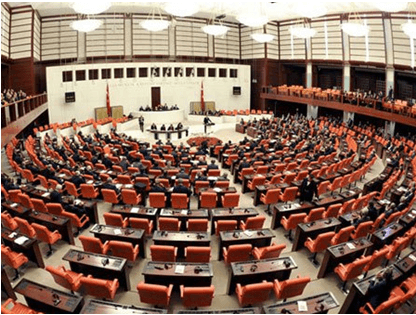
At first sight the reaction of the DISK might seem somewhat exaggerated. An overall 12 per cent increase of the minimum wage over the course of one year seems like a very decent improvement of labour conditions. However, a closer look is required here. Firstly, the inflation rate – after some years of single digit successes – rose to 10.5 per cent in 2011, more than doubling the forecasts of the Central Bank.[2] Hence, the real increase of the minimum wage is much lower. Secondly, a significant point put forward by the trade unions is that the increasing wealth generated by the continuously growing economy is still far from being fairly distributed. The inadequate reform of the minimum wage is characteristic for the way in which minimum wage earners are left without a share in the country’s rapid economic growth. The trade unions emphasize this point by referring to the recent hike of pensions for members of parliament, who saw their pensions rise by 25 per cent to a total of 6200 TL per month. Initially these pensions were even set to rise with 60 per cent to a total of 8000 TL, but public pressure limited the increase.[3]
This discrepancy between minimum wage labourers and a top layer reaping the countries increasing wealth illustrates the structural asymmetries of the post-1979 Turkish economy. The liberalisation of the labour market coupled with the military coup d’état of 1980 practically crushed organised labour, leaving this group in a very vulnerable position. Economic decisions were guided by profit imperatives, at the expense of labourers. Without an effective counterforce restraining the forces of competitive capital accumulation, labourers saw their real wages stagnate and even decline in the economic crises of 1994 and 2000/2001. This stood in sharp contrast with GDP growth which, except some (inter-)national crisis years, continued its rise throughout this period.[4]
The latest quarrel over minimum wages can be interpreted in light of the uneven distributive currents in the liberalised Turkish economy. The total size of accumulated wealth increases, but this wealth is shared asymmetrically up to a point where large parts of society are forced to live around subsistence level. As such, the 12 per cent hike in the minimum wage merely obscures the continuous structural disparity in the distribution of wealth.
Mirko Van Pampus
Please cite this article as follows:
Van Pampus, Mirko (March, 2012), “Recurrent Disappointment: Wage Inequality in Turkey?”, Vol. I, Issue 1, pp.10-11, Centre for Policy and Research on Turkey (ResearchTurkey), London: ResearchTurkey (http://researchturkey.org/dev/p=188)
238&nID =10350&NewsCatID=347 [Accessed 31 December 2011].