Home Blog Page 29

Azerbaijan Caught in the America- Iran Crisis: ‘A Close Neighbour’ or ‘a Distant Ally’?

3
Azerbaijan Caught in the America- Iran Crisis: ‘A Close Neighbour’ or ‘a Distant Ally’?

Recently, in the last few years, the level of tension between U.S. and Iran has risen and this issue has become a threat for both regional and international security. Naturally, increased level of tension has been reflected up on Azerbaijan as well. As U.S. would like Azerbaijan to clearly determine her policy against Iran, Iran on the other hand; pressures Azerbaijan into staying either neutral or siding with her against U.S. ambitions. Consequently such a tension has brought in both opportunities and threats for Azerbaijan. At this point what is crucial for Azerbaijan is to protect national interests while eliminating the threats. 

The U.S., in order to protect and continue its worldwide hegemony has used its economic, political and military power along with the threat of international terrorism to invade Iraq, thereby also strengthening its ownership of energy resources in the Middle East. Though it attacked Iraq on the grounds of a nuclear and chemical threat, when upon invading neither nuclear nor chemical weapons were found, the true reason behind the invasion became apparent[1]. Some sources suggest that the real reason for the U.S.’ invasion of Iraq is as the first step of their plan towards creating a ‘Great Middle East’. Though some claim that the real aim of the ‘Great Middle East’ project is to protect Israel’s power in the region[2], the U.S.’ strategy to carefully control its energy supply is the true reason behind this impetus.[3] At the same time, the U.S. refers to other governments in the region as the ‘Axis of Evil’, and threatens them as such. Although it has failed to completely solve the situation in Iraq and Afghanistan, the U.S is now accusing Iran of wanting to acquire nuclear weapons (not because it genuinely does), and has thereby chosen this country as its newest target in its ‘Great Middle East’ project.

Meanwhile, President Mahmoud Ahmadinejad of Iran and his colleagues continue to make irresponsible statements unfit for politicians, which are likely to increase the U.S.’ desire to invade Iran even further- much like Don Quixote waving his sword at the windmill. This bears significant similarity to Saddam Hussein’s statements directed at the U.S. preceding the latter’s invasion of Afghanistan. The fact that Iranian Naval Forces have arrested British soldiers in the contested zone, and have aired their ‘confessions’ on the television for the world’s perusal has not gained Iran any political advantage. It seems very likely that Iran itself is aware of this fact, but is using the matter to shape national public opinion for its own purposes. When in the last few months Iran captured the U.S.’ unmanned aerial reconnaissance device, we might conjecture that it was displaying a similar attitude.

The world press are offering a variety of possible situations regarding the subject of when the U.S. or Israel will attack Iran. However controversial it may seem, it is suggested that the U.S. will attack Iran before resolving the situation in Iraq, and hit military, commercial and other strategic targets using rockets with the capacity to aim at specific destinations. The U.S. may even ‘accidentally’ aim a few rockets at a few civilian targets just to see what the collective political and psychological atmosphere is among the Iranian people. By doing this, it can also easily find out whether the Iranian populace is in support of its government or not.

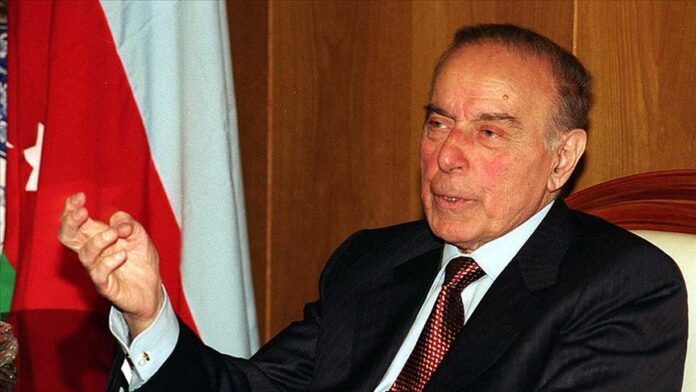
Due to the fact that the U.S. is operating a worldwide hegemony, any changes in its foreign, economic or security policies will naturally lead to significant outcomes on the international stage. The important thing for Azerbaijan is to use these changes to maximise its own national interests, and from this perspective the crisis between the U.S. and Iran will affect Azerbaijan too. This is especially because the U.S., in light of the country’s geopolitical position, is trying to make it take sides in the conflict. Since the late 1990’s, the U.S. has made it clear that it wishes to create military bases (consisting of mobile forces) in Azerbaijan[4], and the idea is one that occasionally crops up during meetings between the two sides. Azerbaijan’s late President Haydar Aliyev acted cautiously in this matter, and, in paying attention to the states which have the ability and means to change the political balance in the region (namely Russia, Iran and Turkey), he did not express a particular opinion on the matter.

The U.S.’ recent desire to instate an air-based defence system in one of the South Caucasian states has made Russia and Iran rather uncomfortable. Although it has not expressly named a particular country in this regard, the U.S. has now caused Azerbaijan and Georgia to come under close scrutiny from Russia and Iran.

The U.S. has not even hurried to express an opinion on the matter to Georgia, which it sees as its key ally in the region. And although Azerbaijan has been behaving in a more reserved and cautious fashion, the Russian and Armenian press have published a series of reports that suggest that it is a target. Such allegations are part and parcel of the psychological warfare waged by Russia and Armenia against Azerbaijan, and this is not without effect on the recently increasing tensions between Azerbaijan and Iran. It is in this atmosphere that Azerbaijan’s President Ilham Aliyev is trying to continue the politics of his predecessor, Haydar Aliyev. But the international security system is currently undergoing major change, and in the ongoing crisis between the U.S. and Iran (and particularly if the crisis deepens or military operations are embarked upon) the U.S. may well in light of the terrorist attack of 21st September, 2001, make announcements to world governments regarding its view of Iran, as either on the U.S.’ side or against it. Such an announcement would be of great significance particularly among Iran and its neighbouring states, by both threatening them and providing them with an opportunity for action. This would naturally place Azerbaijan in a rather difficult position. If the U.S. were to attack Iran, this would not concur with Azerbaijan’s strategic aims in the world’s current geopolitical climate. Any military operations in the region would pose a serious threat to Azerbaijan’s economic and political development. In this situation, the U.S.’ demand to use Azerbaijan’s air space and land in military operations against Iran would be the least desirable development.

The future conflict between the Arab and Kurdish population of Iraq which is predicted to arise when the U.S. withdraws, may make the situation even more complicated. If we look at the matter from a different perspective, however, it may be in the U.S’ favour to take military action against Iran when a conflict situation arises in the Middle East. If the governments which are asserting themselves in the region following the ‘Arab Spring’ which has been ongoing in the past year (namely those of Egypt and Syria), should suffer unrest in their internal political situation, this is likely to weaken their chances of forming an alliance against the U.S.

If we look at the most recent developments in the conflict between the U.S. and Iran, it seems more likely that the U.S.’ short to medium-term action will entail attacking strategically important Iranian targets with rockets, as opposed to sending military forces into the country. Wider military operations are currently not a likely development.

Azerbaijan should be careful in these matters, and make it clear that it agrees with the U.S. on certain subjects, but it must always aim not to take legal liability for this. It should follow the politics of ‘be patient and observe’ and pay close attention to the way in which the situation develops.

If it happens that the U.S. has decided or will decide to take any action against Iran, or start up military operations, Azerbaijan must act with the utmost caution and consider the possibility of allying itself with the U.S. from a large number of perspectives.

If the political balance in the region is to change, Azerbaijan must also take part in the creation of the new balance. It can stage an intervention only by involving itself in the process, not by staying outside of it. The most important thing, however, is for it to protect its own national interests in face of any adverse situations.

South Azerbaijan must consider all possibilities and means of gaining independence or autonomy. For now, the most important priority should be the unification of the South and North of the country- but this must occur within the necessary boundaries to ensure that it takes place in the medium to long term.

Azerbaijan may, on principle, see the U.S.’ demand for a military base in a positive light. Yet it must not allow the U.S. to use this base in military operations against Iran. If the U.S. builds military bases in Azerbaijan, this will necessarily prove provocative against Iran. In this situation, the pressures exerted by Iran and Russia on Azerbaijan may to some extent decrease. In other words, Azerbaijan must not allow the U.S. to attack Iran from within its own boundaries. This could have serious consequences for Azerbaijan (but the possibility that it might allow the U.S. to do so must not be made out of the question). There are important reasons why Azerbaijan should persuade the U.S. on this subject. First of all, Iran is Azerbaijan’s neighbour and no matter what the outcome, it will always be its neighbour.

There are around 30 million Azerbaijani Turks living in Iran and if the U.S. military operations should prove unsuccessful, the Iranian government could prove very dangerous to it.

The U.S. already has military bases in Afghanistan and Iraq, and it is important that military operations are conducted from this region, for the safety of both Azerbaijan and South Caucasian in general.

The Baku-Tiflis-Ceyhan oil pipeline will come under serious threat. Iran and Armenia may support terrorist groups against the region’s energy sources, oil and natural gas pipelines.

If the U.S, in spite of all these potential outcomes, should wish to create a military base in Azerbaijan, and use the country as its base for political, economic and military sanctions against Iran, Azerbaijan must make the following demands:

-The U.S. must withdraw its financial aid to the so-called Nagorno-Karabakh Republic which it grants in spite of claiming that it recognises the unity of Azerbaijan, or else channel this aid to Karabag through Azerbaijan

-The U.S. must remove all representatives of the so-called Nagorno-Karabakh Republic from its country

-The U.S. must wholly remove article 907 of the Freedom Support Act (an agreement made to promote countries that have recently gained independence) which bans aid to Azerbaijan

-It must either agree to also give aid to Azerbaijan as part of the Millenium Programme, or reduce or stop aid to Armenia in this context

– Bearing in mind the military alliance between Armenia and Russia, the U.S. must suspend its military aid to the former

– The U.S. must put an end to sanctions placed by Armenian expats on Azerbaijan in the Senate and Houses of Parliament in order that Azerbaijan can recover the land invaded by Armenia

-The U.S. must guarantee that it will not place any political, economic or military sanctions on Azerbaijan

-The U.S. must help Azerbaijan reduce pressures placed by Russia in order to start to take military action in the Nagorno-Karabakh Republic

-It must prevent Armenia from benefiting from the military force and ammunition of a future Russian military base in Armenia currently being discussed, and must prevent Russia from giving any military aid to Armenia

– The U.S must either help to lighten the European Union’s pressure and sanctions against Armenia, or take opposing measures

-It must put pressure on Armenia to withdraw from the occupied territories, and not grant it political, economic and financial aid if war should arise

-Once the U.S.’ military action against Iran has been concluded, the U.S. must reimburse Azerbaijan for the financial losses it incurs as a result of this action (including the influx of refugees etc.)

-The U.S. must agree not to take severe military action in the regions of Iran where the Azerbaijani Turkish population is concentrated

-Finally, the U.S. must allow South Azerbaijan to use its rights to self-determination once the Iranian regime has fallen.

These requirements are important factors in changing Azerbaijan’s future. Provided that Azerbaijan creates a successful and multi-faceted political plan, it can guarantee that it protects its national interests as much as possible during the U.S.-Iran crisis. In order to ensure this, it must consider international relations from every perspective, research the factors that are likely to threaten regional security, and finally imagine a variety of political and military solutions for this purpose.

Dr. Hatem Cabbarlı

Please cite this article as follows:

Cabbarlı, Hatem (April, 2012), “Azerbaijan Caught in the America- Iran Crisis: ‘A Close Neighbour’ or ‘a Distant Ally’?”, Vol. I, Issue 2,  pp.11-16,  Centre for Policy and Research on Turkey (ResearchTurkey), London: ResearchTurkey (http://researchturkey.org/p=537)


[1]  David Wolsh, Irak’ta Kitle İmha Silahı Yok. ABD Medyası Yalana Devam Ediyor, (In Turkish, translated by: Batur Özdinç), http://www.barikat-lar.de/dunya/kitleimha.htm, 17thMay 2003; EL Baradei: ‘‘Irak’ta Nükleer Silah Yok’’ (In Turkish), http://www.habervitrini.com/haber/el-baradei-irakta-nukleer-silah-yok-74888/, 7th March 2003.

[2] Hasan Şafak, Büyük Ortadoğu Projesi/İsrail’in İmparatorluk Planı, Profil Yayımcılık, Kasım 2006, Hasan Yurtsever, İsrail ve Büyük Ortadoğu Projesi, İstanbul, 2004 (In Turkish).

[3] Necdet A. Pamir, ‘‘Irak’a Müdahale ve Petrol Boyutu’’ (In Turkish), Jeopolitik Dergisi, 5th Edition, Winter 2003, p.43.

[4] “ABŞ Azerbaycanda baza qura biler” (In Azerbaijani) (U.S.A may have a military base in Azerbaijan) http://www.musavat.com,  20th December 2008 (In Turkish and Azerbaijani).
Second Istanbul International Human Security Conference

0

The Second Istanbul Human Security Conference is being organised jointly by Coventry University, Kadir Has University, Middle East Technical University and Abant İzzet Baysal University on 18-19 October 2012.
To present a paper at the conference, a 500 word abstract should be sent to the Conference General Coordinator ([email protected]) by 31 May 2012. The conference is also open to non-paper presenters and we would encourage participation from non-academic sectors such as civil society, private sector, national authorities and the media.
Istanbul Conference: Human Security: threats, risks and crises
Language of the conference: English and Turkish
Deadline of Abstract Submission: 31 May 2012
Notification of Acceptance: 29 June 2012
Full-paper Submission: 31 August 2012
For all relevant info on the Conference please visit:
http://wwwm.coventry.ac.uk/researchnet/CPRS/Turkey/conference/Pages/CPRSTurkey.aspx


Democracy and the Eurozone’s Fiscal Pact : Are They Compatible?

0

We would like to draw attention to the conference entitled ‘Democracy and the Eurozone’s Fiscal Pact:  Are They Compatible?’ jointly organised by the Federal Trust, the Konrad Adenauer Foundation and the Global Policy Institute.
Date: 16th April 2012,
Time: 6.00 pm – 8.00pm
Venue: National Liberal Club, Whitehall Place London SW1A 2HE, UK
Conference Agenda: The conference will be considering the implications of the recently agreed Fiscal Pact for democracy in Europe.  Critics of the Pact have claimed that it is essentially anti-democratic in character.  The Pact’s supporters have argued that the democratic rights of European voters are protected at both the national and European level.  This controversy will be at the centre of the conference on 16th April.
The speakers are:

Professor Vernon Bogdanor, Research Professor, King’s College London
Andreas Krautscheid, Association of German Banks (Bundesverband deutscher Banken)
Brendan Donnelly, Director of the Federal Trust
John Stevens, former MEP, will chair the discussion.
For applications, please reply to Alison Sutherland on [email protected]  or telephone +442073203045.


The Reality of Pozantı Prison: Unsolved Social Issue

0
The Reality of Pozantı Prison: Unsolved Social Issue

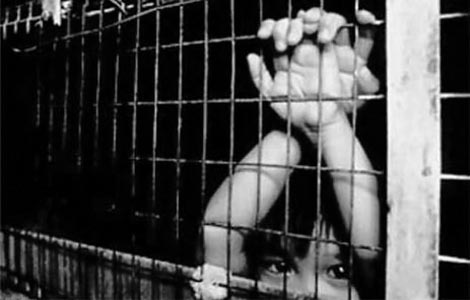
Nearly a month ago, Dicle News Agency (mostly covers news about Kurdish issue) wrote about the torture, rape and sexual harassment that Kurdish children were subjected to in their prison term by the prison staff in Pozantı, a town based in Adana, Southern Turkey. The events had happened a year ago and some of these children in Pozantı Prison had reported about the torture and sexual harassment to Human Rights Foundation (HRF). Afterwards, Turkish Ministry of Justice announced that children in Pozanti Prison would be transferred to the new prison called Sincan Children’s and Youth Prison in Sincan, Ankara. Kurdish children were in Pozantı Prison under the anti- terror law (TMK), which had been enacted in 1991 and then renewed in 2006. Children in Turkey who are in between ages of 12 to 18 have been constantly arrested under anti- terror law[1]. They have been in prison, treated as terrorists and interrogated as adults.[2]

What happened in Pozantı Prison is, in essence, a reflection of an old social issue. This social issue is about discrimination, social inequality and ‘othering’ policies of the state. The issue has a long history, but intensified in the 1980s. During this time, Kurdish women, children in Southeastern Turkey were subject to inhuman acts of brutality, sexual harassment and torture which were documented in the book entitled “Not as you know it (Bildiğin Gibi Değil)” by Rojin Candan Akın ve Funda Danışman, who conducted interviews with Kurdish children living in Southeastern Turkey in the nineties.[3] Incidents of torture and sexual harassment previously happened in Diyarbakir Prison in 1980s and they are now happening in Pozantı Prison. History repeats itself as we witness similar issues occurring many times in different places. Many Kurdish children, women and men have lost their lives; have been deported from their villages and have had to migrate to another city and even to another country since 1980.  In reality, the inhuman acts of brutality, discrimination, social inequalities and the forced assimilation policies of the state began many years ago. Human rights have been violated under ‘Kurdish issue’ and ‘Anti-terror Law’ since 1980s.  Therefore, living in Turkey became more difficult for many Kurds.

Children in Pozantı Prison have had similar human rights violations. According to Zeynep Kuriş, a reporter at Dicle News Agency, children who came out from Pozantı Prison have found difficult to go back to normal life after their traumatic experiences such as sexual violence, sexual abuse and torture.[4] Children interviewed by Kuriş claimed that their friends have been raped and beaten up by judicial prisoners. According to these children, prisoners said that they were terrorists and had to kiss the Turkish flag. If they did not kiss the flag, they were beaten up, exposed to sexual abuse and violence. They also claimed that the prison authorities tried to cover up the issue. [5] Such testimony was also supported by the findings of a workshop called ‘Social Trauma’ organised by Turkey Human Rights Foundation (TİHV). After the workshop, Ishtar Mediterranean Municipality Women’s Counseling Center organised activities with the children who came out from Pozantı prison in order to help them to cope up with social trauma. A research report which was the output of those activities included observations regarding the situation of the children: police officers and police stations have became objects of fear and hate for those children. Children were introverted and intimidated; they were scared of being criticised and silenced. They also had difficulties in expressing themselves both in Turkish and Kurdish languages. [6]

The experiences of children in Pozantı Prison tell what it means to be a convicted child, the limits of what one person can do to another. They show how power can be abused, how far violence can go and the implications of being both Kurdish and child in Turkey. Without any radical social developments, many children, women and men will continue to die; they will be injured and tortured in Turkey. If we keep on remaining silent, human rights will be violated in different places and in even harsher ways.

Doğuş Şimşek

Please cite this article as follows:

Şimşek, Doğuş (April, 2012), “The Reality of Pozantı Prison: Unsolved Social Issue”, Vol. I, Issue 2,  pp.6-8,  Centre for Policy and Research on Turkey (ResearchTurkey), London: ResearchTurkey (http://researchturkey.org/p=479)

The Ankara Conference on Peacebuilding & Conflict Resolution

0

We would like draw attention to the conference entitled “The Ankara Conference on Peacebuilding & Conflict Resolution: Using Cultural Diplomacy as a Tool to Build Sustainable Peace” organized by the Institute for Cultural Diplomacy.

Date: April 17-19, 2012
Venue: Ministry of Finance of Turkey and TOBB University of Economics & Technology, Ankara, Turkey

Conference Agenda: Culture can have a strong impact on societies, and should be taken into account as a factor in change and new developments in the national as well as international systems. In the context of the Arab Spring, many nations in the Mediterranean region are reviewing different models for how culture and politics can be balanced in order to enable peace building and conflict resolution. Since the model of Turkey is often reviewed in these discussions and debates, Ankara will serve as a fascinating context for this conference. The conference therefore will look in detail at the major conflicts and transitions taking place across the Mediterranean today (and since the beginning of the Arab Spring), from disputes amongst communities at the local level to international disputes, reflecting on the role of cultural diplomacy as a tool for conflict resolution.

The Conference is under the Patronage of ICD YLF President the Hon. Yasar Yakis, Former Minister of Foreign Affairs of Turkey.

The Conference is open to applications from academics, diplomatic and political representatives, civil society practitioners, journalists, young professionals and students and other individuals with an interest in the Mediterranean, international relations, cultural studies, and global politics. The participation cost for the program is 195 Euros. If offered a place in the conference, applicants are then required to transfer the participation cost to reserve their position.

For applications, please visit http://www.culturaldiplomacy.org/gphr/index.php?en_acop-2012_applicationform


GLODEM Foreign Policy Conference

0

We would like draw attention to the conference entitled “Turkish American Relations in A Volatile Region – Challenges and Opportunities”.
Date: Thursday 29 March 2012
Venue: Founders Hall, Koc University, Istanbul-TURKEY
Conference Programme:
9.30-10:00 Registration
10:00-10:15 Welcoming Remarks
Prof. Umran Inan
President,Koç University
10:15-11:00 Keynote Speaker
Ambassador Francis Ricciardone
The US Ambassador to the Republic of Turkey
11:15-12:00 Keynote Speaker
Suat Kiniklioglu
Director, Center for Strategic Communication (STRATIM), Former Member of Parliament
‘AKP Turkey and the United States: Partners in No One’s World’
12:00-13:30 LUNCH
13:30- 15:30 Panel I
‘Turkey-US and the Changing Dynamics of the Western Alliance
Panel’
Chair: Prof. Ziya Önis, Director of GLODEM, Koç University
Joost Lagendijk, Istanbul Policy Center Turkey
The US and the EU on Iran: standing united or falling divided?
Tarik Oguzlu, Antalya International University
Testing the strength of Turkish-American strategic relationship through NATO: Convergence or divergence within the Alliance?
Tommy Steiner, Institute for Strategy and Policy, IDC Herzliya
Turkey-US and the Changing Dynamics of the Western Alliance: An Israeli Perspective
William Hale, London SOAS, Emeritus
Turkish-Israeli relations and their impact on Turkey’s partnership with Washington
Mustafa Kibaroglu, Okan University
Turkey’s place in the Missile Shield Project
15:45-17:15 Panel II
Turkey-US-Middle East Triangle in the Context of the Arab Spring
Panel Chair: Suhnaz Yilmaz, Koç University
Nur Bilge Criss, Bilkent University
US-Turkey-Middle East: Yesterday and Today
Meliha Altunisik, Middle East Tachnical University
Arab Uprisings and Regional Power Constellations: Impact on Turkey-US
Relations
Lenore Martin, Emmanuel College and Harvard University
Recalibrating the US-Turkish Relationship in light of the Arab Spring
Kemal Kirisci, Boðaziçi University
The Arab Awakening and Completing Turkey’s regional integration: Challenges and Opportunities
17:30-18:30 Keynote Speaker
Prof. Sabri Sayari, Bahçeþehir University
‘New Directions in U.S-Turkey Relations’
19:30 Conference Dinner
The conference will be free and open to the public.
RSVP:[email protected]

Public Lecture by Professor Paul Gilroy : Zombie Multiculturalism and The Race Politics of Citizenship in Britain

0

We would like to draw your attention to the public lecture entitled “My Britain’s Fuck All: zombie multiculturalism and the race politics of citizenship”.
In a re-launch for the journal Identities: global studies in culture and power, Professor Gilroy reflects on contemporary issues and challenges around identity, multiculturalism and race in Britain.
Date: Wednesday 30 May 2012
Time: 6.30-8pm
Venue: Sheikh Zayed Theatre, New Academic Building, LSE
Speaker: Professor Paul Gilroy
Chair: Dr Claire Alexander

Competition on Doctoral Dissertations on Contemporary Turkey

0

We would like to draw your attention to the competition for completed doctoral dissertations on contemporary Turkey, which is organised by The London School of Economics and Political Science’s (LSE) Chair in Contemporary Turkish Studies.
According to the announcement by the Chair, the dissertations can deal with any aspect (politics, economy, society, international relations, culture, etc.) of contemporary Turkey defined as “Turkey since the end of World War II”.  Part of the dissertations can deal with the earlier period.
Comparative doctoral dissertations which include contemporary Turkey as part of a two or three-country study are also eligible.
For more information visit
http://www2.lse.ac.uk/europeanInstitute/research/ContemporaryTurkishStudies/Doctoral%20Dissertation%20Competition.aspx


Editor-in-Chief’s Inaugural Note

0
Editor-in-Chief’s Inaugural Note Research Turkey serves as a virtual forum for sharing information, analysis and debates relevant for enhancing our understanding of contemporary Turkey and reflecting on ways to develop realistic and creative tools of policy-making in diverse areas. The organisation welcomes various types of submission including short notes, commentaries, reviews, interviews as well as working research and discussion papers on media, politics and economics about Turkey. But it also invites pieces on other countries and the global world from which Turkey cannot be severed. We developed this website with a core group of scholars doing research on Turkey in […]
To access this post, you must purchase Annual Membership.

Combating Violence against Women in Turkey: Where are We on the Road?

0
Combating Violence against Women in Turkey: Where are We on the Road?

“Violence against women is a manifestation of the historically unequal power relations between men and women, which have led to domination over and discrimination against women by men and to the prevention of women’s full advancement”

The Beijing Platform for Action (1995),

The world, as it is, is a place where every day thousands of women are killed, raped and assaulted by men. Turkey, as a patriarchal society with unequal gender relations supported by both deeply-rooted social and cultural norms as well as economic problems is no exception to this rule.

In 2011 alone, men killed 259 women and raped 118 women in Turkey.[1] According to a study conducted for the Turkish Institution of Statistics three years ago, the percentage of women who were the victims of physical violence by their husbands or partners in their lifetime is 39.3 per cent. While in low-wealth group this percentage rises to 47 per cent, it is still no less than 25 per cent among women in high-wealth group.[2] This means at least one in every four women has been subjected to and suffered from their partners’ violence at some point in their lives.

Table 1: Domestic Violence against women[3]

Life time

Last 12 months

Wealth

Low

47

13.7

Medium

38.9

8.9

High

26.7

5.5

Region

West

33

6.8

South

41.7

11.9

Interior

44.7

10.9

North

38.9

7.3

East

48.5

17.7

Work

None

38.7

10.3

Working

40.7

8.9

TURKEY

39.3

9.9

In the last few years, Turkish cabinet, which is mostly composed of men,[4] undertook important steps to reduce violence against women in Turkey. In 2004, the traditional provision that rape can go unpunished if the perpetrator marries the victim was abolished.[5] Recently, in line with the conventions of the Council of Europe, the government established a National Action Plan for combating violence against women. Accordingly, National Institution of Statistics started to compile regional statistics for cases of violence against women. There is also a serious project supported by the Council of Europe to increase the number of shelters and improve their quality. In the meantime, however, the name of the Ministry of Women, Family and Social Services was converted into the Ministry of Family and Social Policy. The Ministry, in spite of all the pressures from women’s associations, continued to truncate the reform proposals in line with the conservative stance of the Justice and Development Party in government. The legislative changes consistently fell short of addressing the deep-rooted causes of male violence against women and accordingly failed and continue to fail bringing about a real change in the implementation of law.

A recent decision by Turkey’s Supreme Court of Appeals to lower the sentences imposed on a group of men found guilty of raping a 13-year-old girl because she was deemed to have “consented” to the acts is the most obvious evidence for the problems in the legal process. The rapists, which included local administrators and a gendarmerie captain, were given between one to slightly more than four years in jail due to good behavior in the courtroom and the judges’ finding that she willingly consented to the abuse. The law also failed to protect women before they are subject to violence. As in the case of Müzeyyen Yanık, who applied to the court several times for protection against her husband, restraining orders for perpetrators of violence are usually issued only after a violent act occurs. Yanık was assigned protection three months after she was killed.[6]

Recently, a draft was prepared by 230 women organizations and submitted to the Ministery, in order to address the problems in the “family protection law” (4320 sayılı ailenin korunması hakkında kanun). The modifications made by the Ministry on the draft proposal point to the limits of the political and bureaucratic willingness to combat with violence against women.[7] Various important articles in the draft proposal were removed by the Ministry before it was submitted to the Prime Minister. While in the draft, an article emphasized that the protective services should be provided for everybody, regardless of their ethnicity, age, social and economic status; in the final version this article was removed. Another article erased from the draft was about the introduction of appropriate training programs for the officials such as the judges and the prosecutors in the family courts, the police force, and social workers. Training for social workers is quite widespread in the European Council member countries; only Azerbaijan, Ireland, Monaco and Turkey are reported not to offer such training, either in initial education or in further training.[8] Furthermore, there are no services with specifically trained staff for women who are victims of sexual assault.[9] Existence of such services accessible to all women in sufficiently wide geographical distribution and free of charge is one of the priorities of the European Council. On the grounds of lack of sufficient funds the article that requires making necessary changes to enable monitoring of the implementation process, which would allow civil society groups to inspect social services provided for the victims, was also removed from the draft.

In addition to all these serious shortcomings in the legislative sphere, the attitudes of the government officials and bureaucrats reflect an equally important obstacle in the development of women’s rights in Turkey. The government and bureaucratic cadres seem to support and reproduce a patriarchal discourse in which value of women is primarily defined within family, emphasizing their role primarily as wives and mothers, instead of their rights as individuals. In line with the attempts of the government to preserve and promote conservatism in the society, AKP government has continued to support the idea that women and men are not equal by creation, and women are therefore responsible for housework and motherhood.[10] One of the first acts of the minister was to sign a protocol with the Directorate of Religious Affairs (Diyanet İşleri Başkanlığı) in order to  develop education, counseling, and social services models to address problems in the family. This act reflects government’s general attitude towards social conflict: The problems of power should be reconciled through religious culture in which sacredness of family has been placed above women’s rights to life and dignity. At the same time, social, economic, and cultural underpinnings of gender inequality have been ignored.

The government does not acknowledge women’s and men’s unequal access to economic resources as an important source of unequal power relations between men and women. According to a study by Economic Forum in 2006, Turkey ranks 105 in 115 countries according to a gender equality index.[11] According to the Turkish Statistical Institute’s data, 80 per cent of women, twice as much as the percentage of men, do not possess any real estate or vehicle. Women’s participation in the labor force is less than 25 per cent.[12]As long as women do not have sufficient income to support themselves and their children, access to social services, and access to psychological support, they will not able to leave and defend themselves against their abusers. Not only these problems of gender inequality are not effectively addressed, but also the realm of reproduction and marital preferences are considered issues of national power and political design. The Prime Minister, Tayyip Erdoğan easily makes statements about how many children families should have and how one shall not choose to remain single. The Minister of Family and Social Services, furthermore, supports explicitly the prime minister’s call for couples to have at least three children against an aging population. She maintains that the Ministry will “implement measures to reduce the workload on women, and at the same time… to increase both our young population and its quality.”[13] One wonders how women’s participation in the labor force will be supported with such diverse priorities.

The decisions of the National Board of Radio and Television (RTÜK) is another proof that the high bureaucrats and politicians are far from able and willing to understand broader cultural and social context in which violence against women are justified. Broadcasting of an add prepared by the famous women’s organization against violence (Mor Çatı) for the television was prevented by RTÜK on the grounds that the add was against “social gender equality” and represented a “generalization.” The board regarded a statement about how many women were killed by men a “generalization,” indicating that men in power are not able or willing to understand the nature of male violence against women: “Gender-based violence against women is violence that is directed against a woman because she is a woman or that affects women disproportionately.”[14] A recent event further demonstrated inability of the government to acknowledge the importance of cultural discourse in reproducing violence against women. The director of the national institution of television and radio (TRT), İbrahim Şahin, called a women singer of Kurdish origin, Rojin, a lascivious woman (aşüfte) in a press meeting and was still able to preserve his office.

Although the picture is gloomy, there are more than 70 women’s groups working actively in order to influence the reform process. The ministry and women’s groups will have a new meeting on January 12 . It is our hope that the Ministry will be more willing to address cultural and economic factors which support patriarchal values legitimizing violence against women and take necessary steps to initiate much needed legal reforms.

Seven Ağır

Please cite this article as follows:

Ağır, Seven (March, 2012), “Combating Violence against Women in Turkey: Where are We on the Road?”, Vol. I, Issue 1,  pp.15-20,  Centre for Policy and Research on Turkey (ResearchTurkey), London: ResearchTurkey (http://researchturkey.org/p=198)


[2] İstatistiklerle Kadın, Women in Statistics 2010, TÜİK Yayınları, 2010.

[3] For more detailed information on statistical categories presented in the above table, please see http://www.tuik.gov.tr/kad%C4%B1nasiddetdagitim/aciklama.zul.

[4] There is only one women minister in Turkey’s cabinet, Fatma Şahin, who is heading the Ministery of Family and Social Services.

[5] CDEG (2010) Protecting women against violence Analytical study of the results of the third round of monitoring the implementation of Recommendation Rec (2002)5 on the protection of women against violence in Council of Europe member state:

http://www.coe.int/t/dghl/standardsetting/equality/03themes/violence-against-women/cdeg_2010_12en.pdf

[6] “Koruma İsteyen Kadına Öldükten Sonra Koruma”, http://www.parantezgazetesi.com/haber_detay.asp?haber=8547.

[7] This account is based on a report by Çiğdem Hacısoftaoğlu (Mor Çatı Women Sığınma Foundation) on the changes in the legal draft from September 11 until December 31, 2011.

[10] Sibel Özbudun, November 5, 2011.

[11] Şahin Alpay, “AKP Kadın Haklarını Tehdit Ediyormuş”, June 19, 2007.

[13] “Government determined to protect women from domestic violence”, 8/12/2012 http://www.todayszaman.com/news-268003-.html

[14] “European Women’s Lobby Position Paper Towards a Europe Free from All Forms of Male Violence against Women,” December 2010, http://www.malostratos.org/images/pdf/011/011%20position%20paper.pdf refers to  The General Recommendation No. 19 of the Committee of the Convention on the Elimination of All forms of Discrimination against Women (CEDAW)