Home Blog Page 4

CALL FOR PAPERS: Protest and Movement Research on Turkey: Performances, Representations, Rituals

0

CALL FOR PAPERS:
Protest and Movement Research on Turkey: Performances, Representations, Rituals

Location: Universty of Hamburg

Date: 14-17 September, 2016

Organisation: Dr. Berna Pekesen

Deadline for the proposals: March 1, 2016

The panel attempts to gather various perspectives and disciplines researching on protest and social movements on Turkey since the 1960s (including labor, leftist, women´s, youth and Gezi Park movement) or other related and comparative works and subjects. Original work and case studies are most welcome. Since historical movement research on Turkey is rather an under-researched field, the panel aims to discuss both the empirical analysis as well as theoretical reflection. This includes reflecting upon the outcomes on similar works on global currents throughout history. What can we learn from international research and what explanatory force might these have on our own studies?

The panel will be conducted in German. English presentations are also welcome. Each paper will be given 20 minutes for presentation. Please submit your abstract (300-500 words) in German or English including a short CV by email to [email protected]

Details about the registration for the Turkologentag 2016 and for other information: http://turkologentag2016.org/

Interview with Sedef Çakmak from the CHP: November 1st Elections from the Perspective of an LGBTI Activist

0
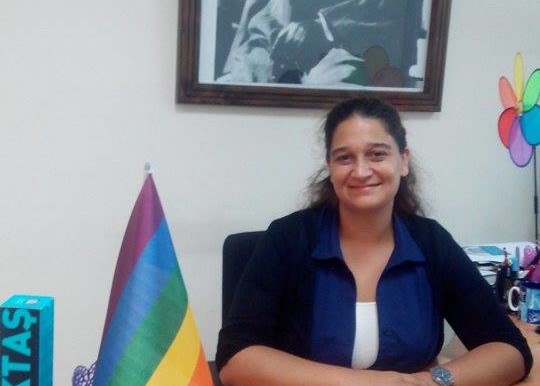
Interview with Sedef Çakmak from the CHP: November 1st Elections from the Perspective of an LGBTI Activist As the Centre for Policy and Research on Turkey (Research Turkey), we have conducted an interview with Sedef Çakmak, who is the Cumhuriyet Halk Partisi (Republican People’s Party) (CHP) City Council member and who combats against sexism and all other forms of discrimination in the Department of Social Equality of the Municipality of Beşiktaş. Sedef Çakmak laid out the increasing events of terror, the failure of the coalition process and the last elections from the CHP point of view. She also clarified the […]
To access this post, you must purchase Annual Membership.

Interview with Professor Dawn Chatty: The Situation of Syrian Refugees in the Neighbouring Countries

0
Interview with Professor Dawn Chatty: The Situation of Syrian Refugees in the Neighbouring Countries Syrian Civil War made many to escape the violence; more than four million refugees have left the country during the course of the war. Neighbouring countries like Turkey, Lebanon, Jordan, and Iraq still have the majority of the Syrian refugees while thousands also ended up in the Caucasus, the Persian Gulf, North Africa and Europe. As Centre for Policy and Research on Turkey (Research Turkey), we conducted an interview with Professor Dawn Chatty about the situation of Syrian refugees in Turkey, Lebanon, Jordan, and Iraq as […]
To access this post, you must purchase Annual Membership.

Interview with Professor Elias Papaioannou: Understanding Stormy Greek Political Economy

0
Interview with Professor Elias Papaioannou: Understanding Stormy Greek Political Economy Centre for Policy and Research on Turkey (Research Turkey) conducted a crucial interview with Professor Elias Papaioannou on last turbulent economic and political year of Greece. The global financial crisis of the late 2000s hit Greece particularly hard, as the legacy of high public spending and widespread tax evasion combined with the credit crunch and the resulting recession to leave the country with a crippling debt burden. Six years of recession beginning in 2008 reduced the economy by about a quarter of its previous size and drove unemployment to record […]
To access this post, you must purchase Annual Membership.

CALL FOR WORKSHOP: VIII Italian Doctoral Workshop in Empirical Economics

0

We are pleased to invite you to submit your medium or advanced stage paper to the VIII Italian Doctoral Workshop in Empirical Economics, which will take place at the Collegio Carlo Alberto – Moncalieri (Turin, Italy) in December 17th – 18th, 2015.

The aim of the workshop is to offer a stimulating environment where PhD students can present their papers and receive feedback and useful comments. Each paper will be discussed by a professor from the Faculty of Collegio Carlo Alberto and University of Turin.

All papers in Empirical Economics will be considered. However, submissions of papers on the following areas of research are particularly encouraged:

  • Labour Economics
  • Household Economics
  • Health Economics
  • Crime Economics
  • Political Economics
  • Industrial Organization

Applications

An extended abstract of approximately 500 words must be submitted by mail and in PDF format to [email protected]

The extended abstract must be written in English and it must contain all the relevant information about the corresponding author. Submissions must be completed with the inclusion of a CV of the corresponding author.

Selected applicants will be asked to send a full version of the paper shortly after the notification of acceptance. All presentations and discussions will be held in English.

Deadline

The deadline for submitting the extended abstract is October 25th, 2015

Notification of acceptance will be communicated by November 15th, 2015

Selected applicants will be asked to send a full version of the paper by November 20th, 2015

Further Information

For any additional information about the workshop visit http://www.sde.unito.it/activities/workshops.htm

Do not hesitate to contact us at: [email protected]

CALL FOR PAPERS: The Multicultural Question in a Mobile World – European University Institute Florence

0

CALL FOR PAPERS: The Multicultural Question in a Mobile World – European University Institute Florence

The last 25 years have been characterised by intensive debates on whether multiculturalism is an appropriate normative and political paradigm for integrating culturally diverse populations in liberal and democratic societies. No firm answer has been given to this question even if a lot of ink was spent to argue both in favour and against multiculturalism. In the meantime though, the nature of migration has changed. Multicultural citizenship was predicated on the assumption that migrants would settle in the destination countries and would also sooner rather than later become citizens of those countries. But things have developed otherwise.

Global migration flows have not only increased in the last 25 years but also diversified. We are witnessing a multiplication of destination countries (which for instance include southern Europe, but also Turkey, Russia, the Gulf States, several African countries), a multiplication of origin countries (more and more developing countries are integrated in the global economy in international trade and in the global migration flows), and a higher level of mobility and connectivity. Migrants appear to be more transnational than ever: they keep close connections to home through IT and cheaper transport, while migration becomes less of a life time decision. It becomes for many a rite of passage, a period in the life, that is followed by return or by onwards migration to a third country. While patters of such mobility differ greatly between countries, and among individuals/households (in line with levels of skills, employment opportunities, visa requirements and life stages of the migrant and her family), they are becoming a new structural feature of international migration. The settlement and citizenship package is no longer to be taken for granted as the migrant’s plan and aim. And integration policies and philosophies have to come to terms with higher and more complex mobility and super-diverse migrant populations.

Rather than debating whether multiculturalism has failed or has partially succeeded or needs to be re-examined, we are proposing in this conference to consider how the multicultural question needs to be rethought in a framework of higher connectivity, higher mobility and less settlement and perhaps not a citizenship acquisition perspective.

The conference includes five Plenary Sessions outlined below and Six Parallel Sessions. We are inviting paper submissions for the Parallel Sessions addressing the conference rationale.

Submissions

Proposals for papers should contain a title, a one page abstract (including theoretical framework, methodology and expected findings) and a short biographical note (400 words).

Proposals should be uploaded at http://www.rscas.org/registration_form/?p=2001

Deadline

15 October 2015

Further Information

Accepted participants will be notified by 30 November.

Those selected to participate in the conference will need to cover their travel and accommodation expenses. There is no fee for this conference and meals and coffee breaks are covered by the organisers.

CALL FOR PAPERS: Transnational Religious Movements, Dialogue and Economic Development Conference: The Hizmet Movement in Comparative Perspective – University of Turin

0

CALL FOR PAPERS: Transnational Religious Movements, Dialogue and Economic Development Conference: The Hizmet Movement in Comparative Perspective – University of Turin

Transnational religious actors, and civil society faith-based movements are a well-established reality of the contemporary world, which is however still understudied especially at the comparative level. Only recently, with the rise of transnational radical Islam, have religious actors started to be regarded as influencing the international and global systems, sparking a significant scholarly production. As a consequence, much of the recent literature in this sub-field has focused on pro-conflict radical and terrorist networks. However, in today’s Europe there are notable cases of transnational faith-based movements which are engaged in education and dialogue, as well as in the economic field, with proposals for interesting new entrepreneurial models merging free-trade principles and social/moral concerns. This conference aims at contributing to a better comprehension of this phenomenon.

Its first day will focus on a relevant example of dialogue-oriented group: the Hizmet movement, inspired by the Turkish preacher Fethullah Gülen, which is portrayed by many as an example of modern, ‘enlightened’ Islam, oriented towards dialogue and co-operation rather than conflict. In recent years the movement has been the focus of extensive international scholarship – both appreciative and critical – dealing with its founder and his teachings, its schools in Turkey and abroad, its relations with Turkish politics and society and the role of women therein. Although many interesting works exist about its development in countries other than Turkey, so far few coherent efforts have been made to understand its development at the transnational level. This is true particularly in relation to comparative works which can highlight the common points and the differences between the movement and other religious groups, either within Islam or belonging to other religious traditions. This conference aims at filling that gap by including papers addressing the Hizmet movement in its transnational perspective: either by analysing its activities, development and institutionalisation in different countries, or by comparing it to other dialogue-oriented religious movements. Different disciplinary perspectives, from political science to sociology, anthropology and law, as well as different methodological perspectives, are welcome.

The second day of the conference will address more broadly the field of contemporary religious movements by focusing on the economic and entrepreneurial activities carried out by faith-based groups and the economic models which inspired them. The above-mentioned Hizmet movement is an example of a religious movement successfully engaged in several entrepreneurial activities, particularly in the education and media fields. However, religion-related entrepreneurship is widespread also in the Christian world, as shown for example by the Focolare movement, which inspired the ‘communion’ or ‘civil’ economy, marked by a strong solidaristic orientation within the free-market economy. Moreover, some ‘new’ religious movements which are not part of ‘traditional’ religions also propose interesting entrepreneurial activities in a neo-communitarian perspective strongly marked by spiritual values. This section of the conference welcomes contributions about the relationship between religious movements and economy, both through single-case studies and broader comparative and theoretical works.

Submissions

Prospective paper givers can send a proposal of up to 250 words, as well as any enquiry, to the scientific coordinator of the conference, Dr. Luca Ozzano, at the address: [email protected], and to the organization assistant, Dr. Chiara Maritato, at the address: [email protected].

Deadline

The deadline for paper proposals is 15 September 2015

Further Information

The conference is funded by the University of Turin and the Compagnia di SanPaoloFoundation, and co-sponsored by the ‘Religion and Politics’ standing group of the European Consortium for Political Research (ECPR), the IPSA RC43 ‘Religion and Politics’ Research Group and the Istituto Tevere based in Rome. It will take place on 10-11 December 2015 and will be hosted by the Department of Cultures, Politics and Society of the University of Turin (Italy) at the Luigi Einaudi Campus (CLE).

CALL FOR PAPERS: Special issue on ‘Protest and Activism With(out) Organisation’ – International Journal of Sociology and Social Policy

0

CALL FOR PAPERS: Special issue on ‘Protest and Activism With(out) Organisation’ – International Journal of Sociology and Social Policy

The economic, political, social, cultural and environmental crises of our time continue to provoke and inspire a remarkable range of social movements into existence. These multiple forms of protest and activism express and embody a politics of hope, captured in alternative narratives that speak of post-crisis possibilities, and demonstrated through the physicality of collective and popular resistance.

In this context, the Special Issue of The International Journal of Sociology and Social Policy is particularly interested in interrogating the socio-spatial forms of ‘organisation’, with which to better understand how this informs different expressions of, and relationships between, protest and activism across time and space. When taking a closer look at the organisational nature across these activist landscapes for example, it becomes apparent that resistance led through membership-based, co-ordinated hierarchical organisations (e.g. Trade Unions, NGOs) still retains an important visibility and influence in agitating for change. However, in addition perhaps, and in some meaningful way beyond these more traditional forms of organised resistance, there exists important diverse and spontaneous forms of everyday activism – perhaps, consistent with a more horizontal and anarchistic praxis of self-organisation.

Questioning the relationship between activism with – and without – organisation throws up some interesting and important inter-disciplinary questions that this Special Issue would particularly like to address. At the most fundamental level it gives us cause to interrogate the very idea of activism: where does activism begin and end? Who gets to be an activist? Seeking to engage a more nuanced understanding of the differences between organized and unorganized forms of activism provokes the question how informal experiences of activism encourage engagement with more organised forms (and vice versa)? Is the relationship between the two antagonistic, competitive or complementary to each other? How are organisational forms of activism dictated to by specific social and spatial temporalities, particularly at a time of crisis? Indeed in these (post)modern times is it meaningful to frame the organisation of activism within a binary relationship (either formal or informal)? Rather should we be encouraged to consider them on an organisational spectrum of difference (more formal, less formal and so on)? If desirable, how can a more informed complex understanding of the organisational natures of activism allow us to better recognise, value, strengthen and link up different types of patterns of activism and resistance?

To these ends, we welcome papers of up to 8000 words addressing empirical or theoretical aspects focused on organisation of activism and protest, past and present, situated in any part of the world and at any scale.

Submissions

Please send 250-300 word abstracts directly to the Guest Editors, Richard White ([email protected])  and Tricia Wood ([email protected] )

Deadline

Abstracts should be submited by 15 August 2015

Further Information

More information about The International Journal of Sociology and Social Policy, as well as further details regarding submission, can be found at:

http://www.emeraldgrouppublishing.com/products/journals/journals.htm?id=ijssp

Istanbul Households Archives, 1880-1940: Census Data and Family History Documents

0
Istanbul Households Archives, 1880-1940: Census Data and Family History Documents

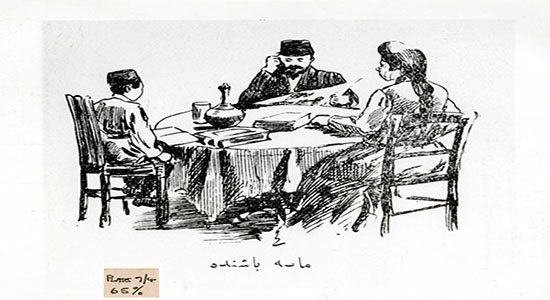
We would like to inform you about a publication of new. Two separate data sets Mosaic (www.censusmosaic.org), holding quantitative data, and SALT research (www.saltresearch.org), holding census and family history documents from an interdisciplinary research project undertaken at Boğaziçi University (Istanbul) during the 1980s on family, household and population in Istanbul during the late Ottoman and early republican periods are now open to public use online. The project was the first systematic historical study of family and population in Turkey and the Middle East, combining the methods and approaches of social anthropology, historical demography and social history. The research culminated in the publication of Duben and Behar, Istanbul Households: Marriage, Family and Fertility 1880-1950, Cambridge University Press, 1991 and its Turkish editions, İstanbul Haneleri: Evlilik, Aile eve Doğurganlık 1880-1940, İletişim Yayınları, 1996 and Boğaziçi Ünivesitesi Yayınları, 2013, as well as various scholarly papers on the subject.

1. Mosaic census records: Ottoman census data for Istanbul, 1885 (1300h) and 1907 (1322h)

The original five percent samples of Ottoman census data for the permanent Muslim population of Istanbul for 1300h (ca. 1885) and 1322h (ca. 1907) are available from the Mosaic archive of historical census data for Europe and beyond. All records in the archive are structured in the same format so that historical comparisons can be made across time and space. More specifically, these data bases allow those researching late Ottoman society to undertake comparisons with non-Ottoman data bases and vice versa.

For more information about Mosaic see: Mikołaj Szołtysek and Siegfried Gruber, “Mosaic: recovering surviving census records and reconstructing the familial history of Europe” The History of the Family, available online at http://dx.doi.org/10.1080/1081602X.2015.1006655

The address for access is www.censusmosaic.org . To access the Istanbul data sets one must register, then click “Data,” followed by “Mosaic Data Files,” and then under “Harmonized Data Sets,” scroll down to Turkey where the 1885 (1300h) and 1907 (1322h) census data sets can be found. Information about use and various caveats is provided.

2. Istanbul Households archive at SALT, Istanbul

The SALT archives located at SALT Galata, Istanbul contain a broad array of materials utilized during the research and writing of Istanbul Households, all accessible online. The complete set of original handwritten transcription sheets used during the early 1980s for recording census data and vital events on site from the official rosters for the permanent Muslim population of Istanbul for 1300h (ca. 1885) and 1322h (ca. 1907)for five central districts of Istanbul are available here. In addition to the transcription sheets various documents containing descriptions of principles, rules, definitions and other guidelines for transcription and data use as well as instructions for recording, transcribing and coding for the censuses and records of vital events are also available. Lists of birthplaces, occupations, titles and status-markers of individuals recorded are also available, as are numerous family photographs of the period from 1880-1940. Transcriptions of selected Ottoman court records relating to marriage, divorce, and inheritance utilized during the research period are also available. These resources provide a part of the “back story” of this research project that took nearly ten years to complete. Summaries of hundreds of newspaper and magazine articles from the period on population, family, marriage, women, childcare, domestic life and related topics will be available shortly, as will sociological and demographic analyses of major novels of the period. Information about the Istanbul Households collection, its coverage, use, meaning, and limitations is available from the archive. General information about SALT and the archives can be obtained at www.saltresearch.org.

Access to the SALT Istanbul Households archive is available directly by clicking: https://www.archives.saltresearch.org/R/ML2IGQI3E2R7LGGG2P5XH8ED7VVEGSA1IDXEREVJPLB1G2C4JY-01582?func=collections&collection_id=3241

We request that researchers properly acknowledge and cite any materials used from either archive.

Interview with Professor Erinç Yeldan: Understanding Current Economic Discussions in Turkey

0
Interview with Professor Erinç Yeldan: Understanding Current Economic Discussions in Turkey Assessment of the Turkey’s Turbulent Year Series – III Centre for Policy and Research on Turkey (Research Turkey) conducted a long interview with Professor Erinç Yeldan about economic dynamics of Turkey. Recently, there have been some discussions between the government authorities of Adalet ve Kalkınma Partisi(Justice and Development Party) (AKP) and the executives of Central Bank, especially on the issue of determining the interest rates. The Turkish Lira has depreciated considerably under the influence of the domestic dynamics and global conjuncture. We examined the underlying reasons for the current […]
To access this post, you must purchase Annual Membership.