


Interview with Professor Ziya Öniş: Explaining the Politics behind Turkey’s Stormy Year
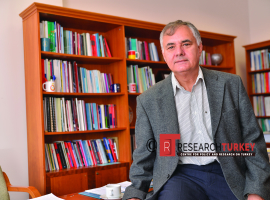
Interview with Professor Ziya Öniş: Explaining the Politics behind Turkey’s Stormy Year Assessment of a Turbulent Year in Turkey Series – I Any observer of Turkish politics will tell you that the past 12 months have been replete with momentous turning points and critical junctures. Beginning last May, the Gezi Park protests, the corruption investigations, local elections of 2014 March, and the Soma mine tragedy made headlines worldwide. The key events, however, did not just take place in domestic politics. Turkey’s continuing involvement in Syria’s civil war and its implications for Turkey together with the developments in Iraq has had […]
Research Turkey Public Conference with Dr. Ali Burak Güven: “Rethinking Turkish Capitalism: The Rise and Demise of Deficit-Led Neoliberal Populism”, 17 October 2014, SOAS
Research Turkey Public Conference with Dr. Ali Burak Güven: “Rethinking Turkish Capitalism: The Rise and Demise of Deficit-Led Neoliberal Populism”,
17 October 2014, SOAS
We are pleased to announce Centre for Policy and Research on Turkey (Research Turkey)’s public conference entitled “Rethinking Turkish Capitalism: The Rise and Demise of Deficit-Led Neoliberal Populism” in which Dr. Ali Burak Güven ofBirkbeck, University of London will give a talk. This event will take place on Friday, 17 October 2014 between 6:30 p.m. and 8:00 p.m. at Main College Buildings, Room G3, SOAS, University of London, WC1H 0XG. Dr. Thomas Marois, Senior Lecturer at SOAS will kindly chair the event. The event is Co-sponsored by SOAS Development Studies, Neoliberalism, Globalisation and States Research Cluster.
You may find the synopsis of the talk and a short biography of Dr. Ali Burak Güven below.
This event is free and open to public but it is a ticketed event that requires pre-registration. A ticket does not guarantee a seat. Please register using the form below.
Synopsis of the talk
“Rethinking Turkish Capitalism: The Rise and Demise of Deficit-Led Neoliberal Populism”
The Turkish economy has lost momentum over the past few years, and one of the main culprits, Dr Ali Burak Guven argues, is policymakers’ reluctance to let go of a particular economic model: deficit-led, consumption-oriented growth. In the extraordinary domestic and international opportunity structure of the mid-2000s, falling back upon the country’s default pattern of foreign capital-dependent growth provided a feasible way of reconciling the two otherwise incompatible requisites of the AKP’s electoral appeal: macro-stability, defined in orthodox neoliberal terms of fisco-financial sustainability, and social inclusion, which in the Turkish context entailed a credit-led expansion of the domestic consumer base and heterodox initiatives of targeted side-payments. Since 2008 onward, however, the positive feedback from deficit-led growth has considerably weakened. Large foreign deficits no longer insure fast growth, whereas the welfare gains from existing forms of inclusion have reached a limit. This state of affairs also sheds light on a key puzzle that characterizes “new Turkey”: why, despite a decade of political transformation, has the structure of the Turkish economy remained fundamentally unchanged.
Short Biography of Dr. Ali Burak Güven
Dr. Ali Burak Güven is Lecturer in International Relations and International Political Economy at Birkbeck, University of London. He has published widely on global political economy, international organisations, and Turkish politics/political economy, and is most recently the editor, with Richard Sandbrook, of Civilizing Globalization: A Survival Guide, Revised and Expanded Edition (SUNY Press, 2014). He previously taught at Koc University and the University of Toronto.
Short Bigography of Dr. Thomas Marois
Dr. Thomas Marois is Senior Lecturer of Political Economy in the Development Studies Department at the School of Oriental and African Studies (SOAS), London, UK. Thomas works in the field of comparative political economy and development. He is the author of the new book, States, Banks and Crisis: Emerging Finance Capitalism in Mexico and Turkey published by Edward Elgar in 2012. He is also participating in the European Commission Framework Programme Seven research project, Financialisation, Economy, Society and Sustainable Development as part of the Turkish team at the Middle East Technical University.
Interview with Mr. Batuhan Aydagül (Education Reform Initiative): “Utilisation of Scientific Knowledge in Turkey”
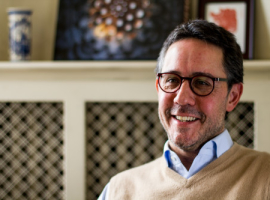
Interview with Mr. Batuhan Aydagül (Education Reform Initiative): “Utilisation of Scientific Knowledge in Turkey” Evaluation Series – III As Centre for Policy and Research on Turkey, we conducted an interview with Batuhan Aydagül, the Director of Education Reform Initiative (ERI), regarding utilization of scientific knowledge in decision-making in Turkey obtained from policy research and evaluation studies. Aydagül, who began his professional career in Finansbank, received his B.A. from Marmara University and M.A. in International Educational Administration and Policy Analysis in Stanford University. Aydagül, who took management classes at Harvard Extension School, also worked as an executive at The British International […]
Regarding Dr. Andrew Mango’s Funeral
Dr. Andrew Mango, prominent scholar & journalist and Advisory Board Member as well as a very good friend of Centre for Policy and Research on Turkey (Research Turkey) has passed away on 6th of July 2014, Sunday. His funeral will be held on Monday 14th July at St Osmund’s RC Church, Castelnau, Barnes at 3pm. Once again we would like to send our condolences and express our deepest sympathies to his relatives, friends, colleagues, and readers. May Dr. Mango rest in peace.
Interview with Dr. Bahar Başer on Her Book: Turkish – Kurdish Question in the Diaspora, Second-generation Turkish and Kurdish Diasporas in Sweden and Germany
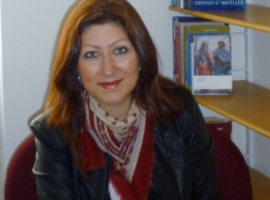
Interview with Dr. Bahar Başer on Her Book: Turkish – Kurdish Question in the Diaspora, Second-generation Turkish and Kurdish Diasporas in Sweden and Germany As Centre for Policy and Research on Turkey (Research Turkey), we conducted an interview with Dr. Bahar Başer about her book Turkish-Kurdish Problem in Diaspora, Second-generation Diasporas in Germany and Sweden. The goal of this interview with Dr. Başer was to analyse how Turkish-Kurdish problem affects the diaspora, to understand the dynamics and conflicts that are either violent or not within second-generation Turkish and Kurdish diaspora members in Germany and Sweden and lastly to clarify how […]
Research Turkey Public Conference: “The Role of Political Islam in Middle Eastern Politics”, 3 June 2014, King’s College London
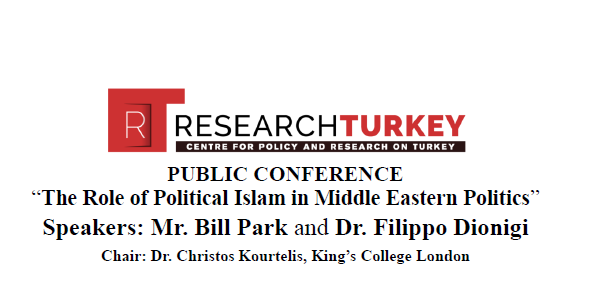
We are pleased to announce Centre for Policy and Research on Turkey (Research Turkey)’s public conference entitled “The Role of Political Islam in Middle Eastern Politics” in which Mr. Bill Park and Dr. Filippo Dionigi will give a talk. This event will take place on Tuesday, 3 June 2014 between 6:00 p.m. and 8:00 p.m. at K-1.56, Lecture Theatre, Strand Campus, King’s College London, WC2R 2LS. Dr. Christos Kourtelis (Teaching Fellow in European and International Studies, King’s College London) will kindly chair this event.
Please find below the abstracts of the talks along with a short biographies of our speakers. This event is free and open to public but it is a ticketed event that requires pre-registration. A ticket does not guarantee a seat. Please reserve a ticket using the form below or by sending an e-mail to [email protected].
Turkish Ministry of Foreign Affairs and the Ministry of Tourism and Culture’s Study Trip Award Programme
We would like to inform you that Turkish Ministry of Foreign Affairs and the Ministry of Tourism and Culture launched an award programme as a study trip to Turkey for graduate students interested in Ottoman and Turkish history. We believe this study trip provides a good opportunity for foreign students to learn more about Turkey and helps them to create a network of people from different countries with similar areas of interest.
Please find the announcement of this study trip which will be held on 21 -28 August 2014 this year, and the draft programme along with guidance on the required qualifications as well as the application procedure below in PDF format. The travel as well as the accommodation expenses of the students are covered by the Turkish Ministry of Culture and Tourism.
The CV, motivation letter and transcript of the applicant (in English language) should be submitted to the e-mail ([email protected]) or postal address of the Turkish Embassy in London (43 Belgrave, Square, London SW1X 8PA, The United Kingdom) no later than 15 June 2014.
Research Turkey Symposium, “The Manifestation of Religion or Belief in the Public Sphere”, 14 June 2014, University of Oxford
Research Turkey Symposium in association with Faculty of Law at University of Oxford: “The Manifestation of Religion or Belief in the Public Sphere”, 14 June 2014, University of Oxford
We are pleased to announce Centre for Policy and Research on Turkey (Research Turkey)’s symposium organised in association with Faculty of Law at University of Oxford entitled “The Manifestation of Religion or Belief in the Public Sphere”. This event will take place on Saturday, 14 June 2014 between 10:30 a.m. and 3:30 p.m. at The Cube Lecture Theatre, University of Oxford, Faculty of Law, St Cross Building,St Cross Rd, Oxford OX1 3UL.
The event consists of two panels in which four panellists will take part. The event is free but requires pre-registration and attendance must be confirmed in advance. For further information and pre-registration please check the link below or e-mail to
events@researchturkey.org or [email protected]. Please find below the symposium programme, abstracts of the speeches and short bios of the panelists.
http://rt-oxford-symposium-2014.eventbrite.co.uk
View the advert of the event or download it as a PDF file
The Symposium Programme
10.30 Registration
10.45 Welcome and introduction
Özgür Heval Çınar, Academic Visitor, Faculty of Law, University of Oxford
Ümit Sönmez, Centre for Policy and Research on Turkey
11.00-12.30 “Human Rights Committee v. European Court of Human Rights”
Chair: Nazila Ghanea, Faculty of Law and Department of Continuing Education,
University of Oxford
Michael Wiener, Visiting Fellow, Kellogg College, Oxford
Juris Rudevskis, European Court of Human Rights
12.30-13.30 Lunch
13.30-15.00 “A Comparative Analysis of Turkey and the United Kingdom”
Chair: Peter Petkoff, Brunel University and Regent’s Park College, Oxford
Mine Yıldırım, Norwegian Helsinki Committee
Erica Howard, Middlesex University
15.00-15.15 Closing remarks
Abstracts of Speeches
Panel I. Human Rights Committee v. European Court of Human Rights
Panelist: Michael Wiener, Visiting Fellow, Kellogg College,Oxford
From religious symbols to conscientious objection – An overview of the UN Human Rights Committee’s evolving interpretation of article 18 ICCPR
How are the international standards on the manifestation of religious belief in the public sphere, most notably article 18 of the International Covenant on Civil and Political Rights, interpreted by the UN Human Rights Committee? In this context, its views on individual communications and general comments will be explored further, with a specific focus on two issues, i.e. the display of religious symbols in the public sphere and the right to conscientious objection to military service. The approach of the UN Human Rights Committee in both areas (e.g. in Bikramjit Singh v. France concerning religious symbols and in Atasoy and Sarkut v. Turkey concerning conscientious objection) will be compared to the jurisprudence of the European Court of Human Rights (e.g. in the admissibility decisions of Ranjit Singh v. France and Jasvir Singh v. France concerning religious symbols and in the Grand Chamber judgment of Bayatyan v. Armenia concerning conscientious objection).
Panelist: Juris Rudevskis, European Court of Human Rights
The Manifestation of Religion and Belief in the Public Sphere:
the Basic Principles of the Case Law of the ECHR
What is the proper meaning and the extent of the right to manifest one’s religion and belief in the public sphere, a non-absolute right guaranteed by Article 9 of the Convention? This conspicuous question is in fact secondary; it cannot be properly understood unless we address the real core question, that is: “What is the concept and the role of the State (as institution) and how does the European Court of Human Rights see it?” The following conclusions can be drawn from the existing case law: (1) the ECHR largely follows the centralised Hobbesian vision of the State; (2) this vision directly determines the limits and conditions under which the ECHR allows the States to regulate the exercise of the rights under Article 9; (3) the principle of subsidiarity, often invoked by the ECHR in this respect, has yet to be fully deployed in order to fully show its potential.
Panel II. A Comparative Analysis of Turkey and the United Kingdom
Panelist: Mine Yıldırım, Norwegian Helsinki Committee
The Right to Manifest Religion or Belief in the Public Sector in Turkey – Is it all about the headscarf?
Despite Turkey’s commitments to protect the right to freedom of religion or belief in its Constitution and international human rights treaties it remains a challenge to create a legal framework in line with international law. The right to manifest religion or belief in the public work place has remained stuck in an ideologically motivated struggle between political groups. This picture, however, would be incomplete without the added consideration of the lack of representation of non-Sunni Muslims in public servant positions. Following the 2011 election victory of the ruling AK Party, steps has been taken to selectively liberalize the use of religious symbols, first by university students, then by public servants. The lack of representation of Turkey’s all belief communities in the public sector, however, remains. The presentation will critically assess the role and approach of the Turkish judiciary and the role of international human rights compliance mechanism in this process.
Panelist: Erica Howard, Middlesex University
The Protection of Religious Manifestations in the Public Sphere in the UK
This presentation analyses the manifestation of religious belief in the UK and the issues that have come to the surface in the debates. Religious manifestations are protected under Article 9 ECHR and under the EU Charter of Fundamental rights. Religious persons are also protected against religious discrimination under the Equality Act 2010, under EU anti-discrimination law and under Article 14 ECHR. But the manifestation of religion or belief in the public sphere, for example, through the wearing of religious symbols or by requests for time off for religious duties, have been and are debated, as is the clash between religious manifestations and the protection against sexual orientation discrimination. The presentation also explores the influence of the case law of the European Court of Human Rights on the case law and the debates in the UK and the lessons that can be drawn from this.
Short Biographies of the Panelists (in alphabetical order)
Erica Howard is reader in law at Middlesex University, where she teaches equality law at postgraduate and undergraduate level. She obtained her PhD in European discrimination law from the University of London. Her areas of research include equality law, human rights, including the right to equality, and European law and she has published widely on topics within this area. Her research into freedom of religion and religious discrimination, including a possible duty of reasonable accommodation of religious manifestations, has led to a book, entitled ‘Law and the Wearing of Religious Symbols: European Bans on the Wearing of Religious Symbols in Education’ and a number of articles.
Juris Rudevskis was born in Riga, Latvia. He studied law at the University of Paris-I (Panthéon-Sorbonne). Former Head of the Division of European Affairs of the Latvian Ministry of Justice, he has been working at the Registry of the European Court of Human Rights since 2000. From 2004 to 2005, he worked as a legal secretary of the Latvian judge of the European Court of Justice in Luxembourg. He is currently a senior lawyer in the Research Division of the ECHR. He has published articles on the principle of subsidiarity, legal philosophy, international law, canon law and Islamic law.
Michael Wiener has been working in the Office of the United Nations High Commissioner for Human Rights since 2006. For five years he assisted the Special Rapporteur on freedom of religion or belief, after completing his doctoral thesis on the Special Rapporteur’s mandate. He also passed the German bar exam and holds a LL.M. degree from the University of London. His research interests include freedom of religion or belief, freedom of expression, and the prohibition of incitement to national, racial or religious hatred. Currently, he is also a Visiting Fellow of Kellogg College, Oxford.
Mine Yıldırım is the Head of the Freedom of Belief Initiative project of the Norwegian Helsinki Committee in Turkey. She received her bachelor’s degree from Marmara University in International Relations and her master’s degree from Leicester University in Human Right and Civil Liberties. She is currently a doctoral candidate at Åbo Academy, Institute for Human Rights. Her research is on the Collective Dimension of Freedom of Religion or Belief – International Law and the Case of Turkey. She has published numerous articles in academic journals as well as newspapers. She regularly writes for Forum 18 on freedom of religion or belief in Turkey.
Research Turkey Public Conference with Dr. Alper Kaliber, “Europeanization of Public Debates and Civil Society in Turkey: The Kurdish Question and Secularism Debates Revisited”, 4 July 2014, SOAS
We are pleased to announce Centre for Policy and Research on Turkey (Research Turkey)’s public conference entitled “Europeanization of Public Debates and Civil Society in Turkey: The Kurdish Question and Secularism Debates Revisited” in which Dr. Alper Kaliber, Marie Curie Research Fellow at European Institute, Istanbul Bilgi University will give a talk. This event will take place on Friday, 4 July 2014 between 6:30 p.m. and 8:00 p.m. at Main College Buildings, Room 116, SOAS, University of London, WC1H 0XG. This event is co-sponsored by the Department of Development Studies, SOAS, Neoliberalism, Globalisation and States Research Cluster. Bezen Balamir Çoşkun, Associate Professor at the Department of International Relations, Zirve University (Gaziantep, Turkey) will kindly chair the event.
You may find the synopsis of the talk and a short biography of Dr. Alper Kaliber below.
This event is free and open to public but it is a ticketed event that requires pre-registration. A ticket does not guarantee a seat. Please register using the link below.
http://rt-dralperkaliber-soas.eventbrite.co.uk
Synopsis of the talk
Europeanization of Public Debates and Civil Society in Turkey: The Kurdish Question and Secularism Debates Revisited
Contemporary Turkish politics is characterised by fierce ideological, political and economic public debates flourishing in every segment of the society. These debates, which have been re-shaping both Turkey’s domestic politics and the trajectory of Turkey’s relations with the EU/Europe, have mainly revolved around such issues as the rise of political Islam, authoritarianism, and the Kurdish question and the peace process. Civil society organizations (CSOs) from all segments of the political spectrum have been heavily involved in these public deliberations dominating Turkish politics and polarising the society. These debates have been informed by distinct perceptions and representations of Europe: Europe either as a source of democratization and improvement of civil and political rights or as a source of insecurity threatening Turkey’s territorial integrity, the core characteristics of the regime and the ‘national will’.
This seminar aims to discuss the impact of the European norms, policies and institutions (particularly the EU) on the politically mobilised civil society organizations in Turkey. It focuses on the CSOs vocal on the Kurdish question and political Islam/secularism debates and on their distinctive perceptions of EU/Europe. It assesses to what extent and in what ways the CSOs formulate their political demands and deliberative positions by making reference to specific European norms, policies and institutions, in order to justify and express their political agenda and deliberative positions. The views of civil societal actors on the current peace process and the potential roles of the European actors in the process would be another focus of the seminar.
Against this background, I suggest a clear analytical distinction between EU-ization as an EU-induced process of legislative, institutional and policy engineering, and Europeanization as a wider socio-political and normative context. The impact of Europeanization is heavily conditioned by the extent of and the ways in which Europe is used as a context by domestic actors to promote their political/social projects. Civil society actors often support EU-ization reforms and consolidation of Europeanization as a political-normative context only when they think that this best serves their causes or deliberative positions. In such cases, they strategically emphasize norms and values which they consider resonate with those of Europe. When CSOs do not support Europeanization, they either ignore or make negative references to European norms and values. They try to explain how these roles conflict with the interests of the social groups that they claim to represent. Therefore, to get a better insight into the multi-layered impact of Europeanization, one needs to look at how Europe is politically and discursively constructed and used by domestic societal and political actors.
Short Biography of Dr. Alper Kaliber
Alper Kaliber currently works as a Marie Curie research fellow at European Institute, Istanbul Bilgi University and conducts a research project titled ‘Europeanisation of Public Debates and Civil Society in Turkey’. He completed his PhD in Political Science at Bilkent University, Turkey. Dr. Kaliber served as a research fellow at the University of Birmingham and he worked as a consultant and researcher in the SHUR project ‘Human Rights in Conflicts: The Role of Civil Society’, funded by the European Commission’s 6th Framework Programme. He previously taught on European security, European Integration, Turkey and the European Union relations, foreign policy analysis and international relations theories at Sabanci, Yaşar, Istanbul Bilgi universities and at the University of Birmingham. His areas of interest include Critical and Regional Security Studies, European security, the Cyprus conflict, Europeanisation, civil society and conflict transformation and Turkish foreign policy. Among his recent publications are ‘Contextual and Contested: Reassessing Europeanisation in the Case of Turkey’ in International Relations, ‘Turkey’s Cyprus Policy: A Case of Europeanisation’, in “Turkey and the European Union: Processes of Europeanisation”, Çiğdem Nas and Yonca Özer (eds.), (Ashgate, 2012); and ‘Human Rights, Civil Society and Conflict in Turkey’s Kurdish Question’, in “Civil Society, Conflicts, and the Politicization of Human Rights”, Raffaele Marchetti and Nathalie Tocci (eds.), (United Nations University Press, 2011). He was recently awarded with Young Scientist Award by Turkey’s Science Academy (BAGEP).
Interview with Mr. Bekir Gür (Foundation for Political, Economic and Social Research – SETA)
Interview with Mr. Bekir Gür (Foundation for Political, Economic and Social Research) Evaluation Series – II As Centre for Policy and Research on Turkey (Research Turkey), we conducted an interview with Mr. Bekir Gür, director of Social Studies at SETA Foundation (Foundation for Political, Economic and Social Research) to discuss the utilization of scientific knowledge provided by policy research and evaluation studies in decision-making processes in Turkey. Mr. Gür received his M.A. degree on instructional systems from Florida State University and his Ph.D. degree in instructional technology from Utah State University where he also worked as a postdoctoral researcher. Currently, […]