Home Blog Page 2

Turkey’s EU bid: Losing Friends and Trouble Ahead

1
Turkey’s EU bid: Losing Friends and Trouble Ahead

Turkey’s EU bid: Losing Friends and Trouble Ahead

Introduction: the European Parliament’s
2013 Resolution on Turkey

On March 12th, the European Parliament (EP) adopted its yearly Resolution on Turkey during its monthly plenary session.[i] This non-binding document – which contains the views of the EP concerning Turkey’s EU bid – was passed by an overwhelming majority of 475 votes in favour, while 153 Members of the European Parliament (MEPs) voted against and 43 abstained.[ii]

In the Resolution – a response to the European Commission’s 2013 Progress Report on Turkey – the EP reaffirms Turkey’s value as a strategic partner with regard to economy and trade, energy and migration. It particularly welcomes Turkey’s great efforts in harbouring the influx of Syrian refugees, as well as its pro-active role in Bosnia-Herzegovina and its decisions to establish a national Ombudsman office and sign a Readmission Agreement.

Nevertheless, it can be regarded as the most critical, sharpest Resolution up to date. The EP openly started to doubt Turkey’s commitment to democracy and the rule of law and its abilities to adhere to the ‘Copenhagen Criteria’ – i.e. the basic political and economic criteria which allow a country to apply for EU membership. In this regard, the EP implicitly expressed its concerns for the viability of Turkey’s EU membership by criticising the developments which have occurred in Turkey over the past months:

  • the “heavy-handed” response by Turkish authorities and resulting loss of life following the Gezi Park protests during June 2013;
  • the “excessively wide” scope of the Ergenekon coup case and related procedural shortcomings;
  • the recent decisions by the Turkish government to intervene directly into an ongoing corruption investigation by making the Supreme Board of Judges and Prosecutors (HSYK) subordinate to the Minister of Justice and sack or replace thousands of police officials following a HSYK-ordered, surprise graft probe into aides of long-standing Prime Minister Recep Tayyip Erdoğan in December 2013;
  • the tightening of Turkey’s Internet Regulation in February 2014, following the appearance of incriminating audio footage on the Internet indicating direct engagement by Erdoğan, his family and aides in corruption and influencing the media. The Internet Regulation gives Turkish authorities the opportunity to block webpages without a prior court order;
  • the “ongoing systematic profiling” of civil servants, the police and security forces by the authorities on the basis of religious, ethnic and political affiliations;
  • the increasing risk of undue intrusion by Turkish authorities into citizen’s lives following  recent statements on the number of children women should have, on mixed-sex student residences and on the selling of alcohol;
  • the limited independence of Turkish media outlets, who frequently engage in self-censorship and according to the leaked audio footage face direct interference by Turkey’s political brass. Consequentially, Turkey currently ranks 154th out of 179 in Reporters Without Borders’ Press Freedom Index.[iii]

The content and tone of the Resolution is exemplary for the atmosphere in the European Parliament and perhaps wider political circles in ‘Brussels’. EU policy-makers increasingly seem tired of Turkey’s current political leadership and its seeming inability and/ or unwillingness to reform. For instance, Andrew Duff, a British Liberal MEP – and once staunch supporter of Turkey’s EU bid – tweeted after the debate on the Resolution “Most pessimistic EP debate I can recall about Turkey”, while MEP Alexander Graf Lambsdorff called for a halt in Turkey’s EU accession negotiations “Relations between Turkey and the EU have gotten worse and this process needs to be deferred until Turkey cleans up its act.”[iv] Moreover, European Commissioner for Enlargement Štefan Füle aptly tweeted that the “(…) debate in the EP showed that Turkey is losing its supporters. Reflection and follow-up in Ankara needed to reverse this trend.”[v]

Do the Views of the European Parliament Matter?

Of course, one can rightfully ask: does it actually matter, this Resolution, which signals a loss of support in the European Parliament? After all, the European Parliament only plays a limited role in the EU Enlargement process, exercising its democratic right of oversight by issuing non-binding, own-initiative Resolutions. Moreover, the European Parliament itself is by no means uncontested: it has been struggling with its democratic legitimacy since its conception in 1979.

Yet, the EP’s views clearly do matter. The European Parliament – although recently labelled undemocratic and illegitimate by Turkish Prime Minister Erdoğan[vi] – is the only EU Institution relatively open and conducive to Turkish views and stakeholders. The European Parliament traditionally has been a great adversary of Turkey – primarily due to the presence of scores of MEPs sceptical towards Turkey’s EU bid for various reasons – yet simultaneously it has been its greatest friend. The EP namely hosts a Friends of Turkey Intergroup, organises Turkey-related events on a frequent basis while seating various MEPs of Turkish descent. Disregarding it would thus be to shoot in one’s own foot.

At least equally important in this regard is that the views of the EP – although non-binding – influence the EU policy debate on Turkey while simultaneously providing a platform for Brussels’ political top-brass to voice its sentiments, intentions and expectations and relatively uninhibited manner.

What Will Happen at EU Level: Two Scenarios

So what does this mean? What can we expect from ‘Brussels’ in the coming months with regard to Turkey’s EU bid? Without doubt, the current events have marked an end to a period of careful optimism which came into being mid-2013 (following a relatively mild European Commission 2013 Progress Report; the restart of Turkey’s EU negotiation process by opening a chapter on regional policy and; the conclusion of a Readmission Agreement in turn for a roadmap towards EU visa exemption for Turkish citizens). What is clear as well is that, even though Turkey appears to be struggling with the Copenhagen Criteria, the EU will most probably not decide to end Turkey’s EU bid: the costs are simply too high to jeopardise relations with Turkey – a strategic partner in terms of economy and trade, energy, migration and security.

Instead, two possible scenarios exist. The first scenario holds that Turkey EU negotiations will continue. In view of recent events in Turkey, the European Union could decide to open negotiation Chapters 23 and 24 on judiciary and fundamental rights and justice and home affairs respectively. Such a scenario is currently preferred by the European Parliament as well as the European Commission, whom regard intensified negotiations a crucial element to prevent Turkey from drifting from the EU. Additionally, Turkish authorities themselves have consistently called for opening of additional chapters (up to this date, Turkey’s EU bid has been exceptionally slow with thirteen out of 35 negotiation chapters currently opened and only one chapter provisionally finalised).

The second scenario is preferred by various EU Member States. Under such a scenario – which clearly would be reminiscent to three year hiatus in accession negotiations before June 2013 – the EU would decide to freeze Turkey’s EU bid by abstaining from opening additional negotiation chapters. When Commissioner Füle argued to open Chapter 23 and 24, Greek Deputy Foreign Minister Dimitrios Kourkoulas – representing the current EU Presidency and speaking on behalf of the EU Member States – was quick to rebuke. Kourkoulas stated that opening negotiation chapters – which is often regarded as an encouraging gesture of good will – is not an “end itself”, while noting that it should be the Erdoğan Administration that should take the lead in furthering Turkey’s EU bid: “Turkey knows what it must do (…) the pace of negotiations will depend on Turkey’s ability and willingness to go forward and if we are to move then certain reforms will have to be undertaken.”[vii]

Looking Forward: Losing Friends
and Trouble Up-Ahead

Which scenario will turn out to be reality depends on various factors such as the Turkish authorities’ response to the ongoing graft probe and the recent mass-demonstrations following the death of Berkin Elvan – a fifteen year old boy who died after 269 days of coma resulting from an injury sustained by a tear gas canister during last year’s Gezi Park protests. Moreover, election outcomes will shape Turkey-EU dynamics. 2014 is an electoral ‘super year’ for Turkey, with local, national and presidential elections taking place. Despite increasing criticism of corruption, power abuse and nepotism, there are no clear indications that Erdoğan and his Adalet ve Kalkınma Partisi (AKP) will prove unable to consolidate their power. At EU level, elections for the European Parliament will take place in May. Taking into account the disgruntlement that exists with the EU among large parts of the European populace, expectation are that radical-left and right and non-aligned parties will win significantly.[viii] Logically, an increase in power Eurosceptic parties will not do any good to EU enlargement in general, while it might also result in a decrease in the number of ‘Friends of Turkey’ present in the EP.

One thing is crystal clear: either scenario would mean trouble for the Erdoğan Administration. Under the first scenario – although sustaining the impression that Turkey’s EU bid is moving forward – the EU would tighten the screws on the Erdoğan Administration by pressuring it to implement reforms which are in line with EU judicial and democratic standards. In this respect, Chapter 23 and 24 would constitute clear examples of the EU’s transformative power: they would be ‘sticks’ that the EU could use to align Turkey. The second scenario would constitute a return to square one, to the situation that existed prior to June 2013. Given the current volatility of the Turkish economy and the continued importance of the EU for Turkey (the EU is Turkey’s biggest trading and investment partner) this scenario would not be desirable for either party involved, yet the least for Turkey.

The EP’s Resolution – at first instance seemingly unimportant – thus signals that Turkey might be losing its remaining supporters in ‘Brussels’. Moreover, it might also be a prelude for a harsher EU stance on Erdoğan’s Turkey, which undoubtedly will adversely affect Turkey’s EU bid and annul the careful progress made over the past year. Therefore, the Erdoğan Administration should thread carefully, ensuring that Turkey does not lose even more friends on its way towards political consolidation.

Gerben K. Wedekind, Brussels Representative, Centre for Policy and Research on Turkey (Research Turkey)  

Please cite this publication as follows:

Wedekind, Gerben K. (March, 2014), “Turkey’s EU bid: Losing Friends and Trouble Ahead”, Vol. III, Issue 3, pp.19-23, Centre for Policy and Research on Turkey (ResearchTurkey), London, Research Turkey. (http://researchturkey.org/?p=5541)

End Notes


[i] European Parliament. (2014). TEXTS ADOPTED PART III at the sitting of Wednesday 12 March 2014. Pp. 328-338. Available at: http://www.europarl.europa.eu/sides/getDoc.do?pubRef=-//EP//NONSGML+TA+20140312+SIT-03+DOC+WORD+V0//EN&language=EN. (16 March 2014)

[ii] European Parliament. (2014). Turkey: credible commitment and strong democratic foundations needed, MEPs say. Available at: http://www.europarl.europa.eu/news/en/news-room/content/20140307IPR38301/html/Turkey-credible-commitment-and-strong-democratic-foundations-needed-MEPs-say. (16 March 2014)

[iii] Reporters without Borders (2014). 2013 World Press Freedom Index: Dashed Hopes After Spring. Available at: http://en.rsf.org/press-freedom-index-2013,1054.html. (16 March 2014)

[iv] EUobserver. (2014). Boy’s death spurs anti-Erdogan feeling in EU parliament. Available at: http://euobserver.com/foreign/123435. (16 March 2014)

[v] Today’s Zaman. (2014). Turkey is losing supporters in EU, Füle says. Available at: http://todayszaman.com/news-341921-turkey-is-losing-supporters-in-eu-fule-says.html (16 March 2014)

[vi] Hurriyet Daily News. (2013). I don’t recognize European Parliament decision, Turkish PM Erdoğan says. Available at: http://www.hurriyetdailynews.com/i-dont-recognize-european-parliament-decision-turkish-pm-erdogan-says.aspx?pageID=238&nID=48730&NewsCatID=338 (16 March 2014)

[vii]EUobserver. (2014). Boy’s death spurs anti-Erdogan feeling in EU parliament. Available at: http://euobserver.com/foreign/123435. (16 March 2014)

[viii] Pollwatch. (2014). What the polls say. Available at: http://www.pollwatch2014.eu/ (16 March 2014)
Turkish Drama in the Arab World: Social Impacts, Religious Reaction and Dramatic Void in the Arab World

1
Turkish Drama in the Arab World: Social Impacts, Religious Reaction and Dramatic Void in the Arab World

Turkish Drama in the Arab World: Social Impacts, Religious Reaction and Dramatic Void in the Arab World

Introduction

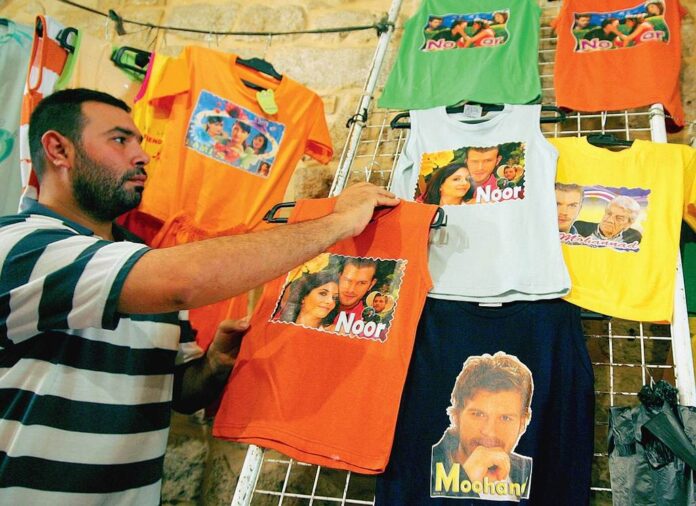
Nour, which is named after the main character in the dubbed Turkish soap opera which was shown on the Saudi-owned MBC satellite channel in 2008, immediately became a hit. The high ratings it got were partly due to its unconventional use of colloquial Arabic. Non-Arabic dramas too have been dubbed earlier in classical Arabic. “The last two episodes of Nour, shown on August 30, 2008, attracted 85 million viewers in the Middle East and North Africa [Mena] region, out of which 50 million were females,” said Mazen Al Hayek, MBC’s official spokesperson and the group director of PR, marketing and commercial. MBC, which started broadcasting Turkish dramas in 2008, has telecast nearly 20 series. The others are shown on Arabic satellite channels such as Abu Dhabi TV and Dubai TV.[1]

The demand for drama, which has become a target for several Arab channels in the past few years, has increased in recent months with the expansion of its broadcasting map, after overcoming some accent barriers. The demand for Turkish drama has increased, especially with the decreasing output of the two important TV production cities in the Arab region, Cairo and Damascus, due to the political turmoil in both countries for more than a year. Several years back, “I bought a one-hour (one hour of copyright) Turkish drama for $600 [Dh2, 203] or $700. Today, there are [parties] who are willing to pay $40,000 for one-hour [dramas],” said Adeeb Khair, general manager and owner of Sama Art Productions, a Syrian TV production company which dubs Turkish dramas into colloquial Syrian Arabic. [2]

“Gümüş” (Silver) was the vanguard of the Turkish drama. Renamed “Noor” (Arabic for “light”) and characters renamed with Arabic names, the entire show became a phenomenon in the Arab world. The show was such a success that 85 million Arabs tuned in to watch the series finale broadcast in 2008. Just a decade ago international sale of Turkish television dramas amounted to less than 1 million U.S. dollars, and in just a few years it managed to reach 50 million dollars in 2010, due primarily to the huge success of those shows in the Middle East.[3]

The Turkish Drama Fills the Void

Recent weeks have seen images from the Arab world that most would rather forget: angry mobs, burning flags, dead civilians. That there is so much more to the region and its people is indisputable. That Arabs themselves need to do a better job of articulating their own dreams, hopes and ambitions for the future – i.e. the existential elements of humanity that tie us together regardless of race, creed or religion – is also beyond dispute. The problems begin, however, when that funding is too readily available for filmmakers whose scripts are not properly developed, whose stories are not interesting enough, whose characters are not engaging and who have no idea of the concept of dramatic resolution. Instead, these filmmakers hide behind the label of “auteur”. What they seem to forget, however, is auteur is someone with an actual artistic vision and something original to say, not simply a propensity for long, slow, listless treatises on the banality of life. Of course, there are a plethora of talented, hard-working and genuinely engaged filmmakers in the Arab world. The likes of Nadine LabakiElia Suleiman and Hany Abu-Assad have won international awards and achieved box office success both at home and abroad. But we need more. And we need our young voices to push themselves harder and not simply take the money because they can. One must also recognize the myriad challenges that still remain for Arab filmmakers: namely the lack of an Arab audience for their films. The region is still woefully lacking in cinemas (movie theatres). And while the Arab world is officially bound by the same language, the truth is the 22 countries all have their own dialects and local customs that frequently remain specific to their own borders. The result is the absence of a genuine pan-Arab market for Arab cinema.[4]

But this spreading out has its price. As the economic rule goes, an increase in demand leads to an increase in prices. Some experts in the industry believe that the increasing prices of Turkish dramas will eventually lead to a shift in demand. High prices have put forward the option of searching for a new window of profits for TV channels, they said. [5]

Dalia Ahmed, 32, is an assistant researcher in agricultural studies; and a Turkish soaps lover. She started watching them when she saw Asi by chance: “I watched a scene and liked it a lot, I was glued to my laptop screen for the next two days to finish the series, watching an episode after another.” Since then, Ahmed has watched countless series. “I was attracted to the series because they have different plots, the sceneries are stupendous and the music is out of this world. They present many songs of their heritage to the point that we use these songs as ring tones for our phones, the acting performance is so good and the good-looks of their leading characters is a plus too.” In a recent article film critic Tarek El Shennawy commented on the factors that attract an Egyptian audience to Turkish soaps: “They film outside in the natural scenery, they are meticulous about customs and make-up and they simply have a ‘fresh’ flavour in ideas, scenes, events and in exhibiting beauty… Egyptian soaps have been following the same production patterns for a very long time, our drama production is exclusive to the month of Ramadan and we leave the rest of the year for the Turkish drama to dominate and that’s why the Egyptian and Arab viewers escape to Turkish drama.” [6]

Yet recently like everyone else in this part of the world, I have witnessed the invasion of Turkish series (soap operas as they are known in America) dubbed into Lebanese or Syrian Arabic dialect. Not a fan of soap operas, I did not watch for sometime… in fact, I used to mock those who did, simply because I thought of them as unreal, long and melodramatic. They say the tasting is in the eating … well to my surprise, I have spent the last 60 days or more eagerly watching Fatmagül, a series about  a raped woman and her struggle! Huh! Me! While my point of view has not changed in that I still think of them as too drawn out, emotional, and fictionalized, they are well produced, presented and professionally dubbed. So what is it about these series that have attracted Egyptians from their traditional supposedly famous series into such new unfamiliar territory? Is it the fact that we yearn for slow, romantic and exaggerated plots? As humans, we voluntarily let ourselves to be drawn into very emotional worlds where the good triumphs over the evil, where the lover sacrifices all for his beloved and where the stress and bitterness of the world vanish and melt away. I really don’t know if I will watch any other series, but I felt so obliged to honour those Turkish people who are able to shoot in colourful modern scenes what we lack in our modern world infusing them with the beauty of the black and white series.[7]

Stressing the vitality of love and positive emotions is the key word of the Turkish drama that has been screened on Arab satellite channels. The romantic story lines depicting heroes facing the harsh fleeting of time and the dramatic separation between lovers are the main theme in most of these series. This very feature is what makes them more appealing to the Egyptian viewer, who is fed up with Egyptian drama where corruption, rape crimes and tragedies involving street children are the most prevalent topics. It is true that such topics reflect the economic and social transformation of Egyptian society, but presenting the same themes over and over again has forced the viewers to draw back.( It is equally true to assume that women make up the majority of the audiences, and they are desperate for romance. For them, the Turkish drama presents an escape from the marital conflicts and dull routine in their daily lives for the first time they see romance, kisses and hugs among married couples, and not between romantic but temporary, illegal relationships as depicted in the Egyptian drama.) So what exactly is the influence of such Turkish dramas on Egyptian television drama producers? Egyptian actor Nour El-Sherif, who has followed the show, was quoted as saying that it appealed to Arab women because it showed that a man could be deeply in love with a woman who was not particularly attractive. There might be another reason, however. None of the women in Time to Part wears the hijab (head cover). Most tend to be fashionable blondes in revealing European attire — not exactly representative of Turkish women. Moreover, the script makes Turkey look quite secular, with marriages and divorces all conducted at a city hall, not the mosque. Egyptians love it. Film critic Ihab El-Turki says the huge success of Turkish drama is a wake up call to Arab producers. “Arab drama needs to rid itself of its rigid formulas, such as over- dependence on one star. We need better scripts and more shooting on-location,” he concludes.[8]

The Turkish soaps have also resulted in a dramatic increase in the number of Arab tourists thronging to Istanbul for the city’s historic ambiance, as well as a desire to see the spectacular mansions along the Bosporus, where many of the favorite soaps are shot. Asked by Euronews recently what it was she found in these soaps, Auhood Salim, one such tourist from Iraq did not mince her words. Reeling off the names of her favorite Turkish actors without difficulty, she said these productions showed that one could be Muslim and modern at the same time. “They show the parts of life we don’t really have in some of our countries,” she added with a discernible tone of regret and yearning. Daniel Abdul Fattah, MBC and Al Arabiya’s representative in Turkey, reflected this fact recently with a striking example during an interview with Euronews. Indicating that one of the Turkish soaps was being aired during the most violent period of conflict between Al Fattah and Hamas, he said that the sides had agreed on a cease-fire to be able to see the show. “If a series or a movie has a love story or a romance, it can stop a fratricidal quarrel and bloodshed,” Al Fattah said. But it is not just Turkish romantic soaps and historic productions that have turned the Arabs on. Another highly popular Turkish series is the “Valley of the Wolves,” which deals with current political topics in the Middle East in ways that have annoyed the U.S. and Israel.[9]

A Yemeni man has been executed after murdering five people, among then one woman, in an effort to imitate a Turkish soap opera. Mohamed al-Ali al-Azab, 31, admitted before a crowd of tribal chieftains, who gathered to witness his execution, that his crime was inspired by the Turkish TV series ‘Valley of Wolves.’ The incident began with a dispute between Azab and another man in the Dawran district in the western governorate of Dhama and culminated with Azab killing five people, amongst them the other man’s mother in a shootout.[10]

Social worker Layla Abu Shama emphasized that the popularity of Turkish series amongst women in particular is proof that these programs deal with topics that correspond to their own personal issues and aspirations. “It is important that parents talk to their children and discuss their interests as this reflects what is going on in their minds,” she said. [11]

According to journalist Seyfullah Türksoy, the secret to its success lies in the Middle East’s quest for a ‘hero’: “It’s a necessity and because of this necessity, people have found a hero who defeats and challenges America and Israel. I think series like ‘Valley of the Wolves’ will be influential in the future and the effect of Turkey on cinema and art will continue, especially in the Middle East. Maybe there will even be new heroes.” Sociologist Hülya Uğur Tanrıöver thinks this may be a bit of a stretch: “Non-dictatorship regimes were less common in Muslim dominated societies, until now. When you break out of a dictatorship regime, you look for political, social and cultural models that are close, but at the same time different from your own. People in that region already needed, and liked, the kinds of stories and lifestyles shown in the Turkish TV series, and that’s why they’ve accepted them.[12]

Social Implications

According to a report on the MBC website, a man recently left his wife after she said she had contacted the lead actor of Noor and was planning to meet him. Saudi Arabia, meanwhile, is apparently threatening fines for cars with pictures of Muhanad on their windows. [13]

It seems most viewers are female,” said Hana Rahman, who runs an Arab entertainment blog (waleg.com). “They’re so swept away by the main character. He’s become a heartthrob here! He has even caused divorce cases in Saudi Arabia. “We made the series with a Turkish audience in mind,” Tatlıtuğ told al-Arabiya Television during a recent visit to Dubai. “The fact that it has amassed such a following in the Arab world just proves how much our cultures have in common.” Many Saudi women explained their devotion to the show as a form of escapism from stifling, love-less marriages. “Our men are rugged and unyielding,” quipped a 26-year-old house-frau who preferred to remain unnamed. “I wake up and see a cold and detached man lying next to me, I look out the window and see dust. It is all so dull. On Noor, I see beautiful faces, the beautiful feelings they share and beautiful scenery.”[14]

They are very comfortable with it. It varies from country to country. Turkish soap operas are popular all over the Arab world. Turkey has a cultural, soft power influence right now. People will refer to soap operas as an indication that a Muslim country can produce modern, culturally authentic TV stories; there is a kind of Turkey [showing that there] is a way to be modern and Muslim. Since many of these old governments, including [Hosni] Mubarak’s, said basically that these two things were not reconcilable, but people want that and they love to see Turkey [doing] that. People think Turkey is respected as a country; this is also appealing. There is more interest and hope for attention in Libya and Syria than there is in Egypt and Tunisia. By and large, people are pleased to see Turkey taking an interest in what is going on in the region.[15]

Turkey and its government should be thankful to the soap stars who are conquering hearts and minds on their behalf — and on the cheap. The government can claim the benefit and ride a wave of popular support among the Arab masses, something which burnishes Turkey’s already popular image in the Arab world (indeed, Turkish Prime Minister Recep Tayyip Erdoğan is already considered a hero on the Arab street due to his strong show of solidarity with the Palestinian people; rather for his Israel-bashing). Between topics including romance and social upheaval that rattles traditional values, and highlighting the Palestinian cause, one can see a blurring of the lines between art and reality, and the effect one has on the other. Who said that capturing hearts and minds in the Muslim world is mission impossible? It’s just that the United States hasn’t figured out the right way to do it. Sometimes, it seems the U.S. government still thinks that public diplomacy is exchange students and a few diplomats who can speak Arabic and struggle on satellite television in the region to explain U.S. foreign policy. Welcome to the power of the stars! I am not talking about the ones in the sky, but rather a handful of good-looking blond and dark Turkish movie stars who are taking the Arab world by storm (during the Ottoman Empire, most of the Arabs would not have regarded this as occupation since this was a Sunni Muslim regime, the Young Turks are only a very late phenomenon in that history). The Arab world is embracing Turkey, opening its living rooms and flocking around their television sets to watch over 140 episodes of second-rate Turkish soap operas that don’t even do well in Turkey itself.[16]

President Abdullah Gül said Turkish soap operas were the focal point of the meetings with officials of the United Arab Emirates (UAE), which broadcasts Turkish soaps on TV. “They asked me what will happen at the end of the Turkish series,” Gül said, “and said their wives were always sitting in front of the televisions for the shows.” Gül said it was important that another culture liked Turkish television series.[17]

In 2012, despite problems at our southern borders, we hosted some 32 million foreign tourists. Turkey gets nearly $25 billion in income from tourism. All people in the sector try to promote the country to the world but the most effective promotion is that of culture and arts. As a result of these efforts, the Turkish Culture and Tourism Ministry was chosen as the best tourism organization in Europe last year in Portugal. This is the result of our synergy.” Günay said the ministry has aimed to support Turkish cinema in recent years, adding that they are preparing to develop a new cinema law. “TV dramas promote Turkey around the world on their own accord. I learned the names of many dramas and their actors while abroad over the years. I heard their names abroad for the first time and wondered about them. Many of my friends abroad joke that they organize their meetings and travels according to our TV dramas. They ask me ‘Is Turkey really so beautiful?’,” he said.[18]

Turkey is expecting the number of Saudi tourists this year to top 100,000, including King  Abdullah’s wife Hissa al-Shaalan, who has been the subject of YouTube videos showing her swanning through the markets and sweet-shops of Istanbul. “From 41,000 (tourists) last year to 100,000 this year — the same year this show became phenomenally successful,” said Turkish diplomat Yasin  Temizkan “It’s more than just a coincidence.”[19]                                                    

Religious Reaction

Many Arabs were shocked and appalled this month when a prominent Saudi cleric declared that it was permissible to kill the owners of satellite TV stations that broadcast “immoral” material. But the comment, by Sheik Saleh al-Luhaidan, was only the most visible part of a continuing cultural controversy over Arab television. This summer another Saudi cleric denounced the Arab world’s most popular TV show ever – the dubbed Turkish series “Noor” – calling it “replete with evil, wickedness, moral collapse and a war on the virtues.” He also urged Muslims not to watch the series, which portrays the lives of moderate Muslims who drink wine with dinner and have premarital sexual relations. And last week, as if to provide comic relief, a third Saudi cleric said (in all seriousness) that children should not be allowed to watch Mickey Mouse, labelling that Disney cartoon character a “soldier of Satan” who should be killed. The show and the liberties it displayed prompted unusual condemnations from hard-line clerics throughout the Middle East, including Sheik Abdul Aziz al-Asheik, Saudi Arabia’s leading cleric, who issued an instruction that Muslims should not watch it.[20]

That divided response was apparent this month when Luhaidan, who is chief justice (judge) of Saudi Arabia’s highest legal authority, the Supreme Judicial Council, commented about killing the owners of satellite TV stations that broadcast indecent material. His comments were quickly rebroadcasted, and an uproar ensued. Critics across the ideological spectrum, including some hard-line Saudis, berated him as having crossed the line. Some of the television networks Luhaidan appeared to be referring to are owned, after all, by members of the Saudi royal family. Luhaidan is said to have been surprised by all the controversy. A few days later, apparently under pressure from senior figures in the Saudi government, he appeared on state television to explain. He said he had not meant to encourage or condone the murder of TV station owners. Assuming other penalties do not deter them, he said, the owners should first be brought to trial and sentenced to death – and then they could be executed. [21]

Conclusion

There is no doubt that the Turkish drama plays an important role in the Arab World socially, religiously, and politically, especially among the youth and women as the Arab drama, especially Egyptian and Syrian,  faces artistic drawbacks since the 1980s . It is clear that the Turkish drama presents a new kind of suspense (may be common in Turkey and the West) that appeals to the Arabic viewers: scenery. Moreover, through drama, Turkey can go back to the world to rebuild the cultural and social ties between the Turkish and Arab peoples. Most of the Arabs see Turkey as a great model of an Islamic country with modern traits.

 Mohamed Zayed, Researcher in Middle East Affairs

Please cite this publication as follows:

Zayed, Mohamed (September, 2013), “Turkish Drama in the Arab World: Social Impacts, Religious Reaction and Dramatic Void in the Arab World ”, Vol. II, Issue 7, pp.35-42, Centre for Policy and Research on Turkey (ResearchTurkey), London, Research Turkey. (http://researchturkey.org/?p=4125)


[1] “Challenge of the Turkish soap operas,” GulfNews, April 1, 2012

[2]“Challenge of the Turkish soap operas,” GulfNews, April 1, 2012

[3]-“Arab cinema is in crisis – it needs dramatic resolution m,” October 10 , 2012  The Guardian

[4]“Television drama enhances Turkey’s popularity in Arab world,” Xinhua, April 9 , 2011.

[5]“Arab cinema is in crisis – it needs dramatic resolution m,” October 10, 2012, The Guardian.

[6]“Arab cinema is in crisis – it needs dramatic resolution m,” October 10, 2012, The Guardian.

[8]“Awash with Turkish soap,” Al Ahraam Weekly, 15 – 21 January 2009.

[9]Semih İdiz, “Arabs Soak Up Turkish Soap Operas,” Al-Monitor, January 25, 2013.

[10]“Yemeni kills five people after watching Turkish soap opera,” AlArabyia News, 11 July, 2012.

[11]Turkish Drama Series Gain Popularity in Arab World,” Sharq Al Awasat, April 27, 2008.

[13]Roula Khalaf , “Viewers fall for soap’s Turkish delight,” Financial Times,  August 29, 2008.

[14]Farah al-Sweel,”Turkish soap opera flop takes Arab world by storm,” Reuters, July 26, 2008.

[15]Interview with the President of the American University in Cairo Lisa Anderson, Hürriyet Daily News, April 14, 2012

[16]Nadia Bilbassy,” Leave it to Turkish soap operas to conquer hearts and minds,” Foreign Policy, April 15, 2010.

[17]“Turkish soap operas topic of meeting with Arab officials,” the Daily News, November 18, 2011.

[18]“Turkish dramas receive tourism awards,” Anatolia News Agency , Jan 18 , 2013.

[19]Farah al-Sweel, “Turkish soap opera flop takes Arab world by storm,” Reuters, July 26, 2008.

[20] Robert F. Worth, “TV shows cause controversy in Arab world,” The New York Times, September 27, 2008.

[21]Robert F. Worth, “TV shows cause controversy in Arab world,” The New York Times, September 27, 2008.

“Women without men” in Turkey

“Women without men” in Turkey

“Women without men” in Turkey

Burcu Yakut-Çakar, Kocaeli University[1] and
Şemsa Özar, Boğaziçi University[2]

Burcu Yakut-Cakar, Kocaeli University[1] and Semsa Ozar, Boğaziçi University[2]

Divorced, widowed, deserted women, women who left their husbands and women with imprisoned husbands, that is, women whose male partners no longer exist in their daily lives are taking a step into a different context. In Turkey, this context implies not only material deprivation and a struggle for daily living but also the need to cope with stigmatizing and discriminatory social attitudes against women.

This research note aims to explore the circumstances facing these women without men in Turkey.[3] We claim that this group of women, which used to be referred to as “the wife of a man”, is important in transcribing the societal value judgements against women. This is primarily because the social status of women – as individuals – is invisible when they live in a family as “mothers”, and more importantly as “wives”. For instance, the changes in the living conditions and deprivation in the aftermath of divorce demonstrate the destructive aspect of the economic dependence of women on men, an aspect that is not as apparent within the family context before divorce. Not only in Turkey, but in almost all societies including high-income countries, female-headed households and particularly lone mothers and elderly widows face higher risks of poverty, showing increased vulnerability of women in the absence of a male breadwinner in the family (for some evidence, see Goldberg and Kremen, 1990; Chant, 2003; Günçavdı and Selim, 2009, Gökovalı and Danışman-Işık, 2010). Moreover, as the saying in Turkey goes “widowed women are easy women [dul kadin kolay kadindir]”, the “honour” of women becomes an issue when men are not around. Therefore, cases when men are absent in women’s daily lives (and when women are not identified in relation to men but “simply” as themselves) are instrumental in reflecting both the material deprivation facing women and the social norms and attitudes towards them.

Next to these entrenched norms, we argue that when their conditions change, women do not receive the necessary support they need from public institutions. We attempt to demonstrate the social norms and attitudes towards women without men, which shape the discriminatory nature of the welfare system that, in return, reinforces them. Our research aims to deepen understanding of the conditions surrounding women without men in Turkey by looking primarily at three domains[4]: (i) the gender division of labour; (ii) marriage/divorce and family relations; and (iii) access to paid work. We argue that gendered social policies would help transforming the dependency of women in these three domains by enabling them to form autonomous households that they can sustain economically (Orloff, 1993: 319).


Revisiting Orloff’s trilogy in Turkey

The gender division of labour in households assigns the maintenance of livelihood of the household to men while delegating unpaid domestic work and care for family members to women. This is legitimized by the patriarchal structure dominating domestic relations and social life in Turkey, based on the assumption that the differential roles taken on by women and men are in line with their “inborn” differences. The latest available time use data show that women in Turkey spend, on average, 5 hours 17 minutes during a day for household and home care including child care, elderly care as well as laundry, cooking, ironing etc. while men spend only 51 minutes on male household care activities defined as dealing with in-house construction and repair activities (TURKSTAT, 2007). This gendered division of labour assigning unpaid domestic activities to women is also reflected in the accumulation of material wealth and savings over time. The Family Structure Survey reveals the inequality of the distribution of wealth and property within households, where 80,2% of women compared to 39,6% of men do not own property such as real estate or a vehicle (TURKSTAT, 2006:3).

In terms of marriage and family relations, the family in Turkey appears as the founding and “sacred” element of the social structure the unity of which should be maintained and sustained in any circumstance. In this respect, self-altruism by women has been the primal norm for the “continuity of the family”. Despite the recent increase in divorce rates, Turkey still ranks in lower strata in cross-country comparisons, e.g. 1.59 thousandth compared to the EU-27 average of 2.0 thousandth (EUROSTAT, 2010). Research evidence shows that psychological and/or physical violence against women ranks as one of the main reasons for divorce, while prevalence of domestic violence is independent of the level of education, profession and income level.

In such a context where a gendered division of labour within the household delegates all domestic care services to women and where women lack public support in the provision of care services for children, elderly and disabled, it becomes nearly impossible for women to engage in paid work outside the household. Hence, labour force participation of women is around 27% in Turkey – increasing around their 20s and then showing a significant decline after marriage and birth of the first child and over the life course of women. Approximately 12 million women outside the labour force are housewives. Women represent only 30% of total employment in Turkey, half of which – and more than one-third outside of agriculture – is not covered by social security (TURKSTAT, 2012). Thus, the unequal gender division of labour within the household is reflected in the labour market in Turkey where women tend to be trapped in low paying jobs and indecent working conditions.

The three interrelated aspects of our framework show that women provide care services within the bonding ties of family life as mothers, daughters and wives, while they are almost completely dependent on men for mere survival. Thus, when breadwinning men no longer exist for reasons such as death, imprisonment or divorce, women – in most cases with their dependent children – find them in ultimate deprivation lacking almost any opportunities to maintain their household afterwards.

The struggle to make ends meet

Our research provides ample evidence to show the interrelations between different domains and the challenges that women without men face. Households headed by these women have lower levels of income and, thus, lack sufficient resources to meet basic needs such as food, heating, clothing, household appliances and education expenses of children. Moreover, women without men suffer from high levels of debt – especially to the grocer, the butcher etc. demonstrating the inadequacy of household income to meet basic needs. These households are also burdened with problems related to housing such as rent, electricity and water bills, especially affecting those women without men who have dependent children.

“I pay 450 TL rent, if I am not evacuated this month there will be a rent increase, and I have not paid the rent for six months, see the situation, I don’t know where to find money and how to pay it… In such times with inflation it is so difficult to earn one’s living with five students, I think one cannot understand it without living through it.” (Age 33, spouse in prison, İstanbul)

 “I am a tenant, at the moment I use my electricity illegally… I have two months of rent to pay, the landlord comes, shouting and shouting, I cannot face him and tell him anything…My gas tube finishes, you cannot renew your gas tube for 3-4 days, what will you then prepare for the children??… At times when I could not give pocket money, my children did not want to go to school.” (Age 30, widowed, Bursa)

As mentioned above, economic difficulties facing women without men are aggravated when they are constrained in access to paid work due to their responsibility of caring for their dependent children. These women are inevitably obliged to work in flexible, part-time and low-income jobs without social security, such as cleaning stairs or taking piecemeal home-based work. Because marriage is an obstacle in labour force participation of women over the course of life, women without men are often in a disadvantaged position when they need to look for employment because they lack work experience, and have no profession of their own. Even well-educated women cannot find decent jobs and are obliged to take on jobs that are not suited to their level of education and income needs.

“I clean stairs, I do some domestic work, my elder daughter makes beads. She can’t earn more than 10TL a day, but there is not even work available every day.”(Age 30, deserted by her spouse, İstanbul)

“For 11 years I worked in whatever job I found… I am a university graduate but I cleaned stairs, I went to work at a garment manufacturer and worked there almost day and night, I took piecework to do at home … I was responsible to earn the living for the home … I tried but could not find work with insurance, all like this half-day, house cleaning… Before marriage, I had worked as an accountant at a company but when I married, my husband did not let me work. Had I worked that time I would not be deprived like this, he did not even have regular work… At the moment I am cleaning stairs, I have four stair-cleaning jobs, I approximately get a total of 300 TL in monthly income….” (Age 42, widowed, İstanbul)

The prevalence of informality in the labour market in Turkey strikes women without men twice: not only are women trapped in jobs without social security but the persistence of unregistered employment for their spouses deprives them of any pension entitlement as dependent, causing high risk of poverty. Moreover, institutions in charge of employment services do not function efficiently and tend not to provide support to women without men to maintain autonomous households. Hence, vocational training courses offered are either focused on male jobs or overemphasize certain groups of jobs such as embroidery, elderly or childcare etc. This does not contribute much to the earning potential of the household.

  “…I work at the quality control department, no insurance, nothing, 150 TL per week, I have no insurance, the owner says that he can provide insurance but only if I pay half of the charges. I cannot afford this, even if he would increase my salary..(Age 35, divorced, İstanbul)

“My husband was a driver, he did not have any insurance, if he had we would not have been in this situation today… I never worked; I had an operation in my stomach as well.” (Age 35, widowed, Bursa)


Stigmatizing society

Besides the constraints imposed by gendered division of labour and limited opportunities in the labour market, our study shows that women without men are also constrained in maintaining an autonomous households by value judgements of society towards women living without spouses.  In the words of one of our interviewees:

“Besides monetary difficulties, there are also other difficulties. I call it the distress of being a widowed woman. You know, widowed woman is always a widowed woman… Everyone around thinks that she definitely acts dishonourably” (Age 42, widowed, İstanbul)

Such value judgements also reinforce existing economic problems of women without men as, for instance, through the attitude of landlords. Moreover, some women will deliberately limit their own freedom to avoid stigmatization.

“I mean, I should take care not to give the wrong impression. No, I  do not go out much, I go to work from home, come home from work. People  around me do not interest me much… People’s eyes are on us. I can imagine that their eyes are on me. You  have to watch yourself.” (Age 46, divorced, Trabzon)


No home is safe

Women without men experience direct and indirect incidents of violence, abuse and harassment from their ex-spouses, their own families and relatives, and the family members and relatives of their former spouses. Society indirectly imposes violence on women by, for instance, rejecting complaints of the women subjected to violence by her spouse or brother in-law to the local police office, because “such issues among wife and spouse do not constitute a crime”[5]. The incidents of direct violence experienced by our interviewees were primarily from their own families or the relatives of their spouses:

“My mother in-law beat me on one side, and my husband beat me on the other side. If you see my abdomen it is all cut… Taking me here and there since I could not have a child, some said this, some others said that as a reason. She said it is because of you. Not even once did my mother in-law say that it could be because of her son and that she should take him for a control. Then after 9 years we separated. Despite everything, he attempted to kill me, he was pushing the pillow down on my face; he attempted to kill me. I said ’why are you doing this?’ He said ‘you can’t have a child’. I say ‘then leave me’. He would not leave or divorce either. I wanted to get back to my family but my father did not accept me. He said there is no divorce in our family and closed the subject.” (Divorced, age 45, Denizli) 

 “He became worse after becoming a husband, there was also violence and no work  either (the neighbouring woman translating from Kurdish) : “she does not complain,  since she is subjected to violence by her mother in-law, father in-law and others, so to whom will she complain? When she goes to her own father, it becomes worse, as if they disturb my family. Actually once she was subjected to such severe violence, she was in such a bad situation that her family came to take her… Her husband got a gun, he tied her, saying that they could not get his wife… And she was afraid and said she would not go””(Age 23, spouse in prison, İstanbul)

One could consider women’s shelter houses for victims of violence but our research findings point to institutional constraints such as low levels of capacity, short duration of the stay and the lack of opportunities to maintain autonomous living conditions for women –especially with dependent children- after their stay.


No more autonomy outside the family

As illustrated by the quotations from interviews above, the gender division of labour, family relations and conditions in the labour market in Turkey prevent women without men – either alone or with dependent children – from having autonomous livelihoods. More generally, we argue that income inequality, the prevalence of informal employment and a lack of decent working conditions in the labour market, gender inequalities and discriminatory attitudes reinforce the constraining conditions surrounding women in all domains of social and economic life. Thus, under these circumstances, it seems considerably difficult for women to maintain an independent living as autonomous individuals “without men”. Hence, we suggest prioritizing public policies aimed at transforming the labour market, while tackling income inequality, gender inequalities and discriminatory practices. Policy interventions should not only provide an immediate response to the short-term needs of women without men but also help maintain conditions for women to sustain autonomous living as independent individuals. Thus, we recommend policies aimed at structural transformation, instead of arbitrary policy interventions that merely tackle the symptoms of these structural problems.

The Ministry of Family and Social Policies introduced a cash benefit scheme for widowed women without social security in April 2012 based on the findings of this research. The scheme should target 150.000 widowed women in Turkey, not addressing other women without men, such as divorced women, a group of some 20.000 women according to the estimates of the report (Ozar et al., 2011).

We would emphasize that widowed women are categorically considered to deserve the right to be protected by the state using public resources, thus maintaining the continuity of the family despite the loss of the male breadwinner. Divorced women, who are intentionally outside this family norm, are ignored by public policy and hence implicitly punished. Such policy discourse avoids public support for divorced women, seeing that it would help them maintaining an autonomous living outside the family norm, as independent individuals. In short, women without men in Turkey, as we described in this paper, constitute a prominent example that shows how policy discourse, social value judgements and contemporary conditions in the labour market coalesce to reproduce, support and reinforce discriminatory and unequal attitudes towards women in Turkey.

REFERENCES

Chant, S. (2003) “Female Household Headship and the Feminisation of Poverty: Facts, Fictions and Forward Strategies”, New Working Paper Series 9, London: LSE Gender Institute.

EUROSTAT (2010) Marriage and Divorce Statistics. Retrieved from: http://epp.eurostat.ec.europa.eu/statistics_explained/index.php?title=File:Crude_divorce_rate_%281%29_%28per_1%A0000_inhabitants%29.png&filetimestamp=20110303071301(accessed 14.07.2011)

Goldberg, G. S. and Kremen, E. (1990) The Feminization of Poverty: Only in America? New York: Praeger.

Gökovalı, Ü. and Danışman-Işık, A. (2010) “Feminization of Poverty: Does it Really Exist in Turkey”, New Perspectives on Turkey, 42, 179-201.

Günçavdı, Ö. and Selim, R. (2009) “Openness to Trade and the Poverty of Female-Headed Households in Turkey”, in D. Basu (ed.) Advances in Development Economics (pp.187-210). London: World Scientific Publishing Co.

Orloff, A.S. (1993) “Gender and the Social Rights of Citizenship: The Comparative Analysis of Gender Relations and Welfare States”, American Sociological Review, 58(3), 303-328.

Ozar, S., Yakut-Cakar, B., Yilmaz, V., Orhon, A. and Gumus, P. (2011) Research Project for the Development of a Cash Transfer Program for Widowed Women – Final Report. Ankara: SYDGM.

TURKSTAT (2006) Aile Yapısı Araştırması (Research on Family Structure). Ankara: TURKSTAT.

TURKSTAT (2007) “2006 Zaman Kullanım Anketi Sonuçları (Results of 2006 Time Use Survey)”, Newsletter, No: 119 (July 25).

TURKSTAT (2012) Household Labour Force Database. www.tuik.gov.tr

[1] Kocaeli University, [email protected]

[2] Bogazici University, [email protected]

[3] It is based on the findings of a study involving a nation-wide survey covering 1220 divorced and widowed women within the 18-65 age group and in-depth interviews carried out in 6 provinces with widowed, divorced and deserted women and women with imprisoned spouses. With the contribution of Volkan Yilmaz, Asli Orhon and Pinar Gumus as the research team led by the authors, the final report of the study is available online at http://www.spf.boun.edu.tr/content_files/SYDGM_NihaiRapor_ENG.pdf.

[4] Our theoretical framework is very much inspired by Ann Orloff’s approach that clearly sets out the role of public policies in defining the status of women in society by alleviating or reinforcing gender inequality (for details see Orloff, A. S. (1993) “Gender and the Social Rights of Citizenship: The Comparative Analysis of Gender Relations and Welfare States”, American Sociological Review, 58(3), 303-328). We have built our theoretical framework on the basis of Orloff’s argument describing the three main domains within which this interaction takes place.

[5] Milliyet, http://www.milliyet.com.tr/bir-gunde-3-kez-dayak-yiyen-kadin-polislerden-de-sikayetci-oldu/turkiye/sondakikaarsiv/13.09.2010/1278437/default.htm  (19 Ağustos 2010)


The Future of the British Student

0
The Future of the British Student

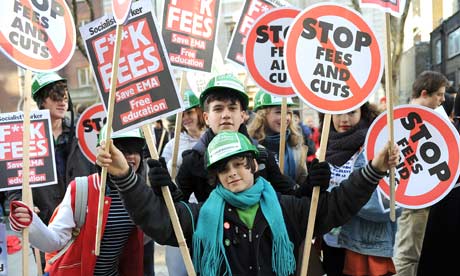
While student protest movements have embraced the rhetoric of ‘free education’ and ‘educational equality for all’, their rise and fall over the past few months has proved them to be only little more than empty politician-bashing.

Following the publication of the ‘White Paper’ by Universities Minister David Willets in June 2011, students and academics joined forces in what looked to be a widespread move of dissent across the world of higher education. The most controversial of the Paper’s content, the decision to raise tuition fees to a maximum of £9,000 per year, came under particular fire from journalists, students and academics alike as being ‘untenable’ and ‘unfair’.

Seen by some as “the most radical shakeup of the higher education in decades”(Education Guardian, 28.06.11), it sparked a largely student-led backlash that Willetts can hardly have anticipated. Ignoring the minister’s measures within the legislation to offset costs over an extended period of time through an interest-free loan, not to mention the drive to encourage popular universities to increase their intake and have costs based on employment outcomes, the reaction was predominantly one of vitriol.


What seemed particularly striking throughout the process of anger and revolt (if we can call it that) is the degree to which criticism, and especially on students’ behalf, was not leveled in a reasonable or consistent way. While, for example, the University of Cambridge as a whole published a detailed and comprehensive account of the University’s objections to the paper in their document The Government White Paper: Students at the Heart of the System Response to the Consultation from the Council of the University of Cambridge following meetings occurring from January onwards (much of them about speculative legislation rather than what had been published), opposition on the student front has been far more disparate and, sadly, misinformed.

This became increasingly obvious come November, when members of Cambridge Defend Education (CDE), a student activist group who claims their aim is to run “an active campaign to fight government proposals which threaten the future of higher education, as part of the fight against wider public sector cuts”  decided to occupy the Lady Mitchell Hall (LMH) building on Cambridge’s arts and humanities campus. The occupation, which ran for a little over a week running up to the end of last academic term, turned out to be more bluff than content. CDE’s members, like any student activists, were certainly enthusiastic about their cause; upon meeting them, they were keen to emphasise what they considered to be the ‘evils’ of the White Paper, along with promoting their own, alternative ‘White Paper’, which would apparently solve all the problems of funding higher education faced by the government at this time.

Yet it is notable that, when Willetts himself came to respond in a talk at LMH on the 22ndNovember, the protestors simply did not let him make his speech on ‘The Idea of the University’. The minister was heckled continuously to the extent that his speech was cancelled and he was forced to leave. (See video)  Cambridge academic Simon Goldhill, who had organized the talk, told student newspaper The Tab that CDE’s actions were “self-indulgent nonsense” and “a shame to Cambridge.” The occupation itself seemed to style itself as a pseudo-Marxist liberation movement, touting such literature as the ‘Socialist Workers Party’ pamphlets which were spread across LMH. The hall itself remained virtually empty for all but a few hours of the occupation. Having had no personal contact with the other, parallel Occupy movements at the Bloomsbury, Goldsmith’s and Warwick Universities, one should not generalize, but in the case of Cambridge it certainly seemed to be the case that all the ‘anger’ that CDE and similar movements feel against the evils of the ‘government’ and the ‘cuts’ could be much more profitably employed.

Whilst distributing pictures of Lenin and reciting revolutionary poetry may be useful in stirring up the mass hysteria surrounding cuts and education cuts in particular, it provides a mere mask for the absence of measured investigation of policy and real engagement with the authorities concerned (as the heckling incident shows).  How can movements like CDE possibly hope to make a difference if they are not willing to engage, respond and compromise? The bald facts of British economy remain, and it is necessary and right that the education sector should have to bear at least some of the burden. This is not to say that government policy on education is flawless; far from it. But if students really wish to have an impact, rather than merely making empty noises, they are going to have to forget the rhetoric of ‘rebellion’ and start engaging in the process of dialogue. Much as the average student protestor probably enjoys the romantic idea of the Che Guevara-esque rebel, the fact that Britain is functioning under a democracy must preclude this kind of radicalism as a means to change. And, as CDE quietly retired at the end of the term, having thankfully had a negligible effect on lectures and the academic welfare of their fellow students during the time of their occupation, the outcome was clear. We are not living in an age where shouting loudly and waving one’s arms about will have any effect. It is time for the British student to sit down, listen, and begin to engage. Only then can we even hope to start having an effect on our collective future.

Papatya Sutcliffe

Please cite this article as follows:

Sutcliffe, Papatya (May, 2012), “The Future of the British Student”, Vol. I, Issue 3,  pp.23-25,  Centre for Policy and Research on Turkey (ResearchTurkey), London: ResearchTurkey

Research Turkey in Search for New Team Mates

0
Research Turkey in Search for New Team Mates

Research Turkey is seeking dynamic team mates!
Centre for Policy and Research on Turkey (Research Turkey) is an independent, non-profit organisation devoted to policy analysis and research focussing primarily on contemporary Turkey. It aims at sharing a wide range of publication types including reviews, interventions, political, economic and social analyses, working papers, interviews and commentaries, by following interdisciplinary trends in the global world and examining Turkey and the global world from different points of view.  Against the tendency to homogenise perspectives in the media and to reduce complex political and social reality to simplistic analysis, it welcomes theoretical and political pluralism to reach a more comprehensive, multi-sided understanding of contemporary Turkey in its global context. Research Turkey is an institution based in London with offices in İstanbul, Ankara and Brussels. All of Research Turkey’s content is published both in English and Turkish.
Research Turkey also organises public events, politics forums and public lectures and conference in notable universities of the UK such as LSE, King’s College London and SOAS, as well as in other distinguished institutions such as the British Parliament and the British Academy.
You may access our publications and activities from:
www.researchturkey.org
We are seeking dynamic team mates for our UK-based think tank to work with us at different levels and circumstances either in London or in other countries Candidates will be appointed to the necessary departments for translation, project assistance, field study assistance, preparing reports, technical assistance to the website, decoding interviews and reports,  attending national/international conferences and activities, finance and PR assistance and academic journal assistance. Priority will be given to the students or expert graduates of economics, political science, international relations, communication and media and education programmes. The ideal candidate shall have advanced English skills as the content is published both in English and Turkish. However, those who have English or Turkish language skills only will also be allocated to related departments based on their competency. Regardless of the role they are being considered for, the ideal candidates shall be self-starters who are willing to take initiatives for the further enhancement of the institution.
Candidates should send their resumé (CV) and a short cover letter (max. 500 words) on why they want to become a part of the ResearchTurkey team and what kinds of roles they are willing to take by sending an email to [email protected] and/or [email protected]. After the pre-selection process, successful candidates will be contacted and they will be subject to an interview.

Turkey’s Energy Policy towards Becoming an Energy Hub: Internal and External Challenges

1
Turkey’s Energy Policy towards Becoming an Energy Hub: Internal and External Challenges

Turkey’s Energy Policy towards Becoming an Energy Hub: Internal and External Challenges

Abstract

Owing to its strategic geographical location, Turkey is a very important player in the energy security of Europe. Using this opportunity, Turkey has a cherished desire of becoming an energy hub. Turkey is open to let any pipeline through its own territory to achieve this goal. With this aim Turkey not only seeks to ensure its own energy security and receive revenue from pipeline projects as a transit country but also one may assume that such kind of strategy could allow Turkey to open an energy chapter in the European Union (EU) negotiations and accelerate accession to the EU. However, because of some realities such as the competing pipelines supported by Turkey, political instability in the Caspian region, South Caucasus and Middle East, and the importance of the interests of the great powers such as Russia and Iran Turkey should not only believe in its own resources, it should also take some other factors into account as well.  Taking all these factors into consideration it is not for certain that Turkey will become an energy hub in the near future.

Introduction

Turkey’s favorable geostrategic location as the bridge to Europe, Central Asia, and the Caspian Sea has historically been very advantageous for Turkey, as it has previously made Turkey the gatekeeper for goods moving westward. Today, the situation is the same and especially for Turkey alongside its raising economic and political power Turkey with its central location is an important energy transit country for oil and natural gas going to the energy-hungry European Union (EU) from Middle East, the Caspian Sea, Central Asia, and Russia because it is located between hydrocarbon consumers and suppliers.

In this regard, Turkey can use an energy strategy to achieve its foreign policy aims towards these regions. Therefore, Turkey’s geopolitical position as an energy transit country can be used as a tool to promote its foreign policy objectives by supporting any possible pipeline projects passing through Turkey, especially those that connect its territory with European consumers. Given the fact that today in geopolitical competition for power pipeline routes have become a major factor that gives leverage and economic advantage, in this regard, the geostrategic location of Turkey gives it such an opportunity (Coşkun and Carlson, 2010). Although Turkey does not have energy resources of its own, “having control over energy transport corridors could be almost as essential as having control over energy supplies themselves” (Tekin/Walterova, 2007, p.84). Thus with lack of energy resources of its own Turkey is able to be as important as energy-rich countries politically and economically given its centrality.

Background

According to Turkey’s Energy Strategy, the ultimate aim of Turkey is to promote its own energy security. For this purpose, Turkey has to set the objective to diversify its energy supply routes, source countries, and contribute to Europe’s energy security. By setting these objectives together with its foreign policy ambitions provided Turkey with the goal of becoming an energy gateway to the European Union. To promote this aim of becoming an energy hub, Ankara has permitted the construction pipelines and its supporting infrastructure within its territory.  Thus these pipelines are the integral elements of Turkey’s energy strategy because Ankara has gained revenues from transit tariffs and regional influence through the control of these energy routes (Hill 2004, p.213).

The main component of the East-West Energy Corridor is the Baku-Tbilisi-Ceyhan (BTC) pipeline, which is a crude oil pipeline system that extends from the Azeri-Chirag-Guneshli (ACG) field through Azerbaijan and Georgia to a terminal at Ceyhan. It has been operating since 2006 and has the capacity of 1 million barrels per day, and at 1760 kilometers is the second longest of its kind in the world. As of 15 October 2012, over 1.5 billion barrels of Azeri oil were loaded onto tankers from Ceyhan and shipped to European markets (Ministry of Foreign Affairs of Turkey, 2012). The second component of the East-West Energy Corridor is the South Caucasus natural gas pipeline which has been operational since 2007 and transports gas from the Shah Deniz field of the Caspian Sea in Azerbaijan, through Georgia to Turkey. This pipeline has the capacity of 6.6 billion cm gas. Turkey supports all Southern Gas Corridor projects passing through Turkish territory. In 2009, an intergovernmental agreement was signed in Ankara between Turkey, Bulgaria, Hungary, Romania, and Austria. According to this agreement, natural gas had to be transported through the planned Nabucco pipeline. It was a major step towards decreasing the EU’s dependence of energy on Russia. The pipeline was supposed to carry Azeri, Turkmen, Iraqi, and Egyptian gas to Europe via Turkey; however, there was no agreement between the shareholders on the funding and tariffs. According to Mehmet Sheflek (2009), giving a start for the Nabucco project in 2009 was a significant step for transforming Turkey into a strategic energy distribution point”.

In 2009, Russia signed a protocol with Turkey routing the pipeline called, the South Stream, through the Turkish territorial waters which was a rival to Nabucco. As Russia has been having problems with Ukraine, the pipeline should have passed through Turkey and the Black Sea. However, there were contentions about Turkey’s assistance to Russia for letting the pipeline pass through Turkey’s soil and its loyalty to the Nabucco project, as the South Stream was a rival to Nabucco.  These facts clearly show Turkey’s aim because Ankara supports any pipeline project passing through its territory. Moreover, on June 28, 2012 was a watershed moment for Azerbaijan and Turkey, as both governments signed the final agreement to establish a consortium for the implementation of Trans-Anatolian Gas Pipeline (TANAP). It sets the stage in energy history of both countries as well as Europe; officially opening the coveted “Southern Gas Corridor” to the EU states. The pipeline with estimated cost of 7 billion USD will transport 16 bcm of gas annually from Azerbaijan through Georgia to Turkey, and the greatest amount of the gas will be delivered to Europe. With this pipeline, Nabucco was replaced with Nabucco West and another transport route called TAP (Trans Adriatic Pipeline) was also proposed as a project that will join TANAP to carry Azeri gas to Europe. On June 28, 2013, The Shah Deniz Consortium chose TAP over Nabucco West as an energy route to Europe via Turkey.  These pipeline projects further demonstrate that Turkey is striving to become an energy hub. There is a lot of literature that reveals Turkey’s aim of becoming an energy hub in future, but this paper will try to show that whether it is possible for Turkey to become an energy hub. Are there obstacles for Turkey’s ambition of becoming an energy hub? Moreover, the paper will also approach to the issue from a different aspect i.e. Turkey’s energy strategy as a part of the EU accession negotiations. How can Turkey’s energy policy affect to its negotiations with the European Union?

Why does Turkey want to become an energy hub? It is because of both domestic issues and achieving foreign policy aims.  Turkey’s energy strategy puts forward the aim of achieving its own energy security. Turkey is an energy-poor country and alongside that its energy demand is rapidly increasing. Today, Turkey imports 70 percent of its oil and gas; Russia and Iran are its top suppliers. According to the U.S. Energy Information Administration (2013), over the last two years, Turkey has seen the fastest growth in energy demand in the OECD. Additionally, energy usage in Turkey is expected to double over the next decade. Therefore, Turkey is open for any pipeline through its own territory to provide a domestic energy supply and to diversify energy sources in addition to receiving revenues from those pipelines. Combined with domestic issues, there are foreign policy objectives as well. Using energy as a tool, Turkey is trying to become an active regional actor.

Is there any Link between Turkey’s Energy Strategy and Its Goal of Joining EU?

After becoming a republic in 1923, Turkey started to have a Western-oriented foreign policy. Turkey became an associated member of the EU and it has conducted political and economic reforms for becoming a full member of the European Union since 2000. This process of “Europeanization” has had a great impact on Turkey’s foreign policy. In this regard, Turkey’s ambition of becoming an energy hub between Asia, the Middle East and Europe does not represent a shift eastwards; instead, it wants to provide energy security and diversification of energy to the EU in order to strengthen its negotiating chips towards becoming an EU member (Dimitrios/Eleni, 2010). According to Turkey’s energy strategy, “Turkey believes that the opening of the energy chapter will surely pave the way for negotiations with the EU on Turkey’s membership to the Energy Community” (MFA, 2012). Turkey enhances its position in the West by increasing its influence in the region to prove itself as a reliable and attractive partner for the U.S. and the EU.  All the pipelines that Turkey agrees to are providing the EU’s energy security. In this sense, according to the Ministry of Foreign Affairs of the Republic of Turkey (2009: 6), “Turkey’s objective is to become Europe’s fourth main artery of energy supply following Norway, Russia and Algeria’, which ‘will open a new avenue for cooperation between Turkey and the EU”.

The EU is highly dependent on external sources of hydrocarbons to meet its domestic demand. According to calculations by the EU Commission (2010: 13), the EU’s import dependency on oil in 2007 was 82.6%, and on natural gas 60.3%. It is estimated that demand for natural gas in the EU will increase by 14%-23% until 2030 and its dependence on imports of gas will be nearly 70% (Eurogas 2010: 2, 9). Therefore, Brussels has included the topic of gas supply security in its energy policy. The EU mainly imports its gas from Russia, but Russia’s use of energy as a “weapon” for political leverage over the EU makes Russia a non-reliable partner for the EU and it makes the EU seek out other possible sources of natural gas such as Azerbaijan, Turkmenistan and the Middle East. However, the routes from these countries are limited; all routes cross Turkey’s territory. Thus, Turkey plays a major role in the EU’s energy security in this context. Moreover, Turkey’s access to Black Sea and the Mediterranean Sea gives it an opportunity of controlling the passage through the Bosporus and the Dardanelles Straits. Furthermore, the recent dispute between Russia and Ukraine has forced Russia to build its pipelines through Turkey, too.  Therefore, Turkey can use its favorable position as a transit corridor for energy resources to get the role of energy hub by controlling gas inflows from Azerbaijan, Turkmenistan, Iran, Iraq, and Russia. In this sense, the EU officially stated in the 2004 Progress Report on Turkey that “Turkey will play a pivotal role in diversifying resources and routes for oil and gas transit from neighboring countries to the EU” (European Commission 2004: 116).

Turkey thinks that the pipelines that pass through its territory will place it in a privileged position in regards with its relations with the EU to negotiate other matters in its favor. In this sense, it has been officially stated that ‘Turkey has also started talks with the EU on Turkey’s membership to the Energy Community in September [2010]’ (Ministry of Foreign Affairs 2011: 4). Ankara believes that the opening of the energy chapter will “pave the way for the success in negotiations with the EU on Turkey’s membership to the Energy Community” (Ministry of Foreign Affairs 2011: 4). During Nabucco negotiations, the government expressly stated that it would participate in the project if only the progress of the energy chapter was possible in the EU accession talks (Krauer, 2011). In this regard, Prime Minister Erdoğan said in 2009: “[i]f we are faced with a situation where the energy chapter is blocked, we would of course review our position [on Nabucco]” (Vucheva 2009). Thus, there is a link between energy and Turkey’s foreign policy aim of joining EU. Turkey hopes that it could use energy as a tool to gain political influence in its relations with EU.

Can Turkey Become an Energy Hub? Internal and External Challenges

Although literature speaks positively about the possibility of Turkey becoming an energy gateway, there are some challenges. One example is the competition between different pipelines supported by Turkey, the political instabilities in the region, and internal instability and problems.  These obstacles together with other geopolitical dynamics and the strategic calculations of other regional actors can impede this process.

First of all, the pipelines supported by Turkey are good enough to ensure Europe’s energy security, however, these pipelines are competing with each other and without all of them Turkey could hardly achieve its ambition of becoming an energy hub. The remarkable examples of these pipelines are Nabucco (which was later called Nabucco West) and South Stream. With the inconsistent policy of Turkey and some other misunderstanding between the shareholders the Nabucco pipeline was not realized and the TANAP project was replaced with Nabucco West which can carry for now only Azeri gas to Europe, however, Azerbaijan alone does not have a sufficient amount of gas to be exported to Europe. Nabucco was the most important pipeline project for Europe to meet its energy demand and to decrease its dependence on Russian gas however; it is no longer a planned pipeline. Without the initial Nabucco, Turkey is unlikely to become an energy hub. According to Carlson (2010): “there is a lack of coherent strategy on the part of Turkey as the government is looking at short-term objectives such as trying to increase the speed of EU accession negotiations, negotiate a low price for Azerbaijani gas, and to keep on good relations with Russia.”

Turkey’s domestic energy consumption is constantly increasing as indicated above. Thus, meeting domestic demand and re-exporting oil and gas to Europe there should be enough pipeline capacity across Turkey to carry the Caspian and Middle Eastern gas to Europe. Therefore, incoherent energy policy between rival pipelines hampers this process. For example, TANAP will carry only 16 bcm gas and 6 bcm will be used for fulfilling Turkey’s internal demand and the rest will go to Europe by the TAP. 10 bcm is not sufficient enough to meet Europe’s demand.

Another domestic challenge is that there was could still be political instability in the Kurdish region in the southeast which disrupts the transportation of oil and gas. For example, in 1996 the Kurdish Worker’s Party’s (PKK) leader, Abdullah Öcalan, stated that they “would not permit any pipelines from the Caspian to run across Kurdish territory” (Hill, 2004, p. 231).  As a proof of that we can name the bombing of the BTC which caused the shutdown of the pipeline for almost a month, there were again two explosions along the BTC pipeline which resulted in an estimated 1.5 billion USD operational loss (Eissler, 2012), moreover, there was terrorism and sabotage along the Kirkuk-Ceyhan pipeline in the last ten years. As most important pipelines are crossing the regions where PKK is active, it is not a reliable route for Europe to transport gas. Although there have been new developments between PKK and the government towards peace, unknown militants have bombed a section of Kirkuk-Ceyhan pipeline carrying Iraqi crude oil from the northern city of Kirkuk to Turkey’s Mediterranean port of Ceyhan (Press TV, 2013). It is unclear now as to what will happen in the region with the recent peace process underway, but it seems this region remains a potential target and volatile area.

The external challenges are that the Caspian region and the Middle East are not stable either. These are the only energy sources that can diversify Europe’s energy routes. However, the ongoing Karabakh conflict makes Azerbaijan a risky investment because the pipelines are near the border with Armenia and if a war would start between the two countries, the pipeline’s security would be in question. Moreover, the Abkhazia and South Ossetia conflicts are also a factor that threatens the security of the pipelines passing through Georgia. The situation is the same in the Middle East as well given there is too much political instability in that region, especially in Syria. Possible regime changes in those Middle East countries will affect Turkey’s friendly relations with them. So, the energy sources that Turkey is relying on and wants to use for transport to Europe are not politically stable. Furthermore, recently Israel has claimed that it has big amount of gas reserves and wants to cooperate with Turkey on transporting its gas, however, such kind of pipeline should cross Cyprus territory and as Turkey has not recognized Cyprus, it is unlikely that such a project could happen.

Another external challenge in the Caucasus and Middle East is that other powerful actors also have interests in these regions, especially Russia and Iran. Russia has political leverage on Kazakhstan and Turkmenistan because it tries to buy energy of these states in order to prevent the Caspian gas to be transported to Europe. Its political leverage is only less on Azerbaijan, as Azerbaijan is in the eastern part of the Caspian Sea, but Azerbaijan alone cannot provide Europe’s energy security. One of the reasons why Nabucco was not realized is that it was supposed to carry Turkmen gas via the Trans-Caspian pipeline; however, as the legal status of the Caspian Sea has not been resolved yet, Iran and Russia have not permitted the construction of any seabed pipeline in the Caspian. Moreover, Iran aims to consolidate its status in Central Asia by transporting energy sources of that region through its own territory to the international markets. As Iran offers the most competitive transportation route for Caspian oil to world markets, it poses a challenge for Turkey’s ambition to be an energy hub (Hill 2004: 232). When Iranian interests are on stage, Turkey is vulnerable in terms of maneuvering, as Iran has more leverage on the Caspian Sea than gas pipeline proposals.  Turkey’s strategic location and its resources are not sufficient to realize so many pipeline projects, in addition to this, the interests of the regional actors are also important to consider.

Conflicting Pipelines and Domestic Terrorism: A Challenging Road Ahead

Turkey’s geographic location gives it the privilege to provide Europe’s energy security, although, it does not have energy resources of its own. In this regard, the above mentioned pipeline projects that Turkey joins to cross through its territory shows that Turkey aims to become an energy hub. The reasons behind this energy strategy are multi-dimensional. Besides receiving revenue from transporting this energy to Europe, Turkey wants to become more active in the region through making energy as a tool, but one factor that is more important is if Turkey can accelerate its accession to EU by opening energy chapter in its negotiations with EU. This condition was put forward in Nabucco negotiations. However, Turkey’s energy strategy can face some serious problems both internally and externally because Turkey’s energy strategy is not consistent as it supports rival pipelines and domestic energy demand is increasing. Moreover, the political problems with the PKK and the Cyprus issue also challenge its energy strategy. Externally, Turkey supports the pipelines which come from politically instable regions namely the Caspian and the Middle East where there are ethnic conflicts and political unrest. Besides, the interests of regional actors such as Russia and Iran do not coincide with the aim of Turkey as those states have strong leverage over the Caspian and this leverage puts the ambition of Turkey to become energy hub under suspicion. Nevertheless, Turkey should also calculate geopolitical dynamics and the interests of others such as Russia and Iran in its energy strategy by not only relying on its own resources.

Narmin Jarchalova, Azebaijan Diplomatic Academy
Please cite this publication as follows:
Jarchalova, Narmin (September, 2013), “Turkey’s Energy Policy towards Becoming an Energy Hub: Internal and External Challenges”, Vol. II, Issue 7, pp.15-22, Centre for Policy and Research on Turkey (ResearchTurkey), London, Research Turkey. (http://researchturkey.org/dev/?p=4073)

Bibliography

Press TV,  Attack on Iraq-Turkey oil pipeline halts flow (May 13, 2013), http://www.presstv.ir/detail/2013/05/13/303350/iraqturkey-oil-pipeline-bombed/
Bezen Balamir Coşkun/Richard Carlson (2010) New Energy Geopolitics: Why does Turkey Matter?, Insight Turkey
DIMITRIOS TRIANTAPHYLLOU and ELENI FOTIOU (2010), The EU and Turkey in Energy Diplomacy, Insight Turkey,vol.12
Eric R. Eissler (2012), Regional Energy Security: Turkey’s Ambition to Become a Regional Energy Hub, Research Turkey, http://researchturkey.org/dev/wp-content/uploads/2012/09/ResearchTurkey_Regional-Energy-Security_Eric-R.-Eissler.pdf
European Commission (2004) 2004 Regular Report on Turkey’s Progress towards Accession. ‹http://ec.europa.eu/enlargement/archives/pdf/key_docu ments/2004/rr_tr_2004_en.pdf›.
Eurogas (2010) Long term outlook for gas demand and supply 2007–2030, ‹http://www.eurogas.org/uploaded/Eurogas%20LT%20Outlook%202007-2030_Final_251110.pdf›.
European Commission (2010) EU Energy in Figures 2010. Statistical Pocketbook 2010. ‹http://ec.europa.eu/energy/publications/doc/statistics/part_2_energy_pocket_book_2010.pdf›.
Hillary Mann-Leverett (2012), Turkey’s Energy Politics as Foreign Policy in the Twenty-first Century, American University
Fiona Hill (2004) Caspian Conundrum: Pipelines and Energy Networks. In: Martin, Lenore G./Keridis, Dimitris (eds.) The Future of Turkish Foreign Policy. Cambridge, MA: The MIT Press
Ksenia Krauer-Pacheco (2011),
Turkey as a Transit Country and Energy Hub: The Link to Its Foreign Policy Aims, http://www.forschungsstelle.uni-bremen.de/UserFiles/file/fsoAP118.pdf
Mehmet Sheflek (2009), Turkey’s ambition to become energy hub remains in place, http://www.todayszaman.com/news-196897-turkeys-ambition-to-become-energy-hub-remains-in-place.html
Ministry of Foreign Affairs, Turkey’s Energy Strategy, http://www.mfa.gov.tr/turkeys-energy-strategy.en.mfa
Ministry of Foreign Affairs (2011) Turkey’s Energy Strategy, ‹http://www.google.com/url?q=http://www.mfa.gov.tr/%255Cdata%255CDISPOLITIKA%255CEnerjiPolitikasi/Mayis2011ing.docx&sa=U&ei=32HrTtf-J8ewhAe6q5jQCA&ved=0CAgQFjAC&client=internal-uds-cse&usg=AFQjCNGyDmODu-_gKOBU05qEAr5DinewNg›.
Natural Gas Europe, Will Turkey Benefit from its Centrality?, http://www.naturalgaseurope.com/will-turkey-benefit-from-its-centrality
Nicole Leonard (2013), Turkey’s role as energy hub: a sustainable future?, http://www.yourmiddleeast.com/columns/article/turkeys-role-as-energy-hub-a-sustainable-future_12500
Soner Hacihaliloglu (2012), New Energy Geopolitics: Turkey as Energy Hub, http://enerji-verimliligi.blogspot.com/2012/02/new-energy-geopolitics-turkey-as-energy.html
Ali Tekin / Iwa Walterova (2007) Turkey’s Geopolitical Role: The Energy Angle, Middle East Policy
U.S Energy Information Administration (2013), Country Info, http://www.eia.gov/countries/cab.cfm?fips=TU


Interview with Zelal Ayman: Women’ Movement and Local Administration

0
Interview with Zelal Ayman: Women’ Movement and Local Administration As Centre for Policy and Research on Turkey (Research Turkey) we had an interview with Zelal Ayman who has been in women’ movement, since 90’s, coordinator of Woman Human Rights Education Program in Women’ Human Rights New Solution Association. In the interview, we talked about women’ movement and its relationships with local administrations and focused on the interaction of women’s movement that takes part in local administrations of the current system of Turkey and makes over the elements. The interview which we widely spoke about the meaning of Local Administration for women, […]
To access this post, you must purchase Annual Membership.

CALL FOR CONFERENCE: Empire, Capital, and Transnational Resistance: Philosophical and Interdisciplinary Approaches – Centre for Applied Philosophy, Politics and Ethics (CAPPE) – University of Brighton

0

CALL FOR CONFERENCE: Empire, Capital, and Transnational Resistance: Philosophical and Interdisciplinary Approaches – Centre for Applied Philosophy, Politics and Ethics (CAPPE) – University of Brighton

13th September 2017 – 15th September 2017

This conference considers recent forms of resistance to corporate, neoliberal and state power in the context of the post-colonial world. It looks towards the emergence of transnational forms of resistance linking different parts of the globe, exploring their limits and their potential.

The Centre for Applied Philosophy, Politics and Ethics at the University of Brighton welcomes interdisciplinary papers on any aspect(s) of such resistance from, among others, those working in philosophy, politics, ethics, area studies, global ethics, and geography, cultural and critical theory.

Submissions

Possible themes include:

  • What is political action? What counts as political resistance?
  • What is political about political philosophy and or politics?
  • How should we understand ‘the state’, ’empire’ and ‘capital’ in today’s world?
  • How does the changing relationship between state and corporation affect understandings of citizenship?
  • What are the interrelations between corporate and disciplinary power?
  • What is the question of difference in the neoliberal conjuncture?
  • Borders
  • Rethinking ‘colonialism’.
  • Trump, Brexit and the Right: implications of realignment of resistance.

Deadline

30 June 2017

Further Information

For more details please see:

http://arts.brighton.ac.uk/research/cappe/calendar/empire,-capital,-and-transnational-resistance

Write for Us

0

Write for Research Turkey

Centre for Policy and Research on Turkey (Research Turkey) invites all willing contributors to publish their works such as Academic Articles, Interview Transcripts and Research/Working Papers. Research Turkey is an international, refereed publication. All submitted work is sent to referees to be reviewed and go through a professional editorial process before being published. The authors are provided at least two referee reports along with feedback and support on their work. Everyone from all disciplines who would like to participate in a refereeing and editorial check process that operates within ‘Acceptance’, ‘Revise and Submit’ and ‘Rejection’ decision points as well as a publication process undertaken by a professional team, are welcome to summit their work for consideration.

Research Turkey encourages authors to write in a clear and intelligible language for a wider and general audience. You may find below, explanations to determine the type of your publication for clarity in explaining your theoretical concepts and develop your argument that is supported by evidence. At Research Turkey, we encourage and host a public conversation on contemporary Turkish politics, economics and society as long as it does not include hate speech, sexist discourses or discriminatory or alike statements. If a paper is polemical, the criticised authors are invited to respond to enable a fruitful and productive discussion.

Submissions can include political, economic and social analyses of contemporary Turkey and the global world. Although our primary focus is on Turkey and Turkish politics, we also encourage articles and scholarship that pertain to other countries or general commentary on issues related to foreign affairs, the global perspectives on politics and economy, society, and culture as well as memoirs and essays.” Along with your publication please also attach a brief CV of yourself. Depending on your preference, you may submit your publication in English, Turkish or in both languages.

The types of publications to be published at Research Turkey are as follow:

  • Academic Article:

Academic articles are the most rigorous type of publications that the Centre for Policy and Research on Turkey publishes.  Academic Articles should answer a line of inquiry with a clear research question, which is systemically tested through a meticulous methodological approach and vast scholastic research. Academic articles are generally considered to intellectually contribute to a body of literature (topic/subject) by addressing fundamental framing questions, critiquing previous academic work, or to hold a discussion within said body of literature.  At Research Turkey, the academic articles to be considered for publication shall have-between 3,000 and 12,000 words.

  • Interview Transcript:

Interview Transcripts are a written record of a discussion between the interviewer and the interviewee on a particular subject or issue that the interviewee is an expert or has credibility on.  Interviews should focus on a line of inquiry or subject that can offer insights to our readers. At Research Turkey, Interview Transcripts have no particular length, but should have verbatim transcripts that are organized for publication.

  • Opinion Piece (Op-Ed)

Opinion pieces are written on either a subject-matter or issue that the author wants to present the reader with his or hers unique perspective.  Opinion pieces are generally a short essay that expresses the opinion of the author. At Research Turkey, Opinion pieces to be considered for publications should have between 600 and 2,000 words.

  • Policy Paper:

Policy Papers address an issue in contemporary politics or a paper that critiques a current policy that is clearly discernible. A good policy paper should provide clear alternatives to the current policy and should make have sufficient data or research presented to provide the target audience (i.e. the decision-maker) with information to make a decision on the policy proposal. At Research Turkey, policy papers are in-between 2,000 and 6,000 words.

  • Research/Working Paper:

Research or Working Papers, are semi-academic papers written with the objective of becoming full academic works at a later date. Research or Working papers should present an introductory hypothesis, an empirical puzzle and/or a theoretical debate on a selected topic, and should discuss it with a clear argument and contextual framework. Research and Working papers are meant to incur critical feedback that assists authors in crafting their project. At Research Turkey, Research or Working Papers, are in-between 3,000 and 10,000 words.

Required Formatting for Publications

Font: Times New Roman, size 12 (in the main text), size 10 (in the footnotes or endnotes)

Main Heading: Times New Roman, Size 16, bold, centred, only the first letters of words are capped.

Sub Headings: Times New Roman, Size 14, bold, centred, only the first letters of words are capped.

References Title: Times New Roman, Size 14, bold, centred nly the first letters of words are capped.

Paragraph Structure: No indentation except for quoted paragraphs, justified format.

End Notes: In the footer with 10 sized font, Times New Roman 

Abstract: A short abstract of 50-300 words to be submitted along with your the article or research/policy paper.


Referencing System: Harvard System – Referencing for the most  common publications:

In-Text referencing

(Surname of Author1 and Surname of Author2, publication year: page numbers)

Example:

With presentations, ‘structure must be clear and precise’ (McCarthy and Hatcher, 1996: 69-70).

In References List:

SurnameAuthor1, InitialofNameAuthor1. and SurnameAuthor2, InitialofNameAuthor2. (Publication Year) Title of Book, Publication Location: Publisher.

Example:

McCarthy, P. and Hatcher, C. (1996) Speaking persuasively: Making the most of your presentations, Sydney: Allen and Unwin.

If you would like to send a document to be considered for publication, you may send it directly to the following e-mail address: [email protected]. All the candidate authors shall also send an abstract of no more than 500 words of the article they would like to be considered for review.

May you have any questions regarding publishing your work on Research Turkey, please contact us at either [email protected] or [email protected].

Centre for Policy and Research on Turkey (Research Turkey)

Interview with Professor Ahmet Sözen: Cyprus Peace Negotiations and Future of the Island

0
CIPMO - Centro Italiano per la Pace in Medio Oriente Conferenza del 19-10-2016 in Roma
Interview with Professor Ahmet Sözen: Cyprus Peace Negotiations and Future of the Island Peace negotiations between the leaders of two parties, Nikos Anastasiadis and Mustafa Akıncı, which started in Cyprus in 2015, have been taken to Geneva on the 9th of January. Talks were deemed international when three guarantor countries; Turkey, Greece and England, first came together. Nonetheless, the talks continue to be made with exchanged maps from both sides and with controversial issues such as guarantees, presence of Turkish military on the island, and security. Supporters of solution from both parties interpret Geneva talks as the last chance for […]
To access this post, you must purchase Annual Membership.