Home Blog Page 26

Call for Papers – 40 Years Since the First Enlargement

0

Call for papers deadline – 29 October 2012 

Venue – Woburn House, London, 7-8 March 2013

2013 is the 40th anniversary of the first enlargement of the European Union. To mark the occasion, UACES is organising a conference exploring the evolution of the integration project since the accession of the UK, Denmark and Ireland in 1973. The anniversary provides an opportunity to assess the impact of membership across these states and to advance the understanding of the contemporary conditions of European integration.
The conference will involve a mixture of plenary addresses from leading political figures and five panels dedicated to assessing the impact of EU membership from a range of disciplinary perspectives.
We invite proposals for papers which are focused on any of these areas:
Panel 1:                ’The First Enlargement: Good for the EU, Good for the Acceding States?’
Panel 2:                ‘The Impact on Domestic Politics, Society and Media’
Panel 3:                ‘The Economic Impact of Accession’
Panel 4:                ‘A Changed Legal Order?’
Panel 5:                ‘A Reformed Public Administration?’
To submit a paper proposal send your 250-word abstract as a word document to [email protected]. Please indicate ONE panel into which your paper fits.
The deadline for paper proposals is Monday 29 October 2012.
Find out more: www.uaces.org/forty
This conference is being organised with the support of the Lifelong Learning Programme of the European Union.


Rethinking Climate Change, Conflict and Security International Conference

0

18-19 October 2012

Sussex Centre for International Security

University of Sussex 

Read more:

We warmly invite you to the two-day international conference, ‘Rethinking Climate Change, Conflict and Security’, taking place at the Sussex Centre for International Security at the University of Sussex, 18th-19th October 2012.

What are the conflict and security implications of global climate change? This question has received widespread attention from policy makers in recent years, with most concluding that climate change will in all likelihood become a significant ‘threat multiplier’ to existing patterns of insecurity and discord.  Academic debate has tended to be more divided, yet despite differences in emphasis a common set of assumptions have come to dominate contemporary academic and policy discourse on climate change and security.

The guiding premise of this two-day international conference at the University of Sussex is that current academic and policy discourse on climate change, conflict and security is framed too narrowly and would benefit from both broadening and critique. Featuring many of the leading scholars of the links between climate change and security, the conference will both set out some of the most recent findings on likely conflict impacts and contest a range of prevailing orthodoxies. It will include a mix of case study and theoretical analyses, including panels on:

  • Theories of climate change and conflict
  • Sub-Saharan Africa
  • Critical discourse analysis and climate security
  • The links between water scarcities, climate change and conflict
  • Migration
  • Case studies from the Arctic to Pakistan
  • Peacemaking, cooperation and climate change

The conference will also feature two keynote addresses, plus a roundtable event featuring leading policymakers in the area of climate security.

The conference is fully open to researchers, students, policymakers, practitioners and the public.

We attach the conference programme for your information and you can find all the details on the website http://rethinkingclimateconflict.wordpress.com

THE DEADLINE FOR REGISTRATIONS IS TUESDAY 9th OCTOBER.

If you require further information, please contact the conference coordinator Joanna Wood at [email protected].

Middle Eastern Congress on Politics and Society Conference

0

9th to 11th October 2012 
Sakarya, Turkey 

Website: http://www.ortadogu.sakarya.edu.tr/Default.aspx?id=1&dil=en 
Contact person: Ismail Numan Telci

Sakarya University invites scholars, public figures and activists of all stripes to join the panels and colloquiums for advancing our understanding of the region. The language will be English, Arabic and Turkish with simultaneous translation provide
Organized by: Sakarya University, Institute for Social Sciences 
Read more:

Institute for Social Sciences of Sakarya University is pleased to announce “Middle Eastern Congress on Politics and Society” which will be held between 9 and 11 October, 2012 in Sakarya, Turkey. The Middle East is under spotlight thanks to the Arab Awakening. The latter refers to a groundbreaking chain of events that require radical reworking not only in the Middle Eastern politics but also in the groves of academe, which have largely been caught off guard and oblivious of the new social dynamics of the region. This congress invites students of the region to reconsider and rework not only the highly topical events of the day but also several phenomena that include citizenry, political action, state building, democratic politics, social legitimacy of authority, social justice, social media, new political consciousness, national self-determination and the post 9/11 international politics of the Middle East. While Europe and the US needed several centuries to develop modern political governance and civil society, the challenge for the Middle Eastern peoples is to press on the means of democratic politics in a much lesser time frame and under perilous conditions. Sakarya University invites scholars, public figures and activists of all stripes to join the panels and colloquiums for advancing our understanding of the region. The language of the Congress will be English, Arabic and Turkish with simultaneous translation provided.

The opening speech of the congress will be given by the Foreign Minister of Turkey, Ahmet Davutoglu.

The Keynote speech of the Congress will be delivered by Prof. Norman Finkelstein.

Some of the other confirmed participants of the Congress include Prof. Mohammed Ayoob, Prof. Anoush Ehteshami, Prof. Udo Steinbach, Prof. Amr Hamzawy, Gideon Levy and Abdulbari Atwan.

Some of the major topics of the congress are the following:

  • Arab awakening: Revolutions in the Middle East, social media, the role of women in the revolutions, international responses.
  • Middle eastern politics: fall of the dictators, rise of new social movements, Islamic political parties, elections and problems of democracy-building
  • Economy: Energy politics, financial crisis, economic development
  • Islam and Society: the rise of new Islamic movements, social Islam and political Islam
  • Turkey and the Middle East: New Turkish foreign policy in the Middle East
  • The Israel/Palestinian Question: the rise of Jewish radicalism, Palestinian politics after the Arab awakening
  • Iran in the regional context: politics of nuclear weapons, Iran in the Middle East, Iran and Israel
  • International Politics of the Middle East: the rise and fall of the US projects and vision in the region, Arab Union, European Union and the Middle East

Spatial Transformations in Istanbul

0

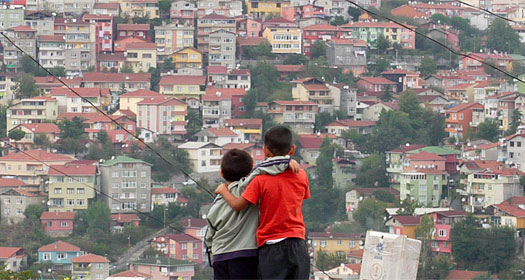
In the spring of 2011 Turkish Prime-Minister Erdoğan organised a press conference and announced with – even to his standards – exceptional bombast his personal plans for the construction of a second Bosporus channel[1]. Matching complete grandeur with complete insanity, this new channel – 50 kilometres long, 150 meters wide and 25 meters deep – should be completed on the hundredth birthday of the republic in 1923.

Click here to continue

Syria: a Proxy War between Russia and the US?

0

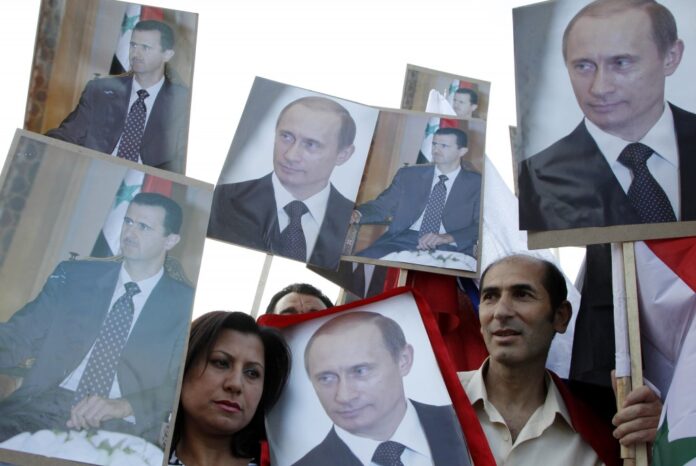
In Syria, there is a proxy war between Saudi Arabia, which is financing the Syrian rebels (‘the Free Syrian Army’) and her staunch ally, the US on the one hand and Russia, which further protects Syria by preventing Chapter 7 of the UN charter on the Security Council on the other. Turkey, as could be understood from the direct phone calls between Prime Minister Recep Tayyip Erdoğan and the US President Barack Obama, is also a party in this war in order to influence the outcome in post-civil war Syria. However, the people of Syria should decide how they want to be governed and it should not be up to outside powers and their interests to decide how the Syrian people should run their country. 

Click here to continue

ResearchTurkey International Conference Call For Papers

1

CENTRE FOR POLICY ANALYSIS AND RESEARCH ON TURKEY (RESEARCHTURKEY) 

Exploring Turkey’s Education Policy: What Do the Global Trends Suggest, What Do the Recent Amendments Really Amend?’

Date: 13-14 December 2012

Venue: Middle East Technical University, Cultural and Convention Centre, Ankara, Turkey

INTERNATIONAL CONFERENCE CALL FOR PAPERS:

Starting from the late 1980s, globalisation has quickly entered into the realm of the education policy in different settings, including Turkey. In particular, fast spread of the globalization process and the neo-liberal transformation introduced profound changes in terms of school finance, employee rights, curriculum development, privatisation and school-environment relations. Similarly, the lexicon of education policy was introduced some new ‘trendy’ concepts such as ‘productivity’, ‘performance’ and ‘human capital’ and governments and business groups started talking about the necessity of schools meeting the needs of the global economy. The global educational agendas promoted by international organisations, such as United Nations, the OECD and the World Bank, now reflected educational discourses about human capital, economic development, and multiculturalism, leading to intense debates between scholars, policy makers and civil society on how the education should be.

Recently, a controversial answer to this question has been given by Ömer Dinçer, the Turkish Minister of Education: ‘A new legal amendment is somewhat obligatory, which renders the primary education gradual, flexible and in line with the needs of democratisation and global trends’. Indeed, the most recent legal arrangements (the so-called 4+4+4 system, the Fatih project, the restructuring of the Ministry of Education with the Statutory Decree numbered 652) which introduced a thorough transformation into the Turkish primary education has been claimed to serve to this purpose from the start.

Against this background, this 2-day conference organized jointly by ResearchTurkey and the Department of Political Science and Public Administration of the Middle East Technical University aims to investigate current trends and changes in Turkish education policy by locating them within the wider context of globalization. The conference will seek to improve our understanding of following questions:

1- What is meant by the ‘global transformation of the education policy’? How are the concepts of ‘productivity’, ‘innovation’, ‘performance’ and project-based learning’ speak to this transformation?

2- What are the implications of global economic dynamics for education?

3- How does the relationship between education and development relate to the global trends in education?

4- Are the concepts of ‘immigration’ and ‘identity’ meaningful categories for explaining the transformation education?

5- To what extent do these debates overlap with the transformation of education in Turkey? Are the recent changes in Turkey regarding education (4+4+4 system, the Fatih project, the restructuring of the Ministry of Education) significant in relation to the global trends in education?

6- In what ways is education a part of the 2023 vision of the AKP government? To what extent is the 2023 vision related to the aforementioned transformation?

ResearchTurkey is pleased to announce its first international conference to be held on December 13 and 14, 2012 at Cultural and Convention Centre, Middle East Technical University, Ankara, Turkey. We welcome papers and panels from various disciplines including education, social policy, sociology, psychology, gender studies and economics digging into various aspects of the transformation of the education policy both in Turkey and in the world. Paper or panel proposals should be prepared for blind review and be sent to [email protected] no later than 20 October 2012 with 3-5 keywords and a maximum of 500 words.

For more information and/or any enquiries: [email protected]

Centre for Policy Analysis and Research on Turkey (ResearchTurkey)
For general enquiries, contact [email protected]
For sending articles and papers, contact [email protected]
www.researchturkey.org


The Association for Middle Eastern Public Policy and Administration (AMEPPA) First Global Conference on Public Policy and Administration in the Middle East

0

Sound Governance: the Key to Peace and Prosperity in the Middle East
November 8 and 9, 2012
Rabat, Morocco
www.ameppa.org
Call for Papers

The Association for Middle Eastern Public Policy and Administration (AMEPPA) is pleased to announce the convening of its Inaugural Conference on November 8 and 9, 2012. in Rabat, Morocco. The conference is also the First Global Conference on Public Policy and Administration in the Middle East.

Scholars are encouraged to submit their proposals to the conference co-chairs, Dr. Jennifer Bremer at [email protected] and Dr. Mohamed Harakat at [email protected] no later than August 31st, 2012. Please limit your abstracts to no more than 500 words.

Abstracts that have been accepted should be submitted as full papers to the conference co-chairs no later than 15 October 2012. Since the conference will be organized in two tracks (Arab Spring and Sound Governance), the reviewers will be looking for a number of key features in proposals for papers:

* Abstracts should be directly related to one of the themes within a track and strongly related to one or more Middle Eastern countries.

* Abstracts should show evidence of theoretical and conceptual underpinning for the proposed paper.

* Papers should be empirically based with evidence of new findings from research by the author(s) or direct involvement with the experience being reported; purely reflective/theoretical/conceptual/hypothetical papers are strongly discouraged and will not be accepted.

* There should be evidence that the proposed paper emerges from contemporary debate within the public policy and administration sphere, broadly defined.

It is not necessary for a proposal to have all of these features, but it should have most of them.

The conference will be held in two tracks titled Arab Spring Track and Sound Governance Track.
For more information please visit:
http://www.ameppa.org/Call-for-Papers.htmlDoğru Yönetişim: Ortadoğu’da Barış ve Refahın Anahtarı
8-9 Kasım 2012
Rabat, Fas
www.ameppa.org

Interview with Dr. Andrew Mango: “Turkey’s Walk from 1923 to 2023: A Critique of the Past and Recent Political Challenges”

6
We are deeply sad to hear that Dr. Andrew Mango, who has been a very good friend and supporter of Research Turkey since its foundation and contributed significantly to our work as well as being a member of our advisory board, passed away on Sunday, 6 July 2014. We deeply regret this unbearable loss and convey our regards to Dr. Mango’s relatives, colleagues, readers, and friends. As Research Turkey team we would like to send our sincere and heartfelt condolences for Andrew, a true friend, and in his beloved memory, we are republishing the most recent, comprehensive interview that he conducted with Research […]
To access this post, you must purchase Annual Membership.

Limited Autonomy of the Civil Society and the Misuse of the EU Accession Process

0
Limited Autonomy of the Civil Society and the Misuse of the EU Accession Process

Misuse of the European integration process by the Justice and Development Party (AKP) is interrelated to a process of the control of the civil society which goes hand in hand with transforming the Turkish cultural capital. According to the interviews conducted with the major civil society leaders, the democratisation discourse of the AKP is superficial. Moreover, the usage of the European integration process by AKP as a room to manoeuvre in the domestic politics and as a tool for Turkey’s further authoritarisation.

Limited Autonomy of the Civil Society and the Misuse of the EU Accession Process

On a recent official visit in Turkey, the European Parliament’s President Martin Schulz stated that the EU Parliament had wondered about the sincerity of the AKP’s reforms and is now convinced that “the EU is of no importance” to them and the reforms are rather of a tactical nature. Schulz said that “There is a difference between Erdoğan’s previous and present attitudes. We had believed that he would carry out fundamental reforms, but he is making tactical reforms. We are disappointed.”[1] In this article, parallel with this scepticism towards the sincerity of the AKP, I propose a new concept in the context of the EU membership process of Turkey, namely the misuse of the European integration process by the government party that is interrelated to a process of the control of the civil society which goes hand-in-hand with transforming the cultural capital in Turkey. I concentrate on some concrete crucial cases, such as the Alevi initiative, the failed Deniz Feneri (Lighthouse) case and the changes in the structure of the High Council of Judges and Prosecutors (HSYK), which, in essence, lead to further democracy deficits in Turkey.

The image of Europe has been a permanent reference point in political discourses in Turkey. Ruling cadres exercise power and ensures their cultural and moral leadership through utilizing the European integration process and, more specifically, the Copenhagen criteria. The most striking example is the use of the European integration process by the AKP as a room to manoeuvre in the domestic politics and as a tool for Turkey’s further authoritarisation. The centre-right Islamist AKP, which defines itself as a party of conservative democrats, justifies its practices and arrangements with reference to the EU accession process and further strengthens its ideological hegemony. In other words, in the current political climate, the AKP instrumentalizes EU accession process as a form of social control.

During the EU accession process, Prime Minister Erdoğan and Minister for EU affairs, Egemen Bağış have continuously stated the commitment of the AKP to the EU membership goal from the start. After the party came to the power in 2002, it implemented a pro-EU political and economic reform agenda. Eight EU harmonization legislation packages were passed by the legislature. Turkish prominent political scientists have agreed upon the fact that AKP’s support for the EU started as a tactic to hinder the repression by the established Kemalist elites and afterwards became a strategic tool in order to distinguish themselves from the earlier political Islam roots, represented by the ideology of Necmettin Erbakan and the Milli Görüş (National Outlook).[2] Moreover, it has aimed to transform the rules and regulations to enhance religious rights and freedoms as a measure against secularist establishment. Yet, there is lately a fierce debate whether the AKP government poses a serious threat to Turkey’s traditional pro-European stance with its shift in foreign policy towards the non-EU neighbours and whether the AKP aims at further authoritarisation of Turkish political system and civil society.

Civil society has become one of the most commonly used term in social scientific discourses that deals with the social, political and economic transformation of Turkey in the EU accession process. Nevertheless, the AKP aims to control the whole Turkish civil society and intends to transform Turkey’s cultural capital.[3] With this in mind, an influential group of social scientists argue that the government party AKP practices subtle discrimination among civil society organizations to strengthen its cultural and moral leadership. It is argued that the government is closer to those groups with which it has ideological or political similarities. This has become more explicit when the AKP government supported the conservative Turkish charity named “Deniz Feneri” (Lighthouse), whose representatives are the members of the AKP. Critics accuse the AKP of protecting the accomplices in the Lighthouse Affair, the biggest charity corruption case in Germany’s history, and of using the embezzled money to support the AKP’s political aims. The opposition party, Republican People’s Party (CHP) argued that the money was utilized to support media close to the AKP. Recently, three prosecutors were abruptly removed from the case without sufficient cause. They could now face jail terms and expulsion from the profession. In fact, they are persecuted for advancing the Lighthouse probe by the AKP controlled judiciary.[4]

In the European Commission Progress Report 2010, the adoption of the constitutional amendments on the composition of the HSYK is considered to be a positive step. The recent arrangements have changed the council’s makeup significantly, giving the AKP a potentially broad scope of authority. The EU has supported the changes in the structure of the HSYK and appraised it as a democratisation step, despite the fact that opposition parties and civil society organisations warned against the danger that the judiciary could become dependent to the government party. In Turkey, the fear that the AKP would consolidate its power through the amendments, came true. Partly as a consequence of these changes, activists and journalists have been arrested in the past months by Turkish police in alleged terror plot but actually in wave of media and opposition repression.  KCK operations is used as principal means to push the BDP politicians out of politics. The Confederation of Trade Unions and Public Employees (KESK), the Human Rights Association (IHD), the Education and Science Workers’ Union (Eğitim-Sen), as well as various other non-governmental organizations accused of being linked to the KCK.

When Minister for EU Affairs Egemen Bağış was pressed on the topic of arrested journalists on the BBC’s renowned news program “Hard Talk” on March 1, he stated that there were no journalists arrested due to their professional activities, but there are some people who carried journalist identification cards who have been chaught while raping another person. The fact that there is no journalist on the lists who has been arrested because of the crime of rape causes suspects on the honesty of the AKP’s statements regarding the arrests. In any case, AKP government denies that there are over 100 journalists in prison and tries to convince the EU with disinformation.

Lately, the AKP governed Istanbul Metropolitan Municipality has adopted new regulations on the management of the Istanbul City Theaters; which would change the administrative committe of the Istanbul City Theaters. It is argued that this would increase control over the artistic content of city theaters, which are formerly accused by the AKP of underestimating religious people.

One further example on how the AKP policies contradict civil liberties or democracy rather than fitting into the EU accession process is the Alevi initiative launched in 2007, which has failed due to the intention of the AKP to create an official form of Alevism, ruled by its Sunni-led Directorate of Religious Affairs. At that time, the European leaders supported government’s Alevi initiative of the AKP. Nevertheless, Vicdan Baykara, an Alevi labour union leader said: “The government wants to extinguish the Alevi movement. If the Directorate of Religious Affairs recognizes one form of Alevism, all other concepts of Alevism will be suppressed and destroyed. In one sense assimilation will occur. So the AKP will make it seem like Alevism is recognized while using methods to diminish it further.”[5] In a recently conducted interview by the author of this article, an Alevi leader stated: ‘The AKP intends to control the whole civil society; they never proposed a solution during the Alevi initiative. They aimed to make us ineffective and take possession on us.’

Existence of strong civil society organizations monitoring the activities of the government has become more prominent in this environment. According to the 31 semi-structured interviews conducted in order to explore the positions of the major civil society leaders vis-à-vis the government, the democratisation discourse of the AKP is superficial. They claim that repression and discrimination dominate government-civil society relations. In order to be considered as legitimate, the ideological or political standings of the civil society organisations have to align with the political preferences of the AKP. To illustrate, Memur-Sen (Confederation of Trade Unions of Public Servants) has close affiliations with the AKP. The Union was the smallest of the three public sector confederations ten years ago, neverthless it has increased its membership from 2002 to 2012 from 41. 000 to 515. 000.[6] The last example of discrimination is the statement of Deputy Prime Minister Bülent Arınç that collective bargaining is only the right of Memur-Sen.[7] The leaders of trade union confederations (DİSK, TÜRK-İŞ)  and confederations of public servants (KESK, KAMU-SEN) criticise the government party to create their own trade and public employee unions so that the with latter they can make others passive.

The following questions are crucial: Has the AKP consolidated its power in Turkey in part by using the EU accession process? Is the accession discourse still necesssary for the AKP? Politics is a dynamic process. There is still an ongoing power struggle in the country. Still the 50% of the Turkish voters vote for other parties than the AKP. [8] On the other hand, the EU may change its ally in Turkey and start supporting the opposition party CHP (Republican People’s Party) more prominently. It can be argued that in the current deadlock the AKP cannot credibly refer to the EU process to justify the violations of fundamental rights the article points out. Yet, it seems like this is not the case. Despite its current power in Turkish politics the AKP would still want to hide behind the EU accession process, or use it to justify its grip on power when necessary.

To conclude, it could be argued that the abuse of civil society has become more common during the EU Accession Process than before. The AKP utilizes the EU accession process as the most appropriate way of holding the political power and pursuing its own political agenda in a slow but steady manner.

 Can Büyükbay, Ph.D. candidate at the Department of Political Science at the University of Zurich

Please cite this publication as follows:

Büyükbay, Can (July, 2012), “Limited Autonomy of the Civil Society and the Misuse of the EU Accession Process”, Vol. I, Issue 5, pp.6-10, Centre for Policy and Research on Turkey (ResearchTurkey), London, ResearchTurkey. (http://researchturkey.org/?p=1528)


[1]  http://siyaset.milliyet.com.tr/tutuklu-vekil-olayi-kabul-edilemez/siyaset/siyasetdetay/29.05.2012/1546261/default.htm

[2]  Keyman, F./ Öniş; Z. (2004): Helsinki, Copenhagen and beyond. Challenges to the New Europe and the Turkish State, In: Uğur, Mehmet; Canefe, Nergis (Eds:): Turkey and European Integration. Accession Prospects and issues,London: Routledge: 184.

[3] Recently, Prime Minister Recep Tayyip Erdoğan said that his government wants to “raise a religious youth” and has characterized abortions a crime and spoken against Caesarian section. From now on, state funded youth camps will be segregated by gender.

[4] CHP European Union Representation Brussels, Turkish News Folder, 1 February 2012    http://kadersevinc.blogactiv.eu/files/2012/02/TurkishNewsFolder-1-Feb2012.pdf

[5] http://www.hurriyetdailynews.com/default.aspx?pageid=438&n=vicdan-baykara-speaks-out-on-alevis-kurds-and-akp-initiatives-2010-10-27

[6] Ministry of Labor and Social Security; http://www.csgb.gov.tr

[7] http://www.memurlar.net/haber/211716/

[8] http://siyaset.milliyet.com.tr/bugun-secim-olsa-iste-son anket/siyaset/siyasetdetay/11.05.2012/1539001/default.htm