Home Blog Page 27

Civil Society Organizations Fighting Corruption: Theory and Practice Workshop University of Surrey, 9-10 July 2012

0

Faculty of Business, Economics and Law, University of Surrey
July 9th and 10th, 2012

Workshop Overview:

Why have State Parties adopted such a cautious approach to CSOs?
Who are CSOs and to whom are they accountable?
How transparent are CSOs themselves and from where do they gain their legitimacy?
What measures are needed to improve the effectiveness of CSOs fighting corruption?
These are some of the questions that will be addressed at this exciting international event. The workshop will feature a mix of papers and keynote presentations. The participants offer a truly international and cross-disciplinary perspective on the relationships between CSOs and the fight against corruption. Keynote speakers include well known academics and professionals withextensive experience of anti-corruption work within state, international and CSO bodies.
The competitive papers give the opportunity to hear from leading figures in the field of corruption research and fall into three broad categories: Concepts and Definitions; National and Regional Practices; and Policy and Institutional Issues. Papers and keynote sessions will be delivered over the two days of the workshop with ample opportunity for dialogue and discussion. The final session brings together key themes and plans for future developments, including the possibility of an edited book (currently being negotiated with publishers).
The workshop fee includes tea/coffee and lunch on both days and an evening dinner (with keynote speaker). There will be opportunities for networking and proposing ideas for future events/activities.
We look forward to welcoming you to this exciting and important forum for discussion and debate.  The delegate fee for the workshop is £95 (including dinner on 9th July, lunch and light refreshments on both days). Delegates will be responsible for their own overnight accommodation; a list of hotels with conference rates will be supplied on receipt of a booking form.

Booking and registration:

To register for the conference please visit http://store.surrey.ac.uk/ <http://store.surrey.ac.uk/>  and click on FBEL under Product Catalogue.
Registration on both days will take place in the Management School Foyer.  The workshops will take place in 14MS01.

Programme:

Monday 9th July
09.00 – 09.30
Registration – Management School Foyer
09.30 – 09.45
Welcome
09.45 – 10.30
Keynote speaker:
Public Management, Social Accountability and Countering Corruption: Organizational Aspects
Roberto Villarreal
United Nations Department of Economic and Social Affairs
10.30 – 11.15
What is a CSO?
M van Hulten
11.15 -11.30
Coffee
11.30 – 12.15
Building Reform Conditions: the role of civil society
R Senderowitsch and A Gallina
12.15 -13.00
CSO a fighting corruption in public procurement in Latin America: advancement and limitations
E G Magana
13.00 – 14.00
Lunch
14.00 -14.45
Keynote speaker:
Citizens Against Corruption: Lessons From the Front Line
Pierre Landell-Mills
Partnership for Transparency Fund
14.45 – 15.30
Heroes or Hypocrites?  An analysis of NGO compliance with Anti-Bribery Laws
R Barrington and L David-Barrett
15.30 – 16.00
Tea
16.00 – 16.45
Keynote speaker:
Corruption – whose values count?
Hans Holmen
Linköping University, Sweden
author of Snakes in Paradise
16.45 – 18.15
Special Guest Presentation:
Siemens Compliance System, Track Record and Challenges
Discussant:
John Garred
Siemens
Professor David Bruce Allen
Dean of the Faculty of Business, Economics & Law, University of Surrey
18.30
Dinner
Tuesday 10th July
09.15 – 10.00
Keynote Speaker:
Who Decides?
SlagjanaTaseva
Transparency International, Macedonia
10.00 – 10.45
Multilevel Mobilization: Civil Society Efforts to Promote Access to Information Laws in Central America
M Grimes
10.45 – 11.00
Coffee
11.00 – 11.45
Curbing Corruption In Nigeria: Building on the Integrity processes as the Extra-Legal Recipe
U Osuaggwu
11.45 – 12.30
Holy alliance against unholy phenomenon: collaboration among civil society organizations in Nigeria
G Odusote
12.30 – 13.30
Lunch
13.30 – 14.15
Keynote speaker:
The Role of CSOs in Policy Development – Maximizing Value; considerations from a Public Service perspective
Margaret Saner
Independent Adviser, Vice Chair of the UN Committee of Experts on Public Administration and former Civil Servant
14.15 – 15.00
Civil society as part of the National Integrity System I
J Wempe
15.00 – 15.45
Civil society as part of the National Integrity System II
W Slingerland
15.45 – 16.30
Tea and closeİşletme, Ekonomi ve Hukuk Fakültesi, Surrey Üniversitesi
9-10 Temmuz 2012

The Present and Future of the G20 From the Perspective of the Global Economy and Turkey

[1]Between the 18th and 19th June 2012, the leaders of G20 summit will meet in Los Cabos, Mexico. Turkey has been nominated for presidency of the summit in the term beginning in 2015.  After discussing a variety of current and long-term problems based on the agenda of 2012 which was determined with respect to the objectives and conclusions of the previous summits, the leaders will try to take important decisions concerning the current situation. The summit, which was expected to take place between September and November is taking place less than eight months later than the last summit under French presidency which took place on the 3rd and 4th November in Cannes. It has been so scheduled to avoid clashing with Mexico’s general elections, due to take place in July 2012. After the summit, which is taking place four months ahead due to political concerns, the work under Mexican presidency will continue until November.

The questions that should be asked here are: since when and on which issues have the G20 countries started to hold summits? Is it an efficient and effective formation? Will the G20 leaders meeting on the 18th and 19th June 2012 be able to compromise on a successful conclusion? What does this successful conclusion depend on? What are the particular concerns that might make us pessimistic or optimistic about the future of the G20? In this evaluation, the answers of these questions will be addressed and discussed with respect to the present and future of world economy and Turkish economy. [2]

G-20 2012 Mexico Summit Agenda and Turkey

The original G7 group was formed in 1976 by the United States of America in the midst of the two major oil crises in the 1970s, and comprised Germany, Japan, Great Britain, France, Italy and Canada. Upon Russia’s entry to the group in 1998, it became the G8, and in 1999 (following the crises in far-eastern Asia and Russia) Argentina, Australia, Brazil, China, India, Indonesia, Mexico, Saudi Arabia, South Africa, South Korea, Turkey and the European Union joined, transforming it to the G20. Such international institutions have always come together for the essential purpose of finding joint solutions to worldwide economic and/or political problems. They meet at a variety of different settings and at varying frequencies, using political coordination between their member countries to weather international crises.

The G20 group failed to serve as a sufficient and active organization in the years between 1999 and 2008. However, in 2008 the members of the group began to form a tighter coalition, following the financial and economic crisis which started in the U.S. and swiftly spread to other countries of the developed world. The U.S. in particular encouraged an increasing frequency of meetings between member countries. The G20 countries met in Washington (the USA)[3] from 14-15th November 2008, in London (UK)[4] on 2nd April 2009, from 24-25th September 2009 in Pittsburgh (the USA)[5],  and in Toronto (Canada)[6] from 26-27th June 2012. During these meetings, they determined the structure and the content of the agenda for the following years.[7] Following these meetings, the G20 countries also met in the Seoul[8]  from 11-12th November 2010 during South Korea’s presidency, and then in Cannes[9]  on 3-4th November 2011 under France’s leadership.

During the summit of 18-19th June 2012 in Los Cabos, under Mexico’s presidency, the current agenda[10] ,as determined in previous years, will be pursued according to Mexico’s own prioritization. This agenda, in summary covers the topics such as; 1) economic stability and structural reforms as fundamentals of economic growth and employment 2) strengthening the financial system to promote economic growth and promoting financial access, 3) improving the structure of international financial systems in a world where world economies are interconnected, 4) strengthening the food security and reducing the fluctuation in commodity prices, 5) the promotion of sustainable development, ‘green’ growth and ways of dealing with climate change. These key points will be discussed according to the prior preparations made in the course of November 2011 to June 2011, and the group will try to reach important joint decisions and make national targets for them.

The Secretariat of the Treasury, who is in preparation for the summit at Los Cabos, has grouped its activities under the following categories:

(1)   Strong, Sustainable and Balanced Growth

(2)   International Financial Structure

(3)   Reforms to the Financial Sector and Spread to the Financial Substructure

(4)   Energy and Commodity Markets

(5)   Governance of Disaster Risk

(6)   International Trade (Refraining from Economic Protection and the Conclusion to Negotiations Regarding Doha Development Agenda)

(7)   The Social Impact of Employment and Globalization

(8)   Fighting Corruption

(9)   Money Laundering and Fighting the Funding of Terrorism

(10) Development (Food Security, Infrastructure and Green Growth)

Since the first of these areas will focus on the financial problems and the inability to create growth and employment in the developed economies (resulting from the fact that current global financial-economic crisis is stemming from a United States and European Union core), this situation might lead to internal struggles of the leaders of the developed economies, as well as a general lack of negotiation (esprcially considering the short-term negative impact of current Eurozone crisis on the agenda in Mexico), particularly between the US and China. Therefore, it is possible that the outcome will be far weaker and more vague than expected. [11]

If decisive steps are not taken at the G20 conference with regards to reforming the international financial structure and overhauling economic organization, then the responsibility for future international financial crises- for failing to prevent or predict them- will, of course, lie mainly on the shoulders of the leaders of the G20 countries.

As for the issues of development, or rather for the “green growth for sustainable development” and “food security”, as well as for the “instability in energy prices”, these in my opinion must be discussed at Los Cabos, and if necessary must be among the most important topics up for discussion at future G20 summits. Due to its geographical location, Turkey is one of the countries likely to be most affected by the negative consequences of global warming and climate change, and so I predict that Turkey will, during its presidency in 2015, put particular emphasis on these issues.

When the international crisis eased off a little in 2010, it seemed that the concomitant anxieties regarding international trade protection also decreased. Yet as the Evenett protection report, which was published on 14 June 2012 using the data of Global Trade Alert (www.globaltradealert.org) Databank, shows, complaints arising from the intensification of protectionist measures in trade (both in public and private sectors) have actually increased. Furthermore, according to the report, G20 countries are responsible for most of the protectionist measures starting from November 2008. For this reason, the G20 countries clearly need to make joint decisions as soon as possible in order to reduce the protectionism, and to do this without waiting for action from the WTO member- countries outside of G20. Because, there is no empirical evidence understating the benefits of free trade on the path to international sustainable development. On the contrary, the one-off increase in prosperity which will arise from opening up the world’s economies is a precondition for the increase in the wealth of poorer countries, insufficient though it may be. In fact, there are strong findings in the economics literature showing that the improvement of institutions and development in technology in open economies will increase prosperity and development.

As for the governance of risk disaster, which has been brought to forefront by Mexico’s own preference, Turkey is expected to share its own experiences with other countries based on a scientific report. The problem is that it may not be realistic to expect or request the discussion of such issues at G20 conferences in the future due to their secondary nature.  This is because the G20’s contemporary agenda is already significantly occupied by many urgent and important matters.

A Few (Likely) Organizational Problems at the G20 Summit

One of the first problems which come to attention about the G20 summit in Mexico, and one which I touched upon earlier, is the fact that the president country has held its presidency for significantly less than the usual 10-12 month period, thanks to the political concerns of politicians in the president country. I personally believe that such arbitrary decisions should be avoided at future summits. This random approach is likely to have a negative effect on the future effectiveness and activity of the G20.

A second organizational issue, which ought not to be downplayed, is the fact that some of the official websites detailing previous summits (as happened to the websites of Britain’s presidency in 2009 and South Korea’s presidency in 2010) have later been taken offline. Although it is claimed that the contents of these websites were transferred to the next-term presidencies and most details of the G20 are generally available on the Toronto Information Centre’s website anyway (www.g20.utoronto.ca), I still believe that websites set up by the president countries should be protected as both a simple and useful means of accessing information.

A third problem concerns the fact that there are plans for another important meeting immediately following the G20 summit in June 2012.  Following the preliminary meetings that begin on the 13th June 2012 in Rio de Janeiro, leaders and representatives of 193 countries from the public and private sector will be meeting on the 20-22nd June 2012 at the “Rio+20 Worldwide Summit” (www.uncsd2012.org)  to discuss “Sustainable Development”. This summit is a continuation of the United Nations Conference on Environment and Development UNCED which was first set up in 1992, and is a 20-year anniversary of this first meeting. The 10-year anniversary was observed in the World Summit on Sustainable Development in 2002 in Johannesburg.

The main aim of the Rio+20 Worldwide Summit is “to push” the world economy to the path of “sustainable development”[12], following the successful efforts and developments in this field over the last 20 years. It is hoped that at the meeting the governments will come up with practical preventative measures based on clear and fixed objectives in order to ensure sustainable development. It is only through this way we can fight poverty without damaging the environment. Turkey’s Ministry of Development has prepared a draft agenda to be pursued at the Rio+20 summit. This includes (1) Development of energy, food and nutrition security in poor countries (2) The gradual decrease of fossil fuel subsidies and (3) Increasing the measures required to protect oceans. However according to the BBC[13]  and other news sources, it seems that there is no firm consensus on the details of the agreement emerging from the preparatory meetings in Rio as of 16th June 2012.

Yet the issues of “Green Development” and “Sustainable Development” remain part of the agenda for the G20 countries, if in reduced form. The fact that there is no real break between the two summits, and the existence of various disagreements, delays and lengthy diplomatic negotiations prior to signing a new international agreement at the Rio+20 summit can be seen as a bad luck for G20 Summit.

Two Factual Facts About G20

I believe that at least these two facts should be kept in mind while evaluating the activities, performance and the future of G20:

(1) The G20’s activities must be conducted in an environment of complex and simultaneous financial, public debt, international trade, ecology (global warming and climate change), energy, food and poverty/hunger crisis since 2006. [14]

The reason why G20 has become more active starting from 2008 is the need to form a force against the financial crisis that started in the US in the years 2006-2007 and spread to the rest of the world in 2008. However, the attempts to create a political coordination among countries and to fight the Great Recession force G20 to take a larger number of issues to the agenda than normally planned due to the complex variety of factors which create and nurture the global economic crisis environment.  This fact is creating an inevitable concentration and diversification pressure on the G20 agenda.

Furthermore, the current crisis environment in the global economy created a need among economists to replace the dominant “new classical” approach which Furthermore, the complex worldwide financial crisis of the years 2006-2012 has created a strong and urgent need for a new economic approach to replace traditional “new classical” approach, which made “the use of complex mathematics and econometrics an objective rather than a tool

The debate between orthodox and heterodox economics which is gaining popularity thanks to the contemporary financial crisis has not yet had a sufficient (positive) impact on the curricula of the economics departments in universities. However, I hope it is acknowledged that there is a need to apply interdisciplinary approach to economics in which institutions, ecological system and history will be three fundamental cornerstones.

Table 1: G20 Agenda (2008-2012) and Major Interest/Action Topics of International Organizations and Platforms – Source: The author

(2) On the other hand, it may be the case that the main issues regarding the G20’s present and future actually stem from the fact that agenda of the G20 summit span the aims of a variety of different worldwide/international groups and platforms. This situation has been summarized with the help of selected major topics from the agenda and organizations in Table 1. The overlap between the main interest areas of organizations and platforms detailed in the rows of the table and the contemporary agenda worked on by the G20 between 2008-12 has been demonstrated in the “black” boxes. Only the G20 issues considered “relatively minor” by the OECD have been shown in “grey” boxes in the Table. If the same method were applied to other organizations and platforms, the areas of overlap in the table would also increase.

Table 1 demonstrates the degree to which the G20 is engaged in “role stealing” from a variety of international organizations and platforms, and this highlights an important point with respect to the performance of the G20. It may be thought that because the G20 consists of relatively fewer countries than the other organizations and platforms, it can take decisions about its main concerns and aims in a straightforward and swift manner compared to the other broader organizations. But this phenomenon also implies that the decisions and actions taken by the G20 will be meaningful if only they are supported and accepted by organizations and platforms with a broader participatory base. This two-way reality has a great significance with regard to the determination of the G20’s agenda and the organization’s performance.

Some Issues and Flaws about the G20 Meeting 2012, Mexico

Now, we can put aside the organizational issues which I touched upon earlier and, bearing in mind the two factual proofs I outlined, we can look more closely at the various issues, weaknesses, uncertainties or potential strengths within the G20 organization.[15]

The excessive complexity and lack of consistency and realistic approach within the G20, At the G20 summits, a wide variety of issues are discussed simultaneously through a number of concentrated discussions of the agenda. It is therefore not an unlikely conjecture that this diversity and complexity will have a negative effect on the G20’s success rate. When determining the G20’s contemporary agenda, the following issues need to be taken into account. (1) The importance of the issues (2) their urgency and (3) the expectancy of reaching to a conclusion in a short or long time. Therefore, it is important to have a realistic approach to the summit’s goals, and to avoid the following topics for the good of the G20 countries and the worldwide economy, namely (1) Issues which appear to be of less importance (2) Issues which appear to be less urgent and (3) Issues which can only be resolved with difficulty and over a longer period of time. Yet it is rather difficult to agree that the G20 has been successful in these areas to date. [16]

Contemporary issues invading the agenda of the summit. It is often the case that a number of important developments in the world economy or in regional politics has a tendency to infiltrate the agenda of the G20 Summits and shift the discussions which were planned earlier towards contemporary developments. For example, at the summit in Toronto (2009), the main issue under discussion was “the fiscal crises of developed countries”, in Seoul (2010) it was that period’s “currency wars” and in Cannes (2011) it was “the Eurozone crisis”. It is predicted that the Eurozone issues will also make their mark on the agenda at Los Cabos (2012). The debt crisis, which deepened with the internal political conflict in Greece, the financial crisis which could not be postponed/avoided any more in Spain and the expectancy of a new debt crisis in Italy led to the arguments concerning a fiscal union, banking union and political union within the EU throughout the first half of 2012 It is clear that such sudden developments should not spoil the agenda during the presidency of Russia[17], Australia and Turkey following that of Mexico.

Should the president country’s influence on the priorities of the summit be limited? The fact that the president country and the initiative of its leaders are primarily responsible for the determination of the summit’s priorities can sometimes disrupt the continuity of the G20’s structural tendencies and the time it takes to come to decisions (for example, France under Sarkozy). As the fact that 7-9 of the G20 countries are having or are about to hold elections during 2012 implies, the changes in country leadership may also have negative effects on the summit- even if they are only minor. This point must not be allowed to limit the long-term presence and significance of the G20.

Some of the natural limitations faced by the G20. Even if the countries of the G20 can agree among themselves about some of the contemporary agenda, they still may not be able to come up with worldwide solutions to them. The best example of this might be the decisions which can be taken at the G20 summits about “the international trade of goods and services”, a topic which falls into the remit of the World Trade Organization. Such decisions require the final say from the WTO, and there is little real point in discussing and reaching conclusions about such topics at the G20, as decisions made at WTO meetings require unanimous approval from member countries.

As the worldwide Great Recession resides, there will be a greater disparity in the mutual interests of the developed and developing countries in the G20. It is generally accepted by many economists that swift and successful responses to the international crisis were made at the Washington (November 2008) and London (April 2009) meetings. This was done through the discussion of (1) Joint financial and fiscal development (2) The provision of extra funds to the IMF and (3) The creation of new laws for the financial sector. The problem is that as the effects of the global financial crisis ease off, there will increasingly be a disparity in the interests of the developed and developing countries of the G20. Many observers have frequently suggested that these changes will reduce the effectiveness of the G20. This loss of enthusiasm and disintegration of shared interests, if it does happen, may create a crisis of presence and significance of the entire G20 group, especially in the view of the countries which are about to take the presidency of the G20. From this point of view, as I touched upon before, it is of paramount importance that all the member countries continue to desire to make a significant contribution to the interests of the G20. If not, the G20 may be condemned to staying idle until the next major global crisis.

Should the structural organization of the G20 be changed? This question arises perhaps as a natural result of the issues touched upon above, and may beg the question as to whether the G20 requires a fixed secretariat, like the one which was formed when the GATT was transformed into the WTO. However, this possibility will not be considered by the G20 members probably because of the risks of “role stealing” from other organizations and platforms, as well as of “bureaucratic inertia”.

The commitments of the G20 countries and the observation of their fulfilment, or lack of it. As far as the decisions made at the G20 summits are concerned, the number of commitments made by the member countries is far less important than how many of them are fulfilled, and in which timescale.[18]This point is of vital importance with regards to both the performance of the G20 and the way it is perceived from the outside. Although there are periodic reports prepared to hold the G20 countries accountable to their national commitments, yet there is (for now) no institution in place for those countries who fail to uphold their commitments, and this might be a useful change for the future of the G20.

Is the lack of a leader country in the G20 a problem? It is a contention commonly made and is trying to be proved by economists, political theorists and historians that the worldwide economic power is shifting from the U.S. to countries like China and India. According to polls conducted in 14 countries by telephone or face-to-face by the Pew Research Centre (pewresearch.org) in 2008, the dominant belief is that China is the “leading economic force in the world” (Rampell, 2012). Furthermore, according to the estimate of The Economist Online (2011), China may indeed overtake the U.S. in terms of its Gross Domestic Product in the very near future, possibly 2018-2021. But in contrast to this tendency neither the U.S., nor China or any other powerful country has been able to undertake the responsibilities of “leadership” in the past as they have been expected to do so. As a result of this, the economist Nouriel Roubini and the political theorist Ian Bremmer have been referring to this international political and economic governance as “G-Zero World” since the beginning of 2011. [19] They believe that during this period – which they think will be “temporary”-, the G20 will- as a result of a greater number of countries being admitted, and their interests becoming increasingly diverse- become a leaderless platform for “lack of compromise”, instead of one for solutions. They contend that this deficit or lack of “cooperation leadership” is postponing and making more difficult to solve the global economic problems. Furthermore, according to the writers, the economic actors around the world (especially large companies) are waiting for this political and economic uncertainty to be over,while hoping that it is temporary. However the longer they “wait” (for example before making new or additional investments), the deeper and bigger will be the impacts of this new (temporary) order on the global economy.

There is no expectation that the G20 leaders who will come together from 18-19 June 2012 in Mexico will be able to solve this issue of “cooperation leadership”. In fact, it seems that this issue will continue to effect G20 summits in the future.

Concluding Remarks

In the existing complex global economic and political atmosphere, it seems that the G20 organisation’s job is rather a difficult one, especially when one considers the questions and problems detailed in this report. Yet the fact remains that the G20 countries can take some steps towards solving or at least lightening some important and urgent issues that may concern the activities of other international organisations and platforms.

Turkey puts an important political emphasis on the G20 group. For this reason, we may contend that Turkey is a more active participant in the G20 than many other of its member countries. As a result of its political interest and willingness, Turkey will be the host country of the preparatory meetings of the G20 in 2015 and, ultimately, will host the leaders’ summit. As it prepares for its presidential term, Turkey, like Russia and Australia, should bear in mind all the points that have been drawn to our attention in this paper. In this way, Turkey may be able to learn some lessons from the mistakes of the inability to create a succesful agenda with respect to continuity, urgency, importance and selectiveness between terms as well as of inability of some countries/leaders in fulfilling their tasks. It is of great importance for Turkey to start preparations for the 2015 summit early, to be careful, realistic and selective when determining the summit’s agenda in order to maintain a successful summit.

During this term it will also be most suitable for Turkey to give a primary importance to the issue of “green growth for sustainable development from an environmental perspective” with a long-term approach on national and global levels. If the G20 countries, who have a big share on production and trade of international goods and services, decide to work together, this will have a huge positive impact on the inevitable transformation process in the global energy system, the fight against global warming, poverty and hunger

But it is important to make one thing clear, namely that if the issues of “a new financial structure” and “the reform of financial organisations” (which seem to be solvable more quickly compared to other topics), are not brought to a concrete solution during the presidencies of Mexico, Russia and Australia, they may even infiltrate the agenda of the G20 in 2015. In this respect, it is clear that big steps on financial issues are needed to be taken in Mexico.

 Prof. Dr. Aykut Kibritçioğlu, Faculty of Political Sciences, Department of Economics, Section for Economic Development and International Economics

Please cite this publication as follows:

Kibritçioğlu, Aykut (June, 2012), “The Present and Future of the G20 from the Perspective of the Global Economy and Turkey”, Volume I, Issue 4, pp. 49-60, Centre for Policy and Research on Turkey (ResearchTurkey), London: ResearchTurkey(http://researchturkey.org/p=1379)

View this article and/or download it as a PDF file 

Bibliography

Bijian, Zheng (2011): “Toward a Global Convergence of Interests”, New Perspectives Quarterly, 28(2): 15–17.

Bremmer, Ian (2012): Every Nation for Itself: Winners and Losers in a G-Zero World. Portfolio (Penguin).

Bremmer, Ian, ve Nouriel Roubini (2011): “A G-Zero World: The New Economic Club Will Produce Conflict, Not Cooperation”, Foreign Affairs, 90(2): 2–7.

Dadush, Uri ve Kati Suominen (2012): “Is There Life for the G20 Beyond the Global Financial Crisis?”, Journal of Globalization and Development, 2(2): Article 7.

Eichengreen, Barry, ve Richard Baldwin (derl.) (2008): What G20 Leaders Must Do To Stabilise Our Economy and Fix the Financial System. Londra: Centre for Economic Policy Research (CEPR) & VoxEU.org.

Evenett, Simon J. (derl.) (2012): Débâcle: The 11th GTA Report on Protectionism. Londra: Centre for Economic Policy Research.

Kibritçioğlu, Aykut (2011a): “2006-2011 Küresel Ekonomik Krizinin Bileşenleri ve Karmaşıklığı”, İktisat ve Toplum Dergisi, Sayı 9 (Temmuz): 30–34.

Kibritçioğlu, Aykut (2011b): “Avro Bölgesi Ülkelerindeki Güncel ‘Borç Krizi’”, İktisat ve Toplum Dergisi, Sayı 10 (Ağustos): 30–41.

Larionova, Marina (2010), “Assessing G8 and G20 Effectiveness in Global Governance So Far”, International Organisations Research Journal, 5(31): 99–120. Güncelleştirilmiş versiyonu (2011):www.g20.utoronto.ca/events/111107-larionova.pdf

Moyo, Dambisa (2011): “How to Get America Back on Track”, New Perspectives Quarterly, 28(2): 31–33.

Rampell, Catherine (2012): “Putting China’s Economic Power in Perspective”, The New York Times (EconoMix), 15 June.

Roubini, Nouriel (2011): “It Is a G-Zero, Not a G-20, World”, New Perspectives Quarterly, 28(2): 27–30.

Qureshi, Z. (2010): “G20: Global Growth and Development Agenda”, International Organisations Research Journal, 5(31): 25–30.

Spence, Michael (2011): “The Middle Income Transition in China and America’s Need for Structural Change”, New Perspectives Quarterly, 28(2): 21–26.

Stiglitz, Joe (2011): “Where the G-20 Stands”, New Perspectives Quarterly, 28(2): 18–21.

The Economist Online (2011): “The Dating Game”, 27 December.

Truman, Edwin M. (2012): “The G-20 Is Failing”, Op-ed in Foreign Policy, 14 April.

Endnotes 


[1]   The Author; would like to thank contributors to the “G20 Information Meetings” organized by the Republic of Turkey’s Treasury Undersecretariat in 2011-1012 in Ankara, and to the meeting titled “Towards Los Cabos: Mexico in the G20 and Turkey’s Role” held in TEPAV on 5 June 2012 (Source: www.tepav.org.tr/tr/haberler/s/2943). He is indebted to the information generated at these meetings, and to the contributions made by the speakers and analysts, some of which have indirectly benefited this article. (Ankara, 17 June 2012)

[2]   According to Larionova (2011), it is possible to say that between G8 and G20, there is a division of tasks in terms of what has been discussed and proposed as solutions to the existing problems during the summits. While topics such as development, political issues, energy, security and environment are covered in G8 agenda, in G20 summits, the focus is mostly on finance, economics, development, trade and energy.

[3]   “The Action Plan to Implement Principles of Reform” that was adopted in 2008 summit can be found on this page: www.g20.utoronto.ca/2008/2008declaration1115.html

[4]   The agenda pamphlet prepared by the British Treasury in 2009 which proposes the issues to be addressed at at the summit can be found on en.wikipedia.org/wiki/2009_G-20_London_Summit, and the G20 Summit Commitments issued by the G20 leaders can be found on: www.g20.utoronto.ca/analysis/commitments-09-london.html

[5]   The G20 Summit Commitments of Pittsburgh (2009) can be found on: www.g20.utoronto.ca/analysis/commitments-09-pittsburgh.html

[6]   The G10 Summit Commitments of Toronto (2010) can be found on: www.g20.utoronto.ca/analysis/commitments-10-toronto.html

[7]   G20 takes place in a manner in which firstly the presidency sets an annual agenda which was followed by a detailed preparation and meeting process and the leaders’ summit. According to the decisions taken in the summit, countries make some commitments which are put into practice at a national level. Afterwards, this process is being observed and evaluated.

[8]   The agenda pamphlet prepared in Seoul in 2010 can be found on en.wikipedia.org/wiki/2010_G-20_Seoul_summit. The Summit Commitments and the Action Plan are on:  www.g20.utoronto.ca/2010/g20seoul-doc.html

[11] “Sustainable growth” objective that is mentioned here mostly focuses on designing and coordinating necessary fiscal and monetary policies and increasing demand and employment to create a way-out from the financial-economic crisis (or to prevent a new crisis). Because, the concept of  “sustainable growth” in the first objective is different from the concepts of “sustainable development” and “green growth” in the other objectives which put an emphasis on the well-being and presence of global ecological system.

[12] In the context of UNCSD, sustainable development, is defined as a development model which meets the needs of the present without compromising the ability of future generations to meet their own needs. On the other hand, as  the Ministry of Development states on (www.surdurulebilirkalkinma.gov.tr), international organizations and platforms such as OECD and UNEP define green growth or green economy as a concept that prioritize the investment and the consumption of goods and services that promote environmental improvements.

[14] For a detailed analysis of components of the current global economic crisis, Kibritçioğlu (2011a and 2011 b) can be consulted. In these two studies, it is claimed that the current global economic problems cannot be reduced to the USA and EU level financial crises and that the crisis has a more complicated and multidimensional structure.

[15] For a detailed evaluation, criticism and discussion on G20 organization, actions and future: Eichengreen ve Baldwin (derl.) (2008), Qureshi (2010), Larionova (2011), Bijian (2011), Stiglitz (2011), Spence (2011), Roubini (2011), Moyo (2011), Bremmer and Roubini (2011), Bremmer (2012) ile Dadusch and Suominen (2012)

[16] The problems which can(and should) be solved at national levels with political decisions and practices of countries’ own policies are taking too much place at G20 agenda. This leads to an overload of topics. As in the case of unfair competition against Turkey which is created by new-developing countries as a result of not complying (enough) with ILO rules, if this problem is mentioned on the ILO platform instead of G20, then this overload of topics and role stealing of G20  will be prevented

[17] According to Reuters (15/06/2012), 2013 G20 summit is expected to be held in St. Petersburg on 05/09. It is also stated that, Russia will be focusing on the performance of the commitments by the G20 members about budget deficit policies, decreasing the debts and reforming the voting rules on IMF.

[18] a comparative quantitative analysis on this issue : Larionova (2011)

[19] See. Bremmer and Roubini (2011), Roubini (2011) and Bremmer (2012).

Contemporary Turkish Studies at a Glance – Topics, Institutions and Future Perspectives

0

‘Contemporary Turkish Studies at a Glance – Topics, Institutions and Future Perspectives’  will be jointly organized by the European Institute at İstanbul Bilgi University, Network Turkey, Istanbul Policy Center, the British Institute in Ankara and the French Institute of Anatolian Studies. The two-day event will provide an opportunity for an interdisciplinary debate within different fields of research and will allow the participants to build networks for future cooperation.

Conference Date: 13-14 October 2012

Conference Venue: Istanbul Bilgi University Santral Campus

Scholars are invited to submit papers that discuss key issues in contemporary Turkish Studies in one of four thematic fields: Political Science, Sociology, History, Cultural Studies. The deadline for applications is June 30, 2012. The papers that are accepted will not only be presented during the conference, but may also potentially be published in the Young researcher’s yearbook of contemporary Turkish Studies.

The organizers invite all researchers with an interest in contemporary Turkish Studies to participate in the conference. The deadline for registration as a participant is August 31, 2012.

For registration, application and any questions please contact:

Mrs. Kristina Kamp, Conference Coordinator
Email: [email protected]
Telephone: +90 (0)5370370142

For more information please visit http://network-turkey.org/event/contemporary-turkish-studies-at-a-glance/


Summer Academy Freiburg (31 August – 3 September 2012)

0

The target group of the Summer Academy Freiburg on the ‘Dynamics of institutional change under EU’s toolkit of conditionality: Judicial reform and fighting corruption in Eastern Europe, Western Balkans and Turkey’ are researchers (PhD candidates, Post-docs), policy makers and practitioners.

Main theoretical and empirical research areas are as follows:

  1. Theoretical concepts and pitfalls of EU’s democracy promotion and compliance in Eastern Europe, Western Balkans and Turkey
    • Conceptual and Methodological refinements of external democracy promotion
  2. Judicial and anti-corruption reforms in reluctant contexts
    • Defining troubled contexts: the political, legal and cultural contexts of the CEE, Western Balkans and Turkey
    • Constituents of judicial and anti-corruption reforms
    • Measuring compliance
    • Effects of non-compliance
  3. Political and institutional actors involved in domestic reforms
    • Power elites
    • The role of Constitutional Courts
    • The role of Judicial Institutions
    • Anti-corruption institutions
  4. The EU’s strategy to strengthen judicial and anti-corruption reform in Eastern Europe, Western Balkans and Turkey
    • Assessing pre- and post- accession political conditionality
    • Mechanisms and strategies of political conditionality
    • Learning by doing? EU’s strategies under review
  5. Domestic compliance to severe political conditionality
    • Adoption versus implementation: institutional building, maintaining and disrupting
    • Unintended consequences
    • Domestic strategies of derailing compliance
  6. Lessons Learned
    • Tailor-made approaches versus ‘one size fits all’

Conference Venue: Studienhaus Wiesneck of the Institute for Political Education of Baden-Württemberg (www.wiesneck.de)
Conference Date: 31 August – 3 September 2012
Submission Deadline: Abstracts must be received electronically by the chair committee by 25 June 2012. Notification: 30 June 2012
Applications: The recommended length for abstracts is 500 words. They must be drafted in English and must connect an empirical question with a theoretical approach and concept in order to be accepted. Comparative approaches (across countries and across time) are encouraged. Applications for participation should include a short CV (1 page).
Applications will be sent electronically to the chair committee Anitta M. Hipper: [email protected]

Greece In Limbo

0
Greece In Limbo

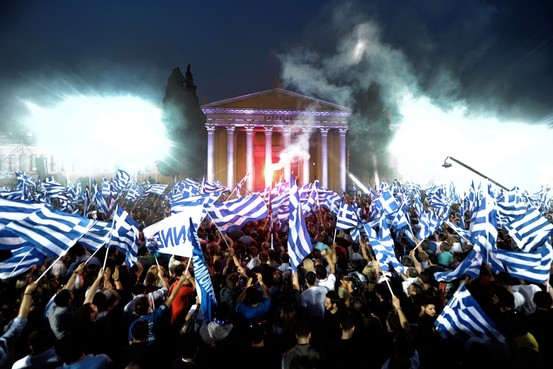
All eyes are focused on looming elections in Greece, scheduled this Sunday, June 17, where the young, charismatic and populist leader of the Coalition of Radical Left—known as SYRIZA party—

Alexis Tsipras 37, attempts to achieve the unimaginable: to challenge and defeat the dominance of the old political elite represented by the centre-right New Democracy Party, led by Antonis Samaras, and the Socialist party (PASOK), led by former Minister of Finance Evangelos Venizelos, two parties that ruled Greece non-stop since 1974 and are mainly responsible for the current status of affairs: corruption, inefficient public administration, nepotism and clientelism.  A potential Tsipras victory will be a major upset to anyone unfamiliar with Greek politics. However, to those who have been paying attention to what is happening in Greece in the last two years, the news of SYRIZA’s electoral success might not come as big surprise. In this article we make the claim that the fiscal adjustment and consolidation program that is being implemented in Greece has failed, mainly for two reasons: the two establishment parties were unwilling to implement drastic reforms and the targets set by the Europeans were overly maximalist. Hence, irrespective of the outcome of the forthcoming elections, tougher days lie ahead for the ravaged Greek economy and desperate electorate. No matter which party emerges victorious a new program has to be implemented. Even under this assumption, nonetheless, a Grexit might still be difficult to avert. Hence, even the formation of a coalition government led by Samaras’ party might not be enough to save the day. This leaves room open for alternative scenarios.

In a country ravaged by unemployment (official numbers put it at 22.7% in Q.1 of 2012) that on the top of it has chronic problems, such as corruption, nepotism, inefficient public administration and tax collection system, and an ailing economy that scarcely produces something of export value, all of them attributes of the clientelistic structure of the economy and the party-system, it should come as no surprise that the rescue plan failed to deliver what it promised: fiscal adjustment, stabilisation, and most importantly, growth. The reason is that instead of much needed reforms (increasing the efficiency of tax collection, curbing tax evasion and reform social services[1], to name a few) another road was chosen: obstinate persistence in horizontal spending cuts,  and across the board tax-hikes in order to mimic and internal devaluation. At this stage, however, it seems no longer viable to keep on slashing wages and imposing further taxes on the population in order to achieve “internal devaluation” to gain competitiveness, promote recovery and at the same time trying to put government budget in order.

The European Union and the policies under the Troika have been rigid, focusing entirely on austerity rather than introducing some elements of growth to counter-balance the reduction in GDP.  This to a great extend was not an explicit choice made by the IMF and the Troika. Rather, it was a reactionary response to Greek political elite’s lack of desire to deal with their clientelistic past and upset their electoral base. Rather than closing down some of the dozen useless public organizations, or bringing equal pay reforms among public sector employees with equal qualifications[2], they chose to postpone reforms dragging their feet to the ground. Instead, the Greek elites opted for massive across the board spending cuts and tax hikes that reduced further consumption and plunged the Greek economy deeper into recession[3]. Hence, it comes as little surprise that Greece remains hugely divided, with the majority of the population not seeing any prospects of recovery and are now looking for a new hope and new leadership to tackle deep structural problems in the Greek economy. And despite the fact that recent polls suggest that the majority of the Greek population wants to stay in Euro, it is neither clear how far Greece can manage to implement further austerity without making the necessary reforms that will re-start its economy, nor is it clear how those reforms will gather social consensus, which is desperately needed for their success, under such extreme austerity that generates social disapproval.

The New Democracy leader, and PM hopeful, Antonis Samaras promotes that staying in Eurozone is the only option for Greece as otherwise will be utter catastrophe whereas, SYRIZA leader Alexis Tsipras suggests that if Greece goes down, it will drag the rest of Europe with it[4]; therefore the terms of the bailout and the program needs to be renegotiated to allow room for growth and less austerity. He also adds that his party wants to stay in Euro and does not think of an exit scenario as the likely one[5].

However, beyond the rhetoric, what can really be done to save Greece at this stage? Most academics in the economics profession have been crying out loud that rigid austerity promoted by German Chancellor Angela Merkel has been choking Europe and the policies have to be reconsidered before it is too late. Moreover, there are two schools of economic thought pertaining to this issue. One camp sees the Eurozone problem as a “debt” problem, i.e. too much debt, too much deficit which needs to be put down into a sustainable trend. The supporters of this camp agree that pro-growth policies need to be incorporated somehow, but the focus should be on putting debt dynamics into a sustainable trend and giving markets the confidence that the governments are committed to good policies. The rest will follow smoothly, they suggest. The other cam that Paul Krugman is the de facto leader, refers to this logic as something being close to “confidence fairy”, something which does not exist. Because further austerity to give markets the required confidence chokes of the economy and the GDP and the further unsustainable the debt becomes. Therefore, they suggest that Europe needs Keynesian type policies, government stepping in and simply doing more spending to avoid a downward spiral. In addition, there are several proposals that envisage common banking deposit insurance scheme to avoid a potential run on Europe’s banks, or issuing Eurobonds with liquidity provision by the European Central Bank.[6]  However, where does Greece stand out in all of these discussions and how does it impact the upcoming election?

Given Greece’s massive debt, another bail-out is almost unavoidable if it stays in Eurozone, simply because its GDP is contracting too fast to keep the debt that it has to take one or roll-over. Yet, no matter how hard Greece tries for austerity, the program is simply too rigid to allow for a recovery. The only path the program envisages for Greece’s recovery is restoring competitiveness through “internal devaluation”, i.e. cutting domestic wages and prices so that the country will sell more abroad. But this argument remains hugely flawed, since it is no longer politically feasible to slash wages (especially if SYRIZA wins), and as long as the wages in northern Eurozone countries (like Germany) do not increase, Greece cannot really improve its  competitiveness under the same currency with rest of Europe. Structural reforms can indeed help Greece improve its competitiveness, but that can only start yielding benefits over the medium-long term, but there are no remedies for Greek economy during the short term. Sadly enough, if the crisis was contained and managed prudently when it first occurred in 2008, and if the reforms were initiated then and not in haste Greece would be in a much better position today. Nevertheless, pragmatism entails to focus on what lies ahead for the ravaged Greek economy, not just analyze what could have been done back in 2008.

Given the popularity of Euro by Greek voters (almost 8 out of 10), whoever wins the elections will first try his or her best to stay in the Eurozone.  A coalition government formed by the New Democracy will be more lenient for austerity imposed by the Troika, whereas a SYRIZA government will not be so lenient. Such a government will try to exhaust all options under the umbrella of EU but a common ground between Eurozone leaders and Tsipras seems to be a long-shot, even though many agree that a SYRIZA victory will probably lead, in the first place, in negotiations and not an immediate expulsion from Euro[7]. The problem with the Eurozone in general is that unlike the United States, Europe is not a structured fiscal union. Therefore, the fiscal transfers or “aid/free lunches” between states are very limited and most of the times are not politically feasible in the stronger states. This makes things worse because the weaker countries do not have their own currencies to implement monetary policies to overcome the contractionary fiscal policies. Therefore, the European crisis presents an impossible trinity: politically infeasible fiscal aid to countries in trouble, lack of domestic currency and adequate tools to fight against the crisis, and requirement of internal devaluation for recovery.

In other words, from Germany and other stronger countries’ point of view, it is not politically possible to bailout for free weaker countries such as Greece without seeing important reforms and budgetary tightening being implemented first.[8] And it is clear by now that this is why Germany has been quite inflexible in pushing hard for austerity. From the Greek point of view, it is not politically feasible to implement further austerity and internal devaluation by simply slashing wages and public investments across the board without shrinking the size of the public sector by abolishing dozen of useless directorates and organizations that used to house the partisan clientele[9]. It is also not economically possible to implement counter-acting policies without having control your own currency. Therefore, in Nouriel Roubini’s words: “the marriage between Greece and Eurozone is doomed to fail and the best possible way is to have an arranged divorce”.[10]To make it perfectly clear, the first best economic solution for the future of Eurozone is more unity, and more integrated fiscal union that resembles the policies of the United States. In other words, a more closely knit family that uses all its buffer stocks for the rainy days for all members. Yet, this seems politically infeasible, at least for the time being, given the current balance of political power in Europe. As a result that leaves us with the second best option—an “arranged divorce”.

But how “consensual” will this divorce be? And is it realistic? A great deal might depend on the electoral outcome of June 17. Yet, no matter who is going to be the winner on that evening, the situation for Greece and Greeks will continue to be dire and Tsipras’ optimism sounds more like wishful thinking rather than a pragmatic answers to the grave problems facing Greece. Despite the major up-set and the big blow that it will bring to the Greek parliamentary -system, a likely Tsipras’ victory will not change the situation on the ground. Due to prolonged political instability, public revenues have collapsed in the last couple of months. Therefore, any government that wants to keep Greece into the Eurozone, assuming that Tsipras is sincere in his intentions[11], will need to take even more drastic measures for fiscal readjustment and consolidation. Europeans, realizing the enormous risk of a Greek collapse and the grave consequences of an immediate Greek exit from the Eurozone as a whole “may opt to prevent a full Greek exit and mitigate its impact”[12]. It will most probably accept to service temporarily the Greek debt, through the “escrow account” held in the Bank of Greece, which will avoid a disorderly default[13] and shore up the Greek banking sector by providing liquidity through the ECB[14]. Yet, they will certainly not accept to fill up the whole on Greece’s primary deficit (excluding interest payments) and leave this task up to the new government. As a result of further fiscal derailment during the pre-electoral period, more drastic measures will need to be taken to curb the shoring deficit. Given that, the question is how the upcoming electoral outcome affects the calculus and if there is even a small window of opportunity for Greece. To fully understand how a divorce will work, we need to examine two possible scenarios (bearing always in mind that the risk of a disorderly default and a Greece exit cannot be excluded as a possibility under any of those two, especially as the Greek economy and the political system are reaching their limits. It can be, simply, an accident.

Given the aforementioned review in mind, if the conservative party of New Democracy emerges victorious the outcome might resemble a suicide in slow motion. Samaras would barely manage to muster enough support for a coalition government (assuming that PASOK and Democratic Left agree with him in principle). De facto, this will be an extremely heterogeneous and weak government that has to walk through a minefield: balancing the budget, implementing the measures of the second Memorandum of Understanding (MoU) that were postponed before the elections and restoring social order to name a few. The task seems herculean and the chances of success for such a weak government with little political capital and growing unruly domestic audience facilities a low expectation of a quick recovery. No one can expect Samaras, leading a coalition government, to succeed where previous government, enjoying much broader support, have failed. Especially under the mounting pressure of SYRIZA, which will consolidate its position in opposition; coupled with Samaras’ own record of populism and distaste for structural reform (he was one of the most prominent opponents of the IMF-EU bail-out plan in May 2010 paving the way for SYRIZA’s surge in the forthcoming elections). Under these circumstances, it might be only a matter of months for such a coalition government to collapse under the pressure of syndicates, public unrest and rage. New elections will have to be called, and even if we assume that Greece manages to escape a fatal accident (disorderly default) during the electoral period, the prospect of a single-party government led by SYRIZA and implementing its views (the most likely outcome of a third election) will guarantee Greece’s exit from the Eurozone. In such an event, the divorce will be neither consensual nor arranged. It will be a brutal process that will destroy the connecting tissue of the society and open the main door to political extremism (the rise of both extremes goes hand in hand as history teaches). The prospect of a single-party radical left government with a strong neo-Nazi party (Golden Dawn) becoming an opposition party, in a bankrupt country is a guarantee for political anomaly and a failed state in the heart of Europe.

On the other hand, if Tsipras emerges victorious, there are equally important reasons to worry. The young leader’s optimism and perhaps this is attributed to his age, will soon vanish under the agony, the difficulties and the challenge of managing his own success and the mounting primary deficit, even if he achieves a moratorium on debt interest and principal payments. It will not be an easy task for SYRIZA to handle the electoral results. In such a case, he will be sooner or later forced to choose between his maximalist pre-electoral positions and reality. And make no mistake, reality always prevails. Most likely, as his recent editorial in FT suggests[15], Tsipras will probably be forced to a U-turn. To justify his stance he can employ as an excuse the fact that he needs to secure the support of the other two moderate centre-left parties: Democratic Left (a moderate social-democrat party) and PASOK. Both parties have made it clear that they have only one condition for supporting a SYRIZA-led government: avoid any unilateral action that will jeopardize Greece’s relationships with the Europeans and put Greece’s Euro membership at risk (of course an exit will still be a possibility but this time not as an accident but as planned and arranged move taken in coordination with Greece’s partners in the EU). This precondition will allow Tsipras to renege on his pre-electoral promises; on the one hand, it will also reassure the Europeans that Greece is a credible ally with who can deliver on reform and not a partner that blackmails with contagion and financial melt-down in order to get their money.

Of course, needless to say, this scenario as well presents us with major risks. There are three possible outcomes. In the event that Tsipras attempts to stick to his promises of a Eurozone exit, it will become a certainty. No European government, especially the German one[16], will be willing to give a credit card with no spending limit unless the Greeks first undertaking some major reforms and fiscal consolidation. In such an event, payments from EFSF/ESM will stop and the new government will be unable to finance its spending needs, such as, printing its own currency in order to finance hospitals, nurseries and other public services will become imminent. Of course, the new devalued drachma will be far from being a hard currency. Imports of oil and raw material will be hard in the initial period and credit lines to Greek business will be shut off. Despite potential recovery in the future, due to devaluation (assuming that Greece undertakes major reforms to change its productive base reforms which the MoU dictates as well) the social and economic costs of such a humanitarian catastrophe will be huge. It is exactly the latter that makes this scenario highly unlikely[17]. No government could survive such a cataclysm. Similar events in Argentina led those who promised everything and delivered a disorderly default to flee the country with helicopters, not the original sinners. Tsipras is smart enough not to make such a grave mistake.

The second possible outcome, is for Tsipras to renege on his promises (after all the coalition government with moderate left parties such as PASOK and Democratic Left would give me the necessary excuse) and implement an new program, one that he likes to call a “National Project for Fiscal Adjustment and Growth”[18]. Nevertheless, in essence it will be a re-written version of the Troika MoU, negotiated with the European allies. This option entails two dangers: firstly, it is highly likely that the Tsipras government will collapse. His party might not be willing to sustain the burden of assuming government responsibilities. Second, the new program might very well fail as the previous two did. The real question for Greece is to reshape its productive model and implement reforms curbing corruption and inefficiency not imposing new tax-hikes, as various SYRIZA heavy-weights have suggested. This will probably lead to one of the same story: the prospect of a Greek exit that will be perhaps disorderly.

Yet, there might be a small variation to this scenario and although this is unlikely, it is important for this discussion as it opens a tiny window of opportunity.  Assuming that Tsipras implements some sort of a fiscal consolidation program that does have some “desired” by the Europeans dose of austerity, the most likely outcome is that the EMU will continue servicing the Greek debt (which is mainly held by IMF and EMU governments) in some sort of moratorium, since neither part would like to move on head-on collision, while leaving to the new Greek government the responsibilities of coping with its primary deficit[19]. This will bring Greece face to face with their own responsibilities: they will have to do something for their finance needs. They can opt for two choices: they can print a parallel currency (call it Geuro) for a temporary amount of time, in accordance with ECB, to finance their need. In case this leads to a permanent adoption of the New Drachma, at least the transition will be smooth and the ECB will guarantee the Euro deposits in the banking system until the new currency is in circulation. In such a case, the catastrophic consequences of an accident are avoided. Additionally, Greece can opt for drastic reforms such as: modernizing tax collection, investing on energy, closing down useless public organizations, and adjusting pay in public sector etc.

This scenario provides a small chance to overcome the political problem of Greece. First of all, it will force SYRIZA to rationalize its maximalist positions and adapt a more pragmatic view. Moreover, it will help to sooth the rage that the Greek public feels for the old political system by electing a new government from the Left. At the same time, since no one can provide a magical solution, this very election of such a government will bring the Greeks face to face with their worse fear: bankruptcy and disorderly default. Those couple of months that the Europeans will only service debt payments but not the deficits will be a simulation of what will follow in the near future. This might cause all political parties to come to their senses. SYRIZA will not assume the responsibility of leading the country to unilateral disastrous actions. On the other hand, no party alone can implement reforms that are needed in order to deal with the deficit. This line of events can be the catalyst for a national unity government that will realistically renegotiate with the Europeans the terms of the bail-out. If all else fail, in the event of a Greek exit, this will be an orderly one and as a result, the social cost will be minimized (of course the cost of abandoning Euro is grave but assuming is unavoidable this looks as a second best). Perhaps Europeans could provide some sort of support (financial and technical) to sweeten the pill. Moreover, a solid pro-European liberal opposition to the SYRIZA-led government might be formed, ready to resume government after Tsipras’ failure, giving the hope of a speedy recovery to the markets.

On the other hand, the national unity government might succeed in achieving its aims (though this is the least likely scenario) and implement reforms with the widest possible consensus among society. Moreover, such a government will have much more bargaining power in Brussels and it is much more likely to achieve more favourable terms for the bail-out package that include less austerity and more growth. Since a unity coalition government will avoid any unilateral action, or else it will fall immediately, this scenario is not completely unlikely. Moreover, it is the only one that provides a tiny sunshine of hope. Tsipras will have to face a pro-reform opposition which is more likely to push him towards the correct direction. Confronting SYRIZA with reality is a necessary condition for dissolving the myths of “easy solutions” and guaranteeing political stability in Greece.

As  aforementioned in the introduction, we believe that the most likely outcome is for Greece to fail to continue being a member of the Eurozone, mainly for economic and political reasons. Nevertheless, there is a big difference on how such an exit takes place. Furthermore, if Greece has a small chance to remain in the Euro, then drastic reforms are needed in order to ignite growth and regain its competitiveness. None of the above is easy or risk-free solution or scenario. What is argued is that the scenario where SYRIZA is victorious, yet not almighty, is not as dire as it might appear in the first place. Saving the day is high-risk, high-cost operation. It entails Greeks overcoming their rage and facing their fears. To paraphrase Machiavelli  rage is an undesirable sentiment as it can lead to self-destructive and irrational behaviour. On the other hand, fear can be useful since it generates rational behaviour based on cost-benefit calculations. Maybe electing SYRIZA can be such an event that triggers this reaction: overcoming rage by sending home the old-guard that is mainly responsible for the current mess and at the same time facing the fear of a disorderly default and Greece’s exit from the Eurozone. The odds are against Greece but the only hope rests in a technique that so much resembles water-boarding: the victim has to be convinced of the prospect of death in order to act rationally. Whether it will succeed is another story (and we offer no guarantee on that by any means). But even if it fails it guarantees two things: first, it dissolves once and for all the myth of “easy solutions” that the left was promising. Any solution (inside or outside the Eurozone) will have to entail lots of hard work and effort by the Greeks. Second, it guarantees conditions for an arranged divorce if things go wrong. In any case, the social costs will be huge but this sounds like a second best option. After all, in the current circumstances, this is all we can ask for.

Güneş Aşık, LSE and Kostas Matakos, University of Rochester

Please cite this article as follows:

Aşık, Güneş & Matakos Kostas (June, 2012), “Greece In Limbo”, Vol. I, Issue 4, pp. 34-42, Centre for Policy and Research on Turkey (ResearchTurkey), London: ResearchTurkey (http://researchturkey.org/?p=1364)


[1] In an audit performed by the Papademos Administration in 2012 it was found that there were more than 200,000 illegal social welfare beneficiaries, who were receiving state support not deserved, raising the cost to the budget by more 1.2 billion Euros per annum, the primary deficit of 2011. There were also major cases of fraud that were unveiled during this audit.

[2] A public high school teacher with 30 years of experience and a Masters diploma was earning approximately 2,000 Euros net of taxes. At the same time, an employee at a public utilities company (such as the Greek Railways), with the same amount of work experience, was earning around 5,000 Euros net of taxes and excluding special bonuses. Those astonishing inequalities were always brought to table by the Troika representatives but were never really tackled by neither PASOK nor ND.

[3] It must be noted that the Greek economy was officially in recession since Q.4 of 2008, one year before the start of the program.

[9] Since 2010 not a single public sector job was lost, despite claims and promises for the opposite.

[16] In fact, some argue that the German government might want to kick Greece out of the Euro in order to set an example and save the Eurozone by issuing Eurobonds to rescue Spain and Italy (see for instance http://www.guardian.co.uk/business/2012/jun/12/germany-sacrifice-greece-save-euro-george-osborne)

A Dangerous Game to Play in Turkey’s Health System: Medical Doctors vs. Patients and their Relatives?

4
A Dangerous Game to Play in Turkey’s Health System: Medical Doctors vs. Patients and their Relatives?

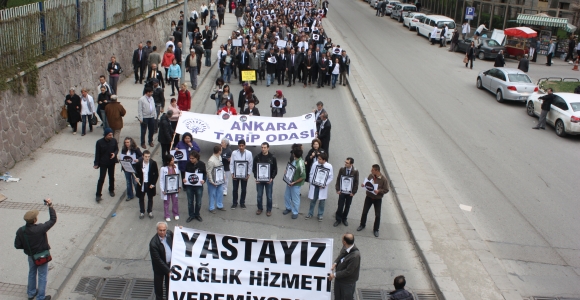
Violence against medical doctors, including its physical, verbal and psychological forms, recently has become widespread in Turkey. Killing of Dr. Ersin Aslan, a thoracic surgeon, was the last horrendous example. Aslan’s death has become the last straw that broke the medical doctors’ back.

Unfortunately, violence against medical doctors has always been there not only in Turkey but also in other countries. For instance, Israeli medical doctors reported that they have been subjected to violence by the patients’ relatives due to reasons such as the postponement of a scheduled medical operation (Haaretz, 2008). More recently, it has been reported that Chinese medical doctors also have been facing threats against their personal safety at work (The Lancet, 2012).

In Turkey, increasing media coverage concerning the issue and contemporary studies (i.e. Aydın, 2009) suggest that violence against medical doctors has been substantially increased in last couple of years in Turkey. For instance, a research conducted in Gaziantep indicates that 36.5 per cent of the medical doctors participated in that research declared that they were exposed to violence within the last year (Gaziantep Medical Chamber 2008); a similar research in Antalya demonstrates that 44 per cent of the medical doctors were subjected to violence from patients and/or patients’ relatives at least once in last 5 years (Antalya Medical Chamber, 2012). Last but not least, in a recent research conducted in Izmir 40 per cent of all medical doctors stated that violence is the biggest problem they face in practicing their profession (İzmir Medical Chamber, 2012). The research findings illustrate that an overwhelming majority of perpetrators are patients’ relatives; while other medical doctors and health professionals commit crime or offence as well (Turkish Medical Association and İstanbul Medical chamber 2009).

The violent attacks against medical doctors have been more common worldwide in most stressful departments of hospitals such as the emergency care, psychiatry and first aid units. For instance, emergency care units are the main scenes for violence against medical doctors in Israel. In some cases, medical doctors working for specific departments are targeted. To exemplify, gynaecologists are subjected to politically motivated violence due to their engagement with abortion in the U.S. (Haaretz, 2008).

However, in the Turkish case, it is interesting to observe that violence is more widespread among different medical departments. Medical departments such as neurosurgery, neurology and thoracic surgery that are not commonly considered are also scenes for violence in Turkey.

Second factor that makes the Turkish case interesting is that medical doctors used to have a high reputation in Turkish society, had been standing at the top of the occupational status hierarchy and are still composed of top ranking students in university entrance examinations held nationwide. Previously, it has been a common cultural practice for patients and their relatives to show respect to the medical doctor. Medical doctors had been considered as “wise saviours” in the eyes of the public.

Here, at least two major questions need to be addressed: What are the factors behind the increasing violence against medical doctors in Turkey? What might be the political implications of this trend for Turkey’s health system?

No violence can be justified on any grounds. This article is in no way aims to make violence against medical doctors “understandable” or “justifiable”. Nevertheless, it is sociologically important to understand the root causes of violence directed towards members of this profession.

First of all, the starting point is that the increased violence against medical doctors today suggests that relatively peaceful yet hierarchical relationship between medical doctors and patients in Turkey does not work anymore. Why so?

One of the key areas to look at for explanation is health policy. Contemporary health care reform titled “Transformation in Health Programme”, initiated by the Justice and Development Party (Turkish acronym: AKP or AK Parti) government just after its rise to power in 2002 general elections, is definitely an important variable in the transformation of the public image of medical doctors.

This reform basically strengthened the insurance-based financing structure of Turkey’s health system, injected market incentives to the health care delivery structure, gave an end to the dual commitment of medical doctors to public hospitals and their private clinics and led to a substantial increase in the role of private sector in health care delivery structure.

Turkish Medical Association (Turkish acronym: TTB) and Health and Social Services Labourers Union (Turkish acronym: SES) hold the AKP’s health reform responsible for the increase in violence against medical doctors. Both headed by elected left-wing cadres and being ardent opponents of the contemporary health reform, TTB and SES argue that the implementation of pro-market approach in health care provision culminated into the acceleration of tension in doctor-patient relationship. One research, supporting TTB and SES’s critique of the current reform process, suggests that various problems of the current health system including long waiting times especially in emergency services, incompatibilities of the government’s promises and the realities in hospitals are among the important reasons why patients and their relatives turn to violence against medical doctors (Özyurt, 2009).

Another factor that possibly contributed to the increased tension between patients and medical doctors has been the use of anti-medical profession rhetoric by the government representatives as a part of the political tactics to increase the credibility of the reform in the eyes of the public. Since the launch of the reform, the government representatives attempted to discredit Turkish Medical Association by accusing it of being an interest group that is blind to the grievances of citizens about health care services and accuse dissenting medical doctors of being greedy for more money. Alternatively, the government presented itself as the only representative of the public interest fighting against the vested interests of prosperous medical doctors and their organization. Indeed, the rate of public satisfaction with health care services substantially increased throughout the reform process that supports the government’s thesis at least for the time being. Nevertheless, medical doctors suggest that not all patients are satisfied with the changes and they can see broader problems will arise in near future.

One of the main issues that constituted the backbone of this contestation between the government and dissenting medical doctors has been the launch of patients’ rights call centre, a toll free number (named as SABIM) that collects complaints from patients and patients’ relatives about medical doctors. On the one hand, the introduction of a complaint procedure for patients and patients’ relatives is clearly a positive step forwards as it requires medical doctors to be accountable in their actions. This is clearly welcomed by the public. However, medical doctors argue that this complaints procedure might be (and some argue that it has already been) abused as a disciplinary tool against them. In addition, for medical doctors, SABIM promotes the idea that Turkey’s health system does not have any structural problems (such as the inadequacy of sufficient number of health professionals, insufficient supply of hospital beds etc.), but all problems originates from the practitioners, thus medical doctors. Dissenting medical doctors emphasize that this free number serves the populist tendencies of the government well without providing actual solutions to the problems raised by the patients. In the end, medical doctors increasingly believe that SABIM works in line with the government’s alleged intention to shift the blame of the actual and prospective problems of the health system from itself to medical doctors.

The key positions of medical doctors as gatekeepers in distributing entitlements of various cash benefits in Turkey’s welfare system might be another explanation for the increased tension between medical doctors and patients. Two examples can illustrate the gatekeeping role of medical doctors. One is that medical doctors, as members of a committee in accredited hospitals, are authorised to issue disability reports that determines the eligibility of the applicant to disability benefits. Secondly, medical doctors as a part of their daily responsibilities, issue medical death reports to people died in hospitals. These reports, once being issued, are being automatically uploaded to the web-based social security registers and leads to the stoppage of welfare payments to that person and his/her household.

Even though these roles of medical doctors are common to almost all welfare systems, the difference in Turkish context is that patients and patients’ relatives in Turkey expects the medical doctor to “do them a favour” and issue a disability report indicating a more serious disability (that means better rates of disability payments) or not to issue the medical death report (that means the continuation of the retirement pension). Medical doctors, unless defies the official procedures, might be punished by a violent act. In this case, medical doctors are again forced to face with the ills of the welfare system that transcends their professional boundaries.

Various solutions have been proposed to counteract violence against medical doctors. Turkish Parliament agreed to establish a Parliamentary Investigation Commission on Violence against Medical Doctors that may be influential in inspiring novel solutions. Minister of Health, Mr. Recep Akdağ, also declared that he would not tolerate violent attacks against medical doctors and backed solutions proposed so far (Hürriyet, 2012).

Most of the proposed solutions from the government’s side seem to be centred upon increasing security in hospitals and organizing public awareness campaigns. These are well-intentioned solutions but it is highly likely that they will fail to address the complexity of the issue at stake in the end.

Turkish Medical Association, alternatively, works for a better organisation of medical doctors against the reform by emphasizing that the government contributes to the increased violence against their colleagues by using anti-medical doctor rhetoric. In doing so, TTB called for a one-day strike on April 19th all around the country. On the day, medical doctors protested silently against the rising violence against them all around Turkey. Following these protests, unfortunately, TTB initiated a campaign among medical doctors, the major aim of which seems to be the restriction of patients’ access to toll free number and complaints procedure.

An interesting stage seems to be in play. On the one hand, patients and their relatives increasingly execute violence against medical doctors in public hospitals. These phenomena may strengthen the motivation of medical doctors not to engage in medically risky interventions. On the other hand, medical doctors started to ask for a less responsive health system that will have restricted access to complaints procedure for patients. This stance of TTB may contribute to worsening of relationship between medical doctors and patients.

Undoubtedly, all measures have to be taken in order to provide a secure working environment for medical doctors. However, these measures have to be built upon the complexity of the factors that feeds into the increased violence against medical doctors and should not be positioned against the patients’ demands and rights.

By complexity of the factors, I mainly refer to the fact that violence against medical doctors is closely related to the broader problems of Turkey’s health system and the welfare system. Increased violence against medical doctors should not be reduced into singular exceptional crimes. There are systematic links between how medical doctors have been used as scapegoats of the ills of the health system, how they have been expected to function as gatekeepers to the welfare benefits and why increasing number of people feel hatred against medical doctors.

Being two potential major allies for a better, overwhelmingly public and egalitarian health system, patients and medical doctors seem to be at odds with each other today. Politically speaking, this may have devastating implications for the direction of change in Turkey’s health system in near future. This is because, the current signals that both sides send to one another do nothing but harm the trust relationship between patients and medical doctors that is the moral basis of public health system.

Volkan Yılmaz, Ph.D. Candidate, the School of Politics and International Studies, University of Leeds, and Research Assistant, Department of Political Science and Public Administration, Istanbul Kemerburgaz University

Please cite this article as follows:

Yılmaz, Volkan (June, 2012), “A Dangerous Game to Play in Turkey’s Health System: Medical Doctors vs. Patients and their Relatives?”, Vol. I, Issue 4, pp. 28-33, Centre for Policy and Research on Turkey (ResearchTurkey), London: ResearchTurkey (http://researchturkey.org/?p=1356)

Bibliography

Antalya Medical Chamber. 2012. Hekim Eğilimlerini Değerlendirme Anketi.

Gaziantep Medical Chamber. 2008. Sağlık Sektöründe Şiddet ve Hekimlerin Şiddet Algısı Anketi.

Haaretz. 2008. Too much violence against medical doctors. June 3rd, 2008.

http://www.haaretz.com/print-edition/opinion/too-much-violence-against-doctors-1.247135

Hürriyet. 2012. “O eli bükmek boynumun borcu.” May 10th, 2012.

http://www.hurriyet.com.tr/saglik/20520827.asp

Izmir Medical Chamber. 2012. Hekimlik Alarm Veriyor.

The Lancet. 2012. Vol. 329 Issue 9828. Ending Violence against Doctors in China.

http://www.lancet.com/journals/lancet/article/PIIS0140-6736%2812%2960729-6/fulltext

Turkish Medical Association and İstanbul Medical Chamber. 2009. Hekime Yönelik Şiddet Çalıştayı Raporu.

Turkey-EU Relations: Past Experiences, Future Prospects

0

‘Turkey-EU Relations: Past Experiences, Future Prospects’ is jointly organised by Ankara University European Research Centre (ATAUM) and Konrad Adenauer Stiftung.

Date: June 8th, 2012 Friday
Time: 9.30
Venue: ATAUM, Ankara University Cebeci Campus, Ankara TURKEY
Conference Programme:
9.30          Registration
10.00        Opening Remarks

Prof. Dr. Çağrı Erhan, Director of ATAUM

Dr. Colin Dürkop, Head of the KAS Office in Turkey

Prof. Dr. Yalçın Karatepe, Dean of the Faculty of Political Science

Tibor Varadi, Deputy Head of the EU Mission in Turkey

10.30        Turkey Policy of the EU

Birgit Schnieber-Jastram, Member of the European Parliament

11.00        Coffee Break
11.15         Turkey-EU: Political Aspects

Prof. Dr. Çağrı Erhan, Director of ATAUM

Ambassador Dr. Hans Winkler, Chairman of the Diplomatic Academy of Vienna

12.30        Discussion

Chairman: Prof. Dr. Hüseyin Bağcı, Chairman of the Department of International Relations, METU

13.00        Lunch Break
14.00        Turkey-EU: Economic Aspects

Associate Professor Özgür Tonus, Anadolu University

Dr. Adam Balcer, Expert, Europa Demos, Poland

Discussion

Chairman: Prof. Dr. Tuğrul Arat, TOBB University

15.30        Coffee Break
16.00        Turkey-EU: Legal and Judicial Aspects

Associate Professor Sanem Baykal, Ankara University

Associate Professor Arndt Künnecke, Okan University

Discussion

Chairman: Prof. Dr. Haluk Kabaalioğlu, Yeditepe University

17.30        End of the Conference
The conference is free and open to public.


Turkey’s Somalia Adventure: The Quest for Soft Power and Regional Recognition

3
Turkey’s Somalia Adventure: The Quest for Soft Power and Regional Recognition

This paper examines a unique dimension in contemporary Turkish foreign policy: “Turkish exceptionalism” in the Middle East. “Turkish exceptionalism” is the coupling of political altruism, embedded in Prime Minister Erdoğan’s personal international agenda, with Turkish “soft power” in the Muslim world to assist failed states. With Such policies simultaneously advance Turkey’s national interests and objectives that further its international power and prestige.  By demonstrating this relationship in statecraft vis-à-vis Turkey’s involvement in rebuilding and stabilising Somalia, this “new” aspect of its foreign policy can be decrypted. This paper also argues that while Turkey’s intention to be a responsible power in Somalia is genuine, the wider geo-politics of Turkey advancing its raison d’etat is coupled within this paradigm. As Turkey’s latent power grows, it will seek out similar opportunities to use its soft power via international autism to achieve its wide-ranging national interests of becoming a regional and global power.

Introduction

On August 10, 2011, while addressing his Justice and Development Party’s (AKP) Expanded Provincial Leaders Convention, Prime Minister Recep Tayyip Erdoğan suddenly and surprisingly announced that he and his family would soon go to Mogadishu as part of Turkey’s humanitarian relief effort in Somalia.[1] During his trip, Erdoğan stated that he would deliver approximately $115 million (USD-2011) in humanitarian assistance that the Turkish public had raised for Turkish Red Crescent operations, while also fostering awareness of the devastating effects of Somalia’s on-going famine and decades old civil-war.[2]  Nine days later, on August 19, Erdoğan made his unprecedented journey to Mogadishu that made him the first leader from outside Africa to officially visit Somalia in almost 20 years.[3] Although this seminal event was often overshadowed by the events unfolding concurrently unfolding in Libya and the Middle East, the success and context of Erdoğan’s mission to Mogadishu showcased Turkey’s first independent international engagement (under Erdoğan’s AKP)  that had an objective of extending its global reach.  Turkey’s Somali Adventure also demonstrated Turkish desire to become a more autonomous and engaging regional and global actor.

The case of Somalia is a significant event in Turkish foreign policy, as it highlights its engagement and leadership in an area that the international community has been unable to solve and unwilling to fully commit its resources to since the Battle of Mogadishu in 1993.[4] Somalia can also be regarded as an instance of “Turkish exceptionalism” in the Middle East, in which Turkish “soft power” was sturdy enough to “influence outcomes” in an place where other states could not obtain similar results. Additionally, Turkey was able to influence politics in Somalia without incurring external or internal punishment for their actions.[5]  Thus, Somalia represents both Turkey’s desire to become a global leader and an example of how Turkish statecraft has managed to incorporate elements of Erdoğan’s international “altruism” (soft power) in order to advance Turkey’s own raison d’etat

In order to demonstrate why the Somali case allows Ankara to become globally influential via soft power (Erdogan’s international altruism), I begin by providing background information regarding Somalia’s plight to illustrate that Turkish engagement is both altruist but also self-severing. I subsequently outline the international benefits that Turkey has reaped by “opening up” Somalia. Finally, I discuss the importance of regional recognition and soft power as a key component in Turkey’s Somali Adventure, and demonstrate that Turkey desires to be internationally recognized as an autonomous and important state in world affairs can be understood as a combination of these two threads.

Background:

Before delving into the political objectives of Turkey, it is first important to contextualize the region and risk associated with Turkish engagement in Somalia.  During the last two decades, Somalia has been without a formal government that controls its mandated borders. In fact, although Somalia is a recognized as a single, unitary state by the international community, it is perhaps better described as three states with distinct populations and national visions: (i) In North Somalia, the Puntland people have set up an informal quasi-autonomous state (akin to Kurdistan  in Northern Iraq), (ii) in the North-West of the country, ‘Somaliland’ was proclaimed as an independent state; and (iii) Mogadishu and South Somalia are theoretically under the control of the Transitional Federal Government (Dowladda Federaalka Kumeelgaarka), thoughthere is widespread lawlessness and anarchy, as well as the continued threat from al-Shabaab.[6] The fall of Siad Barre’s dictatorship in 1991 marked the onset of Somalia’s downward spiral towards immense instability, political and social turmoil, and human suffering, in which no governing entity was able to provide basic services to its citizenry. This state of anarchy is accompanied by a constant state of civil war along ethnic and sectarian lines. In many ways, this state that straddles the eastern most edge of “the horn of Africa” has become a modern day example of what Thomas Hobbes theorized as the “war of all against all”; with the absence of a centralized authority (Leviathan), life has become “solitary, poor, nasty, brutish, and short” for almost all Somali’s.[7]  Its internal turmoil has also caused great external trepidation throughout the international community, due to the continued threat of piracy upon international commerce, alShabaab, which until recently controlled most of Somalia’s southern territory.[8]  Unfortunately, the observation by Anna Husarska of the International Rescue Committee that Somalia is in a state of “endless hell” accurately depicts its condition during the 1990s and 2000s.[9]

From the early 1990s onwards, the international community has tried in vain to stabilize Somalia and bring about a resolution of this on-going conflict; however, the fallout from the now infamous 1993 “Black Hawk Down” incident, which prompted the pullout of United Nations and United States forces in March of 1995, made future peacekeeping action in Somalia both risky and limited during the subsequent decade.[10]  Throughout this time, Somalia was mostly ignored by the international community; even after the attacks on September 11, 2001 and U.S. President’s George W. Bush’s declaration of a “war on terrorism”, this place of endless hell was virtually forgotten and consigned into the dustbin of history.  Often the weighted risks and costs for stabilizing Somali have been considered very high given the continuous anarchic nature throughout the country, and the failure of previous peacekeeping and aide missions.  However, Somalia finally started receiving attention by international media outlets and states in 2008, when the Saudi Aramco super tanker Sirius Star was hijacked by pirates, and al-Shabaab made inroads in taking control of Mogadishu. Later that year, the international community declared Somalia a “frontline” state on the war on terrorism.[11]

During the next three years, multi-national African Union forces (especially the Ethiopian army) conducted a plethora of cross-border incursions with the mission of stabilising and assisting the beleaguered Transitional Federal Government from insurgents.  Although this process seemed minimal, there was a renewed effort to stabilise Somalia’s political landscape and give the transitional government time to organise security. However, most of these attempts failed; even as recently as the week before Erdoğan’s visit al-Shabaab controlled vast territory deep into Mogadishu and virtually all of south Somalia.  In later October 2011, a joint task force consisting of the Somali, Kenyan, and Ethiopian militaries (and other Western Powers such as Denmark and France as military advisers) launched Operation Linda Nchi, which successfully crushed al-Shabaab, but did not effectively ended the Somali Civil War (the primary objective- although the security situation has greatly improved).[12]

Somalia has long been a failed state and problematic for the international community, which has poured many resources into stabilising the country; this aid is meant to in ensure that the access point to the Red Sea remains open and shipping routes are protected.  However, the international community has not been able to penetrate internal Somalia to provide humanitarian assistance, as the security situation has been too grave and humanitarian workers have been targeted for either helping the “wrong clan or group” or are seen as an attempt of the re-colonization of Somalia by Western powers.[13]  In providing humanitarian assistance, Turkey has been received by Somalis with considerably less hostility than other states; the Turkish Red Crescent has already “distributed 5,000 tons of humanitarian aid in Somalia since August 2011” and has reportedly been welcomed and well-received by most of the people.[14]

Erdoğan has opened the door for Somalia to become a functioning state; however, it would be mistaken to interpret his emphasis on development of Somalia as an attempt to contain external security threats—a myopic outlook which has undermined previous stabilisation efforts.  His long time plan that was outlined in his well-received return briefing entailed “The Tears of Somalia”, in which Erdoğan announced that Turkey would help the Transitional Federal Government (TFG) and other institutions in Somalia:

…. Include[s] lending political support in the fields of health, education, and transportation, and envisages the provision of a 400-bed hospital, garbage trucks for the streets of Mogadishu, a waste-disposal facility, metalling of the main highway between Mogadishu and its airport, renovation of the parliamentary and other government buildings, sinking of water wells, and development of agriculture and animal husbandry. These works will be coordinated from Turkey’s proposed embassy in Mogadishu.[15]

If Turkey is successful in turning around Somalia and stabilising the internal politics of this perpetually anarchic country, it will not only become a quasi-benefactor state, but will also demonstrate the vast and wide-ranging influence of Turkey in the Muslim world. Most importantly, Turkey’s efforts would bring about international legitimacy that might allow it to become involved in the decision-making processes of other pressing geo-political issues and crises.

Opening Somalia:

Shortly after Erdoğan’s journey to Mogadishu, Foreign Minister Ahmet Davutoğlu stated that one major objective of the trip was to break down the perception “that nobody can go to Mogadishu”; ergo, “if we came, many others can come”.[16] Knowing that leadership by example is the cornerstone for soft power success, Erdoğan’s personal journey to Mogadishu was aimed to be the event that would assist Somalia in re-entering the community of nations through example; however, it would also show that Turkey has far-reaching power to accomplish this seemingly impossible task. Three months after Erdoğan landed in Mogadishu, U.N. Secretary General Ban Ki-moon also visited on a fact-finding and humanitarian tour.[17]  Afterwards, British Foreign Secretary William Hague made the trek out to Mogadishu, and for the first time in twenty-years “the world’s most failed state” was showing signs of success and strong international engagement.[18] Erdoğan’s trip to Somalia was just the first of many strategically calculated moves to demonstrate the reach of Turkish influence and soft power.

Adding to the opening of Somalia, a Turkish Airlines Boeing 737-800 landed on the tarmac of Mogadishu’s Aden Adde International Airport on March 6, 2012.  On board this flight were many high-ranking Turkish officials, including Deputy Prime Minister Bekir Bozdağ, Somali President Sharif Sheikh Ahmed, Minister of Defence Hussein Arab Isse, and other prominent members of the Transitional Federal Government gathered on the tarmac.[19]  Normally, such an event is routine and customary throughout the world. But as discussed previously, Somalia is not a normal case and this event became yet another unique and promising gathering to showcase an improving Somalia, commemorating Turkish Airlines’ new twice weekly Istanbul- Khartoum- Mogadishu route. The Somali Foreign Minister Abdullahi Haji announced at the gathering that he hopes the new route will “make it easier for the Somali diaspora to come home. It will bring us closer together.”[20] As Somalia is being reopened to the world, it is the Turks who are playing an essential role in not only moving people, but also taking the risk to engage in a very turbulent and unsure place.

Similar to U.S. President Richard Nixon’s trip that “opened” China in 1972 and showed the world that the People’s Republic could be a responsible and non-revisionist power, Erdoğan’s visit to Somalia has given leaders a renewed energy and focus that this war-ravaged country can become a stable member of the international political system.  This is no minor accomplishment, given the political turmoil that has plagued Somalia over the last two decades. With the momentum of recent successes against al-Shabaab and the growing sense of stability in Somalia, the British hosted a meeting on Somalia and invited many world leaders to pledge increased support for measures to fight piracy and terrorism, and bring about political stability in Somalia by substantially increasing international funding for the African Union military operation in the country.[21] In his speech to the conference, David Cameron, the British Prime Minster, stated that:

Despite the huge challenges still ahead, when the British Foreign Secretary visited Mogadishu he saw a growing confidence returning to the streets. Shops re-opening, homes being rebuilt, a city beginning to get back on its feet again…That fatalism has failed Somalia. And it has failed the international community too. Today we have an unprecedented opportunity to change that. There is a real momentum right now. International aid has pulled Somalia back from the brink of the humanitarian crisis.[22]

With a renewed commitment by the international community, Somalia seems to be turning a page in a long and dark chapter of its long history.  Although the Western engagement in Somalia is proliferating in recent months, and there is a sense that there is a unique opportunity to achieve a measureable about of stability and development. Turkey has already won its foreign policy victory and has achieved wide-ranging geo-political support, coupled with boasting its soft power and international recognition.

The outlying success of this case has shown that the Turkish government knows how to utilize its soft power influence, but also understands that it requires leading by example. Joseph Nye, in particular stresses this point in soft power deployment when he wrote: “in the business world, smart executives know that leadership is not just a matter of issuing commands, but also involves leading by example and attracting others to do what you want”. [23]  Similar too most political leaders, Erdoğan understands that soft power comes from a state’s “ability to establish preferences…[which] tends to be associated with intangible assets such as an attractive personality, culture, political values and institutions, and policies that are seen as legitimate or having moral authority.  If a leader represents values that others want to follow, it will cost less to lead”.[24]  Therefore, the opening of Somalia was not only about raison d’etat, but also represents Erdoğan’s own view of global leadership that is supported domestically as well as internationally; yet the uniqueness of this case have been Turkey’s ability to still accomplish several important international objectives.

Subsequently, an understanding of why Turkey wanted to engage in Somalia starts to crystallize when one looks beyond just the notion of altruism and mulls over other geo-political objectives that are within the framework of raison d’etat. This does not say that Erdoğan is not altruist in nature; that he took his entire family to a very dangerous place shows a certain personal belief or commitment to humanitarian relief. However, what makes Turkish foreign policy unique is that it can take an altruist tone or mission, yet its presence in a place such as Somalia is less tremulous that those of Western powers, given its lineage as a non-colonial power and a Muslim country. Turkish exceptionalism in this case adds to a rational choice of engaging in Somalia, because the payoffs over the long run are very lucrative: it enhances Turkish soft power while building its regional status as an emerging world power.

Turkish Objectives:

As mentioned previously, Turkish foreign policy in regards to Somalia has linked Erdoğan’s altruist predisposition and worldview of how Turkey should behave in the international system, while strategically implementing a policy that positively moves forward Turkish national interests.  In doing so, the outcome in Somalia has given Turkey a strategic advantage in North Africa (a foothold into the continent), but also has increased Turkish soft power that will further propagate further cases of Turkish exceptionalism, which is currently unravelling in regards to the Civil War in Syria.

Soft Power

Ankara for the latter part of the last decade has been on a quest to solidify its regional standing and influence by enhancing its soft power throughout the Middle East. Soft Power as defined in Nye as: the utilization of a state’s culture, language, and media “to obtain what one wants through co-option and attraction”.[25]  By moving away from emulating the United States or Europe (Kemalist/Military/ Özal’s foreign policy) and trying to forge its own independent foreign policy, Turkey has redefined its “strategic depth” by not shunning the Arab and Muslim world and fully engaging those states on its periphery.  By boasting its soft power to demonstrate it has increased its own importance and fortunes in the Middle East, Turkey has successfully used its cultural and religious heritage as the successor state of the Ottoman Empire, and its recent emergence of a regional power, as a tool to achieve its geopolitical objectives, while maintaining Erdoğan’s own view of Turkey being a responsible (altruist) power.

In the foreign policy arena, Erdoğan also scored high marks. A Pew Research poll just before the elections in June illustrated that “about six-in-ten (62%) Turks have a great deal of or some confidence he to do the right thing in world affairs.”[26]  The same poll indicated that people believed that: “under Erdoğan’s leadership, Turkey has played a more assertive role in international affairs and most Turks give the prime minister positive marks on foreign policy.”[27]  Furthermore, since Prime Minister Erdoğan’s now infamous “walk out” at the 2009 Davos conference, he became the most popular figure in the Middle East almost overnight.[28] This trend has led to immense benefits in seeking cooperation with “post” Arab Awaking states such as Libya, Tunisia, and Egypt, whose populations and governments have embraced parts of the “Turkish Model”.[29]

Even the United States and Europe have came under the “spell” of Turkey’s soft power, as those states tout Turkey to be a model for the Islamic World and have been (2002-2005 and 2010-present) staunch supporters of the ruling government: “[the AKP’s] coming to power comprises an asset for the Turkish model, as it demonstrates both the evolution of the Islamist movement in Turkey, and the potential for reconciling democracy and Islam.”[30] With support from Western governments and a deep support and gratitude from the Somali government towards Erdoğan, Turkey has uniquely positioned itself as the custodian of Somalia and gateway into that region.  Speaking to this point, the Somali ambassador to Turkey, Nur Sheikh Hamud Mursal, has stated that Somalia regrets having discovered Turkey very late and that the relationship blossoming between the two countries, while he has categorized that:

“[t]he Somali people see Turkey as a savior sent by God to Somalia. Somali people are looking at Turkey not as a foreign country but as their real brother. Turkey did lots of things in a short time and it is really amazing. Turkey is helping us in many fields: education, health, construction.”[31]

In the Somalia case Turkish soft power has also translated into results for its wider geo-political objectives of achieving regional power by demonstrating Turkey’s ability to influence its desired outcomes. Currently, as Turkey’s power grows, it is only logical that it would want to establish itself more independently from any other great power(s).However, given Turkey’s unique geographical location, (bordered by the European Union, Russia, Iran, and the wider Middle East), it has vast potential to maximize its both hard power (as Turkey’s military remains the second largest armed forces in NATO) and soft power. The economic growth has resulted in a renewed confidence in Turkey that continues to underpin these two threads. All of these factors have created a new relationship between domestic and international outlooks and a new domestic audience.  First, soft power plays to the AKP’s base; to the party can play the “neo-Ottoman” card domestically while bringing their Muslim neighbours closer through a sharing of heritage. Second, internationally, the benefits are two-fold as Turkish soft power offers a different cultural perspective to Middle Eastern states, which then in turn makes engagement with those states easier, as it creates payoffs through increased trade and economic cooperation.

International Recognition:

Over the last five years, Turkey’s international power has increased, as its economy has been performing exceptionally well, with high-growth and relatively low-inflation;. This growth has been accompanied by its political system gradually stabilising, hence reducing the prospects of military interventions. With a growing economy and a gradual improvement in its democratic credentials, Turkey has been hailed by the West as a model state for the Middle East and a model for democracy given its ability to reconcile Islam and democratic principles.  Also, given the recent events in the Middle East, Turkey is also touted as a source of stability in region that is constantly in flux. This has elevated Turkey’s international profile and geostrategic importance to not only the United States and the West, but also with Russia, and Iran, which all have look for a friendship in the Turkish Republic.

This has given Turkey a seat at the table to be a leading state in some important international issues.  Having a seat for some states is a matter of national honour and for others is prestigious; however, it also has an important utility given that states engaged in a process are usually provided with fruitful results or payoffs.  This is especially true for states that are global powers or have aligned interests with the strongest power, such as those in the UNSC or G-20. Turkey has been increasingly active in a plethora of issues world-wide; such as the ongoing Arab Spring, the Syrian Civil-War, the NATO missile shield, an actor of interest in mediating the Arab-Israeli conflict, and now the patriarch of Somalia. The courting of Turkey to assist in international issues is only matched by its eagerness to be involved.  Currently, with Erdoğan being the most popular leader in the Middle East for several years, Turkey represents an ideal country to help decide global issues in the Middle East.[32]

Although they now have a seat at the table, the Turks have learned an important lesson about being subjugated to another power’s foreign policy, which Kenneth Waltz in his seminal work A Theory of International Relations refers to as bangwagoning.[33]  For example, during the Cold War and again during Gulf War I, Turkey kowtowed to American policy to achieve payoffs for widespread cooperation and standing behind the U.S.   Then-President Turgut Özal assumed that by cooperating with the United States and allowing the U.S. to use Turkish airspace to attack targets in Iraq and Kuwait and also use its territory to establish a second front in Northern Iraq, Turkey in return would receive high levels of economic assistance from the U.S and other Gulf and coalition members. Although a $4.2 billion defence fund was set up for Turkey, the embargo imposed on Iraq after the war and the effects of the war itself ravaged the Turkish economy due to “the loss of income [from the] Iraq-Turkey pipeline, large scale disruption of bilateral trade as well as the border trade and the unemployment that this caused in south-eastern region, [and] Iraq’s non-payment of its debts to Turkey.”[34]

As a result of the deep economic losses incurred by Turkey’s support of the First Gulf War, it appealed to the United Nations and evoked Article 50 of its Charter, which stipulates:

If preventive or enforcement measures against any state are taken by the Security Council, any other state, whether a Member of the United Nations or not, which finds itself confronted with special economic problems arising from the carrying out of those measures shall have the right to consult the Security Council with regard to a solution of those problems.[35]

However, unlike the Jordanians, who did not participate in the coalition that invaded Iraq and stood close to Saddam Hussein during the war (most likely in a bid to appease the Palestinian demographic of its population), Turkey could not persuade the U.S to support them in the United Nations Security Council.  And unlike the Jordanians, who received compensation under Article 50, they did not receive any compensation for their losses during the aftermath of the war.[36]

It was these events at the end of the Cold War and during the first Gulf War that would remain at the forefront of policy makers’ minds; they who came to realize that “cooperation with the U.S in a crisis was a natural consequence of the convergence of Turkey’s interests with America’s. However, this had to be weighed against Turkey’s losses and Turkey’s cooperation with Iraq on the Kurdish questions over many years.”[37]Turkey would not forget the events that happened at the tail end of the Cold War and the Gulf War I, and decided to become self-reliant an autonomous actor when possible.

Thus, when Turkey felt confident enough to take action in Somalia, it decided to do it alone and to establish itself as the principal power to engage in that area, by first opening it up to the West and others by demonstrating it had the reach and soft power to do as such.  Domestically, many Turks have embraced the concept of an engaged and proactive Turkey as a strong and independent Turkey. This approach not only opens up new markets but also shows a stronger and more powerful state internationally.[38]   As Turkey becomes a more proactive member of the international community and demonstrates its ability to influence outcomes that achieves international security and peace, its recognition as a global power starts to crystallize through its engagement its efforts in Somalia and Syria. Also, as the United States disengages from the Middle East to focus more intently on Asia, Turkey has position itself to fill in the void that will occur concurrently with American disengagement.

The Somalia advantage thus makes decent geo-political sense as Turkey relied heavily on votes from Africa when it won a seat as a non-permanent member on the UN Security Council in 2009.  Ankara is hoping to repeat this feat in 2015 (as well as becoming a permanent member when/if the UNSC reforms itself) and maintain its current status as a responsible global power and its enhances its soft power to continuing its influential position in the international political system.

Conclusion 

The growing influence of the Turkish Republic stems from a unique mixture of taking Prime Minister Erdoğan’s worldview of what constitutes being a “responsible power” and coupling it with advancing its raison d’etat vis-à-vis soft power that achieves greater global recognition and thus political power to a status as an active global actor.  By looking beyond the notion of altruism (yet not discounting) or pure political realism, this paper has demonstrated that both threads working in tandem constitutes a new approach in the implementation of Turkish statecraft.It also provides an explanation for why Turkey was both risking and willing to engage in Somalia as a mechanism to accomplish wide-ranging geo-political goals. Turkey’s engagement in Somalia illustrates some of the many changing aspect in Turkish foreign policy, and is a “tipping of their hand” event, as it sends a clear message of its national interests and objectives in the short to medium term.

Given the success and payoffs received by Turkey for their efforts in Somalia, Turkey has been tipped by the West to be the prime actor in finding a solution for the Civil War taking place in Syria and as a leading state in the Middle East and Muslim world. Furthermore, Turkey’s Somalia adventure might be a model for continued behaviour in Turkish foreign policy: to engage neighbouring failed states and implement a development and stabilising mission to bring those states back as function and contributing states of the international community.  Although, Turkey has received much attention over its role in the Arab Awaking, its mission to Somalia an example of Turkey’s new statecraft when its independent to act under its own accord.

Matthew T. Gullo

Please cite this article as follows:

Gullo, T. Matthew (June, 2012), “Turkey’s Somalia Adventure: The Quest for Soft Power and Regional Recognition”, Vol. I, Issue 4, pp. 6-18, Centre for Policy and Research on Turkey (ResearchTurkey), London: ResearchTurkey (http://researchturkey.org/?p=1226)

View this article and/or download it as a PDF file


Bibliography

Altunisik, Meliha (2008). The Possibilities and Limits of Turkey’s Soft Power in the Middle East. Insight       Turkey Vol. 10/No. 2/2008, pages 41-54.

Anadolu Agency (2012). Turkish Red Crescent distributes 5,000 tons of humanitarian aid in Somalia.            Published April 10, 2012. Accessed April 20, 2012.

Amnesty International (2009). Journalists and humanitarian workers at risk in war-ravaged Somalia.             Published January 9, 2009http://www.amnesty.org/en/news-and-updates/news/journalists-g          and-humanitarian-workers-risk-war-ravaged-somalia-20090106

Bâli, Aslı (2011). A Turkish Model for the Arab Spring? Middle East Law and Governance. Volume 3,         Numbers 1-2, 2011 , pages, 24-42.

BBC World News (2011). Somalia famine: Turkish PM Erdogan visits Mogadishu.  Published August           19, 2011.  http://www.bbc.co.uk/news/world-africa-14588960

BBC World News (2012). William Hague visits Somalia’s Mogadishu. Published February 2, 2012.   Accessed March 30, 2012. http://www.bbc.co.uk/news/world-africa-16851216

BBC World News (2012) Somalia: Turkish Airlines begins flights to Mogadishu. Published March 6, 2012.    Accessed March 30, 2012. http://www.bbc.co.uk/news/world-africa-17269620

Cameron, David PM (2012). David Cameron Somalia speech in full. Published February 23, 2012.              http://www.politics.co.uk/comment-analysis/2012/02/23/david-cameron-somalia-speech-in-full

Cengiz, Sinem (2012). Somali ambassador Nur Sheikh Hamud Mursal: We regret discovering Turkey very late. Today’s Zaman. Published April 16, 2012.  Accessed April 20, 2012.          http://www.todayszaman.com/news-277676-somali-ambassador-nur-sheikh-hamud-mursal-f   we-regret-discovering-turkey-very-late.html

Dagne, Ted (2011). Somalia: Current Conditions and Prospects for a Lasting Peace. Congressional   Research Service. Published August 31, 2011

Erdoğan (2011). The Tears of Somalia. Published on October 11, 2011                 http://www.foreignpolicy.com/articles/2011/10/10/the_tears_of_somalia?showcomments=yes

Fund for Peace (2011). The Failed States Index. Accessed  March 30, 2012.            http://www.fundforpeace.org/global/?q=fsi-grid2011

Gullo, Matthew (2012) Turkish Foreign Policy: Neo-Ottomanism 2.0 and the Future of Turkey’s Relations     with the West. Available on ProQuest.

Heaton, Laura (2012). Saving Somalia. Foreign Policy. Published April 24, 2012. Accessed April 25, 2012.

http://www.foreignpolicy.com/articles/2012/04/24/saving_somalia?page=full

Hirsch, John (2011). The Black Hawk Down Effect. Foreign Policy. Published August 12, 2011.             http://www.foreignpolicy.com/articles/2011/08/12/the_black_hawk_down_effect

Hobbes, Thomas (1982). Leviathan. Penguin Classics.

Husarska, Anna (2007). Somalia’s Endless Hell. Project Syndicate. Published November 13, 2007.    http://www.project-syndicate.org/commentary/somalia-s-endless-hell

Ibrahim, Mohammed and Jeffrey Gettleman (2011). U.N. Chief Pays Surprise Visit to Somalia. New             York Times. Published December 9, 2011.

Kenyan National Assembly (2011). National Assembly Official Report of December 7, 2011.

Kissinger, Henry (1994). Diplomacy.  Simon & Schuster.

Lewis, Michael (2008). Understanding Somalia and Somaliland : culture, history, society.  Hurst & Co.

Mugisha, Nathan General (2010) Somalia is Frontline in Global Fight Against Violent Extremism. AMIS       Bulletin, Issue 2. Published March 15, 2010.

Nye, Joseph (2004). Soft Power: The Means To Success In World Politics. PublicAffairs

Nye, Joseph (2004a). The Benefits of Soft Power. Soft Power and Leadership.  Compass: A Journal of           Leadership, Spring 2004.

Omar Feisal and Taxta Ismail (2012). Turkish Airlines starts regular flights to Somalia.  Reuters News. R       March 6, 2012. Accessed March 31, 2012. http://www.reuters.com/article/2012/03/06/uk-    somalia-turkey-idUSLNE82503120120306

Oran, Baskin and (Translation by) Mustafa Aksin (2011). Turkish Foreign Policy: 1919-2006.           University of Utah Press.

Pew Research Center: Global Attitudes Project (2011). On Eve of Elections, a More Upbeat Mood in Turkey.  Accessed on January 23, 2012.

http://www.pewglobal.org/files/2011/06/Pew-Global-Attitudes-Turkey-Report-FINAL-        June-7-20111.pdf

Uslu, Emrullah (2009).  Erdogan’s Middle East Diplomacy: A New Nasser in the Making. The          Jamestown Foundation. Publication: Eurasia Daily Monitor Volume: 6, Issue: 9.

United Nations Charter: Chapter VII: Action with Respect to Threats to the Peace, Breaches of the    Peace, and Acts of Aggression. Article 50.

Waltz, Kenneth (1979). A Theory of International Politics. Waveland Press Inc.

Endnotes:


[1].  Erdoğan (2011) The Tears of Somalia.

[2].  Dagne (2011) Somalia: Current Conditions and Prospects for a Lasting Peace, page 1.

[3].  BBC World News (2011) Somalia famine: Turkish PM Erdogan visits Mogadishu.

[4].  Although, the U.S and U.N stayed engage in Somalia under 1995, the level and recourse committed sharply declined after the “Black Hawk Down” incident.

[5].  Nye (2004) Soft Power: The Means To Success In World Politics, pages 3-6.

[6].  Lewis (2008). Understanding Somalia and Somaliland: culture, history, society.

[7].  Hobbes (1982) Leviathan, page 186.

[8].  Fund for Peace (2011) The Failed States Index.

[9].  Husarska (2007) Somalia’s Endless Hell.

[10].  Hirsch (2011) The Black Hawk Down Effect.

[11].  Mugisha (2010) Somalia is Frontline in Global Fight Against Violent Extremism.

[12].  Kenyan National Assembly (2011). National Assembly Official Report of December 7, 2011, page 21.

[13].  Amnesty International (2009) Journalists and humanitarian workers at risk in war-ravaged Somalia.

[14].  Anadolu Agency (2012) Turkish Red Crescent distributes 5,000 tons of humanitarian aid in Somalia.  For on Turkish humanitarian workers in Somalia see: Heaton (2012) Saving Somalia.

[15].  Erdoğan (2011) The Tears of Somalia

[16].  BBC World News (2011) Somalia famine: Turkish PM Erdogan visits Mogadishu

[17].  Ibrahim (2011) U.N. Chief Pays Surprise Visit to Somalia.

[18].  BBC World News (2012) William Hague visits Somalia’s Mogadishu

[19].  Omar (2012) Turkish Airlines starts regular flights to Somalia.

[20].  BBC World News (2012) Somalia: Turkish Airlines begins flights to Mogadishu

[21].  Cameron PM (2012). David Cameron Somalia speech in full.

[22].  Ibid.

[23].  Nye, Joseph (2004a). The Benefits of Soft Power. Soft Power and Leadership

[24].  Ibid.

[25]. Nye (2004) Soft Power: The Means To Success In World Politics, page 5.

[26]. Pew Research Center: Global Attitudes Project (2011). On Eve of Elections, a More Upbeat Mood in Turkey.

[27].  Ibid

[28].  Uslu (2009) Erdogan’s Middle East Diplomacy. In the article Uslu writes: “In addition to Turkey’s diplomatic presence in Middle Eastern affairs, Erdogan’s condemnation of Israel has made him especially popular among ordinary Arabs. The Turkish press reported that a big anti-Israel demonstration was held in Damascus and participants chanted”.

[29].  For a discussion on how the so-called “Turkish Model” can affect the Arab Spring see: Bâli (2011) A Turkish Model for the Arab Spring?

[30].  Altuniskik (2008) The Possibilities and Limits of Turkey’s Soft Power in the Middle East.

[31].  Cengiz (2012) Somali ambassador Nur Sheikh Hamud Mursal: We regret discovering Turkey very late.

[32] . Pew Research Center: Global Attitudes Project (2011). On Eve of Elections, a More Upbeat Mood in Turkey.

[33].  Waltz, Kenneth (1979). A Theory of International Politics, pages 118-119.

[34].  Ibid

[35].  See United Nations Charter Article 50 for a complete version of that text.

[36].  Oran (2010) Turkish Foreign Policy, 1919-2006, page 681

[37].  Oran (2010) Turkish Foreign Policy, 1919-2006, page 682

[38].  For a further discussion on domestic payoffs for foreign policy independence in Turkey see Gullo (2012) Turkish Foreign Policy: Neo-Ottomanism 2.0 and the Future of Turkey’s Relations with the West.

Europeanization Decoupled? Fighting Corruption in Turkey

1

The decision of the EU to grant Turkey candidate status in Helsinki Summit in 1999 and the financial crisis of 2000–2001 have given rise to a more serious and a comprehensive fight against corruption in the country. Since then, Turkey‘s anti-corruption legislation is robust on paper. Yet, the amendemetns in legal infrastructure and in most of the administrative institutions and mechanisms, however, are not operated properly in practice. The recent legal amendments seem to be largely decoupled from the prevailing informal institutions and behavioral practices which explains why corruption has remained at a persistently high level, and still affects many spheres of public life in Turkey.

In 1999, Turkey obtained an accession perspective with the decision of the Helsinki European Council. Since then, there had been deep-seated reforms in response to the Copenhagen criteria and acquis communautaire in the country(Aydın/Keyman 2004; Baç 2005; Öniş 2006; Tocci 2005). Yet, like in the Western Balkans, the formal adoption of the EU rules has been often decoupled from behavioural practices in most of the policy areas (see Börzel/Soyaltin 2012). While ruling elites have formally adopted a massive amount of EU legislation, this, however, has not changed actors’ behaviors or fostered internalization and has given rise to “shallow Europeanization” (Goetz 2005) as we have witnessed in most of the Central and Eastern European countries. The anti-corruption policy does not seem like an exception.


Corruption is narrowly defined as the abuse of power for private gain.[1] Corruption has been a severe and permanent problem in Turkey. Mostly overlooked by the media, political actors and academia, corruption was listed as one of the most serious and acute problems along with unemployment and poverty in several public surveys and global barometers[2] (Adaman 2011; Sarlak/Bali 2008). The pervasiveness of the corruption in Turkey has also been recognized by international organizations. For instance, in the Corruption Perceptions Indexes (CPI) of Transparency International, which can be regarded as one of the most popular index measuring perceptions of corruption, place Turkey among the group of countries perceived as the most corrupt in Europe. [3]Moreover, in the World Bank Governance Index that identifies major governance failures, the level of corruption seems to be severely high and despite some fluctuations over the years[4].

Corruption has been mostly associated with the authoritarian political systems with limited political freedoms and administrative capacities and the economies in which the functioning of the market is distorted by state interventions and intransparent regulatory framework (Sandholtz/Koetzle 2000; Shen/Wiliamson 2005). In Turkey, the paternalistic mode of governance (father state) and centralized bureaucratic machinery that are inherited from the Ottoman Empire, turned into a web of patronage based networks with the introduction of multi-party politics in 1950s. These clientelisitic relations perpetuated due to several institutional factors, such as the gap between center and periphery, lack of civil mobilization, the limits on political freedoms, rights, and democracy in general, and the calcification of bureaucratic mechanisms (Mardin 1973; Buğra 1994; Güneş-Ayata 1994, Baran 2000). Today the continuing state tradition and socio-political and administrative culture shape the implementation of the adopted laws and the effectiveness of the institutions (Ömürgönülşen /Doig 2012).

The decision of the EU to grant Turkey candidate status in Helsinki Summit in 1999 and the financial crisis of 2000–2001 have given rise to a more serious and a comprehensive fight against corruption in the country (Acar/Emek 2008). A series of structural reforms and large-scale anti-corruption operations have been launched since then, aiming to restructure the legal framework and the public institutions in order to enhance the main principles of the good governance in the provision of public services; namely efficiency, transparency, and accountability (Aydın/Çarkoğlu 2009, Bryane 2004). Although there is no indication of the benchmarks employed to assess corruption levels that would be considered sufficient by the Commission or a clear corruption-fighting acquis, countries wishing to become members of the EU are expected to develop a comprehensive strategy in order to fight against corruption and need to put them into practice in daily life (Vachudova 2009). There are a number of other areas that do not fall under the label of anti-corruption policy per se, yet, are clearly regarded as of major importance in the fight against corruption. The most important of these are: public procurement, civil service reform, state financial control and audit, and judicial reforms.  Apart from that, EU membership requires to accede, ratify and imple­ment several international conventions that are related to the fight against corruption, including the UN conven­tion on Corruption, the Council of Europe Criminal and Civil Law Conventions and the OECD Convention Anti-bribery Convention.

In order to abide with their international obligations, the recent govern­ments have taken crucial reform steps. Between 1999 and 2002, the tripartite coalition government formed by the Democratic Left Party (DSP), the Motherland Party (ANAP) and the Nationalist Action Party (MHP) had initiated the reforms. In 2001 National Action Plan on Increasing Transparency in Turkey and Enhancing Good Governance in Public Sector has been issued and a ministerial Anti Corruption Committee has established to monitor the implementation of the plan.  In 2002, Justice and Development Party (AKP) gained a landslide victory in general elections and strongly underlined that it would be a party in the service of nation for a decisive struggle against corruption. The AKP government has immediately launched an urgent Action Plan in 2002 to combat poverty, injustice and corruption. The government’s commitment to the fight against corruption continued with issuing a national strategy for enhancing transparency and strengthening the fight against corruption, including an action plan (2010-2014) in 2009.

In line with the action plans, AKP governments have adopted a number of important legal changes in to meet the requirements of the Copenhagen political criteria and acquis in fighting against corruption. First the law on Combating Bribery and Corruption that was entered in force in 1990 has been in 2003, and again in 2004 in order to provide additional measures to make the law operate more efficiently. New laws and by-laws have entered into force such as the Law on the Right to Information, the Law about the Foundation of the Council of Ethics for the Public Service, and the By-Law concerning the Principles of Ethical Behaviour of the Public Servants, the Law on Turkish Court of Accounts, the Law on Public Procurement, the Law on Public Financial Management and Control. The new Penal Code that was adopted in 2005 has brought clear provisions on corruption offences. A Law on Public Inspection Authority (Ombudsman) has been adopted but canceled by Constitutional Court (Ergün 2007;Ömürgönülşen /Doig 2012).

Besides legal changes, several institutional-administrative arrangements have been made. The Council of Ethics for the Public Service was established in 2004; the Prime Minister Inspection Board was appointed as the counterpart of the European Anti-Fraud Office (OLAF). The organizational laws of many public bodies (e.g., the Banking Regulatory and Supervision Agency, the Public Procurement Agency have been amended in order to cover several important anti-corruption measures and ethical rules of conduct (Ömürgönülşen /Doig 2012).

In addition to efforts conducted at the national level in fighting corruption, Turkey has ratified main international convention on fighting corruption. More importantly Turkey has joined international anti-corruption networks, such as the ‘Group of States against Corruption’ (GRECO), and has agreed to implement their recommendation. By June 2010, Turkey has satisfactorily or partially implemented 15 of the 21 recommendations made in 2005 first and second evaluation reports by GRECO[5]. In a similar vein, OECD Working Group on Bribery has recently announced that Turkey has satisfactorily fulfilled most of the recommendations, which were mentioned in 2007 Review Report.[6]

On paper, Turkey‘s anticorruption legislation is robust (Adaman 2011; Albion 2011; Ömürgönülşen /Doig 2012).  Yet, the amendemetns in legal infrastructure and in most of the administrative institutions and mechanisms, however, are not operated properly in practice. In the Transparency International’s Corruption Perception Index (CPI), Turkey was ranked as 64 of 180 with a score of 4.1 in 2007, whereas in 2011 the score did not change that much: Turkey is ranked 61 of 182 with a score of 4.2. The TI has mentioned that Turkey made no progress compared with the last year.

The recent legal amendments seem to be largely decoupled from the prevailing informal institutions and behavioral practices which explains why corruption has remained at a persistently high level, and still affects many spheres of public life in Turkey. Moreover during this time the corruption perception of the public has not changed significantly. The zero tolerance to corrution strategy of the government has been not enough to change the perceptions of the public who think that political parties, parliament/legislature and public officials/civil servants are still the most corrupt institutions in the country[7]. The European Commission’s Progress Report on Turkey 2010 also makes a remark, claiming that ‘effective implementation of the strategy is necessary to reduce corruption[8]’. The progress report in 2011 repeats the limited progress that has been made on implementing the strategy and the action plan to combat corruption’[9].

More time is needed to have effective results after changes in legal framework and institutional structure. Yet, the fragmented structure of the administrative systems (i.e. many legal documents and control institutions) as well as insufficient co-ordination and communication between the main players and parties are the main obstacles to enforce an effective anti-corruption policy in Turkey (Acar/Emek 2008; Ömürgönülşen/ Öktem 2005, Ömürgönülşen/ Doig 2012; Michael 2004). A comprehensive and united anti-corruption strategy and an anti-corruption unit would increase the ability of the government to prevent and control corruption. Furthermore, effective training with respect to corruption-related crimes and codes of ethics within the public administration is an indispensable measure in ensuring and enhancing implementation of adopted anti-corruption measures, and building a clean government.

In this regard the Project of Ethics for the Prevention of Corruption in Turkey (TYEC), which was organized, by the EU and the Council of Europe is worth mentioning. The project aimed to develop codes of ethics for public officials and to build systems of monitoring the effectiveness of prevention and other anti-corruption measures. Yet, these reform efforts would be decoupled from rule-consistent behaviors and not have much effect on level of corruption in the country without existence of watchdog institutions monitoring the activities of the government such as strong civil society organizations, a free and open media, and an independent Public Inspection Authority.

Diğdem Soyaltın

Please cite this article as follows:

Soyaltın, Diğdem (May, 2012), “Europeanization Decoupled? Fighting Corruption in Turkey”, Vol. I, Issue 3, pp. 35-41, Centre for Policy and Research on Turkey (ResearchTurkey), London: ResearchTurkey (http://researchturkey.org/?p=1205)

View this article and/or download it as a PDF file 

Bibliography

Adaman, F. (2011). ” Is Corruption a Drawback to Turkey’s Accession to the European Union?” South European Society and Politics 16(2): 309-321.

Albion, A. S. (2011). Countries at the Crossroads: Turkey. Countries at the Crossroads, Freedom House.

Aydın, S./Keyman, F. 2004: European Integration and the Transformation of Turkish Democracy, in: CEPS EU-Turkey Working Papers 2:1, Brussels: Centre for European Policy Studies and Istanbul:  Economics and Foreign Policy Forum.

Aydın, S./ Çarkoğlu,A. (2009). Reforms for a Consolidated Democracy: Turkey. International Actors, Democratization Rule of Law: Anchoring Democracy? . L. Morlino and A. Magen. New York, Routledge

Baç, Meltem Müftüler 2005: Turkey’s Political Reforms and the Impact of the European Union, in: South  European Society and Politics 10/1, 17-31.

Baran, Z. (2000). “Corruption: The Turkish Challenge.” Journal of International Affairs 54(1): 127-146.

Börzel, T. A./Soyaltin, D. 2012: Europeanization in Turkey. Stretching a Concept to its Limits? KFG Working Paper  Series, No. 36, February 2012, Kolleg-Forschergruppe (KFG) “The Transformative Power of Europe“ Freie Universität  Berlin.

Bryane, M. (2004). “Anti- Corruption in the Turkey’s EU Accession,.” Turkish Policy Quarterly 3(4)

Buğra, A. (1994). State and Business in Modern Turkey: A Comparative Study. . Albany, NY: State, University of New York Press.

Ergün, G. O. (2007). “Anti-Corruption Legislation In Turkish Law.” German Law Journal, 9(1).

Goetz, Klaus H. 2005: The New Member States and the EU: Responding to Europe, in: Bulmer, Simon/ Lequesne, Christian (eds): The Member States of the European Union, Oxford: Oxford University  Press, 254-278.

Güneş-Ayata, A. (1994). Roots and Trends of Clientelism in Turkey. Boulder, CO, Lynne Rienner.

Mardin, S. (1973). “Center-Periphery Relations: A Key to Turkish Politics? .” Daedalus 102(1): 169-190

Michael, B. (2004). ” Anti-Corruption in the Turkey’s EU Accession.” Turkish Policy Quarterly 3(4).

Sandholtz, W./ W. Koetzle (2000). “Accounting for Corruption: Economic Structure, Democracy, and Trade.” International Studies Quarterly 44: 31–50.

Sarlak, Z. and B. B. Bali (2008). Corruption in Turkey: Why Cannot an Urgent Problem Be a Main Concern? Crime and Culture, University of Konstanz.

Shen, C./ J. B. Wiliamson (2005). “Corruption, Democracy, Economic Freedom, and State Strength: A Cross-National Analysis.” International Journal of Comparative Sociology46(4): 327–3

Ömürgönülşen, U./ Öktem, M.K. (2005). The Feasibility of an Ethical Administration in Turkey: Legal-Institutional and Cultural Pillars of Public Service Ethics”, The Conference on Ethics and Integrity of Governance:. The First Transatlantic Dialog, EGPA. Leuven-Belgium, Catholic University of Leuven-Public Management Institute, ASPA, IIAS.

Ömürgönülşen, U/ Doig, A. (2012): Why the Gap? Turkey, EU Accession, Corruption and Culture, Turkish Studies, 13:1, 7-25

Öniş, Z. 2006: Turkey’s encounters with the New Europe: Multiple Transformations, Inherent Dilemmas  and the Challenges Ahead, in: Journal of Southern Europe and the Balkans 8/3, 279-298.

Tocci, N. 2005: Europeanization in Turkey: Trigger or Anchor for Reforms? in: South European Society and Politics 10/1, 73-83.

Vachudova, M. A. (2009). “Corruption and Compliance in the EU’s Post-Communist Members and Candidates.” JCMS 47: 43-62.


[2] See TESEV’s 2001 study “Household View on the Causes of Corruption in Turkey and Suggested Preventive Measures”, Transparency International: Global Corruption Barometer 2004, in: http://www.transparency.org/policy_research/surveys_indices/gcb/2004

[3] Transparency International: Corruption Perception Index 2011, in: http://www.transparency.org/publications/publications/other/corruption_perceptions_index_2011

[4] World Bank Worldwide Governance Indicators, Country Data Report for Turkey (1996-2010), in: http://info.worldbank.org/governance/wgi/pdf/c221.pdf

[5] GRECO, Compliance Report on Turkey, Joint First and Second Round Evaluation, Greco RC-I/II (2008) 2E, p.14

[6] OECD Report on the Application of the Convention on Combating Bribery of Foreign Public Officials and 1997 recommendation on Combating Bribery in International Business Transactions, Phase 2, December 2007, in: http://www.oecd.org/dataoecd/13/46/39862163.pdf

[7] Transparency Internatioanl Global Corruption barometer 2010 , in:  http://www.transparency.org/policy_research/surveys_indices/gcb/2010/results

[8] European Commission, EU Progress Report for Turkey 2010, SEC(2010) 1327, Brussels,p.17

[9] European Commission, EU Progress Report for Turkey 2011, SEC (2011) 1201, Brussels,p.19

Want to Join ResearchTurkey Team?

0

ResearchTurkey is seeking young and dynamic team mates!

Centre for Policy and Research on Turkey (ResearchTurkey) is an independent, non-profit organisation devoted to policy analysis and research focussing primarily on contemporary Turkey. It aims at sharing a wide range of publication types including reviews, interventions, political, economic and social analyses, working papers, interviews and commentaries, by following interdisciplinary trends in the global world and examining Turkey and the global world from different points of view.  Against the tendency to homogenise perspectives in the media and to reduce complex political and social reality to simplistic analysis, it welcomes theoretical and political pluralism to reach a more comprehensive, multi-sided understanding of contemporary Turkey in its global context. ResearchTurkey is an institution based in London and operates as AnalizTürkiye in Turkey. The content is published both in English and Turkish. You may access our studies and activities from www.researchturkey.org and www.analizturkiye.com.

We are seeking young and dynamic team mates for our London based institution. Candidates will be appointed to the necessary departments for translation, project assistance, field study assistance, preparing reports, technical assistance to the website, decoding interviews and reports,  attending national/international conferences and activities, finance and PR assistance and academic journal assistance. Priority will be given to the students or graduates of economics, political science, international relations, communication and media and education programmes. We will also prioritise candidates with advanced English skills as the content is published both in English and Turkish. However those who have only English or Turkish language skills will also be allocated to related departments based on their competency. Candidates should send their resumé and a short cover letter (max. 500 words) on why they want to be a part of the ResearchTurkey team by sending an email to [email protected]. After the pre-selection process, successful candidates will be contacted and they will be subject to an interview.